Germany's CDU collapses as AfD sweeps another eastern state
AfD won a third eastern German state election in Mecklenburg-Vorpommern while Chancellor Merz's CDU failed to clear the 5% threshold — a historic low. The question is no longer whether AfD is here to stay, but whether the coalition can withstand it.
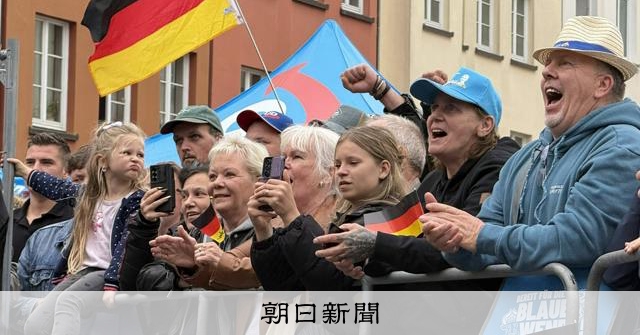
A state election that shouldn’t exist
AfD took Mecklenburg-Vorpommern. Friedrich Merz’s CDU couldn’t even cross the finish line.
In Sunday’s state parliament election — 71 seats, 78.1% turnout — AfD won 38.2% of the vote and 32 seats, up 18 from the last cycle. CDU, the party Merz leads as chancellor, polled 4.9%. Below the 5% threshold. Zero seats. Worse than 1951, worse than anything in eight decades of postwar German electoral history.
Merz spoke thirteen minutes after the polls closed. “The result in MV cannot be dressed up,” he said. “This is a disaster.”
The word “disaster” understates a structural collapse. A party that once governed this country is now starting from below the entry barrier in a state that chose it by nearly four-to-two.
The third eastern domino
This is the third former East German state where AfD has taken first place. Two years ago it was Thuringia. This month it was Saxony-Anhalt. Now Mecklenburg-Vorpommern — the quiet, coastal state north of Brandenburg, bordering Poland, sparsely populated, already struggling with depopulation and deindustrialization.
The pattern is no accident. AfD built its modern identity in the five former GDR states, capitalizing on economic anxiety, migration fears, and a sense that Berlin ignores the east. Each successive state election has confirmed the same trajectory: AfD consolidates, CDU fractures, and the protest vote stops being a signal and becomes a platform.
Saxony-Anhalt’s result this month already made clear this wasn’t a one-off. MV’s result proves it’s institutional.
What the numbers actually mean
AfD gained 18 seats in a 71-seat parliament. That’s not drift. That’s acceleration. Three years ago they had 14 seats here. In 2024 they had 14 again. Now they have 32 — a near-doubling in a single cycle, in a state that voted at 78.1%, above the national average.
CDU’s 4.9% is the operative number. It’s not just bad. It’s structurally impossible under the current rules to send a single representative to the MV Landtag. The party doesn’t even qualify for state-level parliamentary presence. This is the equivalent of a governing party failing to win a single seat in a subnational election.
German electoral law treats state results differently than federal ones, but the message is identical: a significant portion of the CDU’s traditional electorate — older voters, rural communities, former East Germans — has moved. Not all of them. A decisive portion.
The Merz problem
Merz has called this a disaster and promised to govern anyway. He said he would carry out reforms “as chancellor of this country.” That phrasing matters. He is positioning himself as surviving the local loss through national authority.
But governing through national authority requires a party that can win nationally. CDU’s vote is bleeding east. Merz’s coalition partner, the Greens, are weaker in the former GDR than anywhere else in Germany. The SPD is similarly hollowed out. The FDP is irrelevant in most eastern districts.
Merz’s coalition is held together by a majority of seats, not a majority of votes in the east. If AfD continues its current pace, that seat majority becomes increasingly fragile. By 2027, when federal elections are due, the math could look very different from what it looked like when Merz took office.
What happens next
The immediate pressure is on Merz’s leadership. CDU politicians in Mecklenburg-Vorpommern will demand explanation. State-level CDU figures who survived last cycle but now face a party that can’t clear 5% will ask whether the federal strategy is poisoning local prospects.
There is also a second-order question about the coalition. The Greens are Merz’s partner. Their electoral base in the east is thin. If AfD continues absorbing protest votes in these industrial heartlands, the coalition’s eastern parliamentary groups shrink. Policy implementation slows. Merz’s reform agenda — which he has already framed as his signature project — loses legislative capacity.
For the EU, the calculation is blunt. AfD’s program includes strict migration policy and sustained criticism of the European Union. Three eastern states are now AfD strongholds. If the fourth and fifth fall — and the momentum suggests they could — the party will have enough seats in the Bundestag to disrupt legislation, block appointments, and make governance costly for any coalition that includes it.
Merz has ruled out governing with AfD. That position is politically sustainable now. It is not permanently fixed. Coalitions in Germany have shifted before when the arithmetic forced them to.
The real story
The headline numbers are stark: 38.2% versus 4.9%. But the story underneath is simpler and more important. AfD stopped being a protest movement in these states two years ago. It is now the default opposition — and increasingly the default majority — in parts of Germany that federal politicians treat as electorally lost.
Merz called it a disaster. He is right. The question is whether he learns from it fast enough to prevent the next one.
The CDU won’t recover Mecklenburg-Vorpommern by repeating the strategies that produced 4.9%. It will require a fundamentally different relationship with eastern Germany — not just in rhetoric but in policy, representation, and economic commitment. Until it finds that path, AfD keeps winning states that used to belong to the center.
The far-right wave in Europe is not a single event. It is a sequence. Germany is still in the sequence.