Germany’s Top Spy Arrested for Espionage — What It Means for NATO
Germany arrested its former foreign intelligence chief on suspicion of treason and espionage, handing classified documents to a foreign service. The scandal could damage Western intelligence cooperation and signals a widening insider-threat problem across allied services.
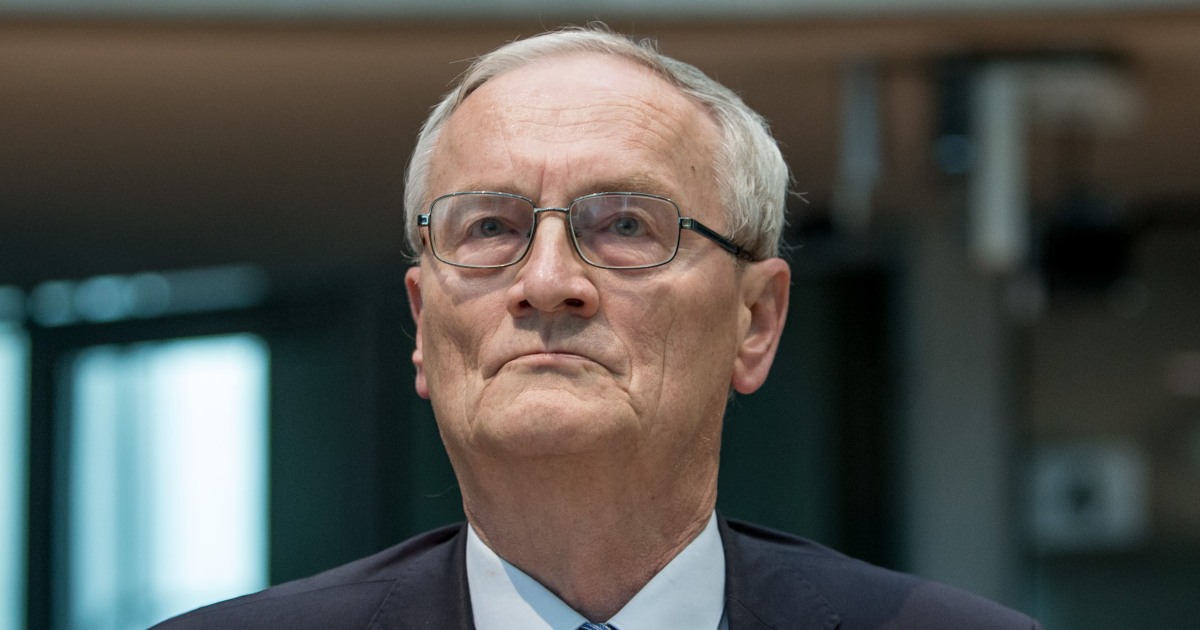
The Man Behind the Files
August Hanning spent seven years running Germany’s foreign intelligence service, the BND, before retiring in 2005. A career diplomat before his intelligence posting, he rose through the ranks during an era when Germany’s spymaster was expected to balance transparency demands at home with the operational secrecy the job required. Five years out of office, he appears to have traded classified documents for cash — and not just old files. His alleged associate, Manfred D., served as office manager to successive BND presidents until at least March 2026, meaning Hanning may have received intelligence on Iran, Russia, and allied communications while those documents were still fresh and operationally relevant.
The prosecutor’s statement was blunt. Hanning is suspected of treason, espionage, obtaining state secrets, and attempted treason. Prosecutors did not name the foreign intelligence service involved, but Spiegel reported investigators are looking into a possible connection to Azerbaijan. A representative of that country’s spy agency is allegedly the one who received Hanning’s political analyses over the years. No contact with Russia is believed to have occurred, according to Süddeutsche Zeitung.
Manfred D. was arrested alongside Hanning. Prosecutors say he supplied roughly 2,000 documents over an unspecified timespan — internal briefings, classified reports on the Iranian nuclear program, military assessments on Russia, and material marked secret by allied intelligence agencies abroad. The volume is staggering. Two thousand documents is not a handful of leaked memos; it suggests a sustained, systematic extraction of intelligence over an extended period.
Both men were due before a judge at the Federal Court of Justice on Tuesday. Neither responded to requests for comment.
A Scandal That Goes to the Top
Hanning’s arrest is one of the most serious intelligence breaches in Germany since the Cold War. The name evokes comparisons. In 1974, Chancellor Willy Brandt resigned after his aide Günter Guillaume was exposed as an East German spy. In 1990, senior counterintelligence official Klaus Kuron was convicted of treason for spying for the Stasi.
This case is different because it implicates someone who ran the entire foreign intelligence apparatus, not a low-level aide or a mole planted by a rival service. The betrayal came from inside. That distinction matters for trust — both domestically and internationally. When a former spymaster is the leaker, the damage extends beyond what was stolen to how allies perceive Germany’s ability to safeguard its own secrets.
Conservative lawmaker Roderich Kiesewetter told Handelsblatt the scandal would be particularly damaging for Germany’s relationships with its intelligence partners. Espionage by a former spy chief sends a message to allies that the country cannot fully control its own house. The implication is uncomfortable: if Germany’s top intelligence officer cannot be trusted with classified material after retirement, what does that say about the vetting and ongoing oversight of cleared personnel?
BND President Martin Jäger said the agency launched internal investigations as soon as suspicions emerged. “There can be no compromises on internal security,” he said. The statement was careful — a public reassurance aimed at nervous allies and a domestic audience eager for answers.
The Azerbaijan Angle
The alleged recipient of Hanning’s analysis — Azerbaijan’s intelligence service — adds a layer of geopolitical complexity. Baku is not a conventional adversary of the West, but it is not a reliable ally either. Azerbaijan maintains pragmatic ties with Russia while simultaneously cultivating partnerships with Turkey and engaging with European energy interests. The choice of recipient matters: selling intelligence to an Azerbaijani service suggests Hanning was not motivated by ideological alignment with a hostile power but by financial gain. That makes the case harder to dismiss as an isolated incident of political betrayal and harder to confine to a simple Cold War narrative.
It also raises questions about what exactly Azerbaijan wanted. German assessments on Iran and Russia would have operational value to Baku, which shares borders and strategic interests with both countries. But the leakage also signals that Germany’s intelligence ecosystem is permeable to third-country actors who may have no direct stake in European security.
The Insider Threat Is Not a German Problem
What makes this case resonate beyond Berlin is that it fits a pattern. Insider threats have surfaced across Western intelligence services in recent years. The United Kingdom dealt with the treachery of Christopher Millar in the early 1990s, who passed secrets to the Soviets. Canada’s Arthur Nelson sold information to the KGB from the 1960s onward. More recently, the FBI has prosecuted agents and contractors for leaking classified material, and British intelligence has faced scrutiny over unreported contacts with foreign officers.
The digital age has made insider threats harder to detect. Data is stored in central repositories accessible to cleared personnel. Classification systems do not stop someone with the right badge from copying files. The traditional solution — compartmentalization — has eroded in services striving for interoperability and real-time sharing among allies.
That erosion is now a vulnerability. The more intelligence Germany shares with its NATO partners, the more a compromised insider can leak. The BND has long been a key partner for the CIA and MI6. A former head of the BND supplying analysis to a foreign service is not merely a German scandal — it is an alliance problem.
Second-Order Effects
The fallout will extend beyond diplomatic inquiries. NATO’s intelligence community operates on a foundation of calibrated trust, and this case will force hard questions about who gets access to what. Allied services may begin imposing stricter conditions on information shared with the BND, potentially creating gaps in the very collective situational awareness that deterrence depends on. The Five Eyes partnership — the closest intelligence alliance in the world — has long set the standard for deep information sharing. Germany’s experience will be scrutinized as a test case for whether non-Five Eyes partners can maintain equally rigorous safeguards.
Retired intelligence officers across Europe will face heightened scrutiny. Post-employment controls, including debriefings, ongoing monitoring, and restrictions on contact with foreign nationals, will come under review. Some services may tighten these measures; others may struggle to enforce them without driving talented analysts toward private-sector opportunities where oversight is lighter.
Domestically, the scandal will feed existing anxieties about Germany’s intelligence infrastructure. The BND has faced criticism in the past for overlapping mandates with domestic counterintelligence and for historical lapses in vetting. This case will reignite debates about whether Germany’s intelligence architecture is fit for purpose in an era of hybrid warfare and persistent espionage.
What Happens Next
The immediate fallout will be diplomatic. German officials will face questions from American, British, French, and other partners about what was shared, how much, and whether it reached adversarial hands. Even if the analysis only went to Azerbaijan, the damage to confidence between intelligence services is real. Partners will reassess what they share with the BND and with whom within it.
The investigation will likely uncover whether other current or former BND personnel were aware of the scheme. Prosecutors have not said whether Manfred D. acted alone or if others facilitated the transfers of documents.
There is also the question of how Hanning, a retired official, maintained access to active intelligence. Office managers have routine operational roles — scheduling, correspondence, document handling — but they do not typically receive classified material. If D. had a mechanism to bypass normal controls, that raises uncomfortable questions about internal oversight at the highest levels of the BND.
The case will force reforms. Germany already tightened its security protocols after previous scandals, but this one suggests the measures were insufficient. Expect reviews of document-handling procedures, access audits, and possibly new oversight mechanisms.
The Bigger Picture
Western intelligence services are under pressure from outside and inside. Russia and China invest heavily in recruiting assets. But the breach through trusted insiders is harder to defend against. It exploits the very openness that makes intelligence sharing valuable. The more integrated the alliance network becomes, the more a single compromised individual can damage collective security.
Hanning’s arrest is not just a scandal. It is a warning that the architecture of allied intelligence cooperation, built on trust, can be weaponized from within. The question now is whether Germany and its partners learn the right lessons — strengthening safeguards without retreating into the kind of secrecy that undermines the very cooperation they are trying to protect.