Goldman's KOSPI 12,000 Bet Is Really About Who Wins the Memory Boom
Goldman Sachs is doubling down on a KOSPI 12,000 target, arguing that US big-tech AI spending will keep memory supply tight through next year. But the trade isn't as clean as the bull case suggests.
The Number That Should Make You Look Closer
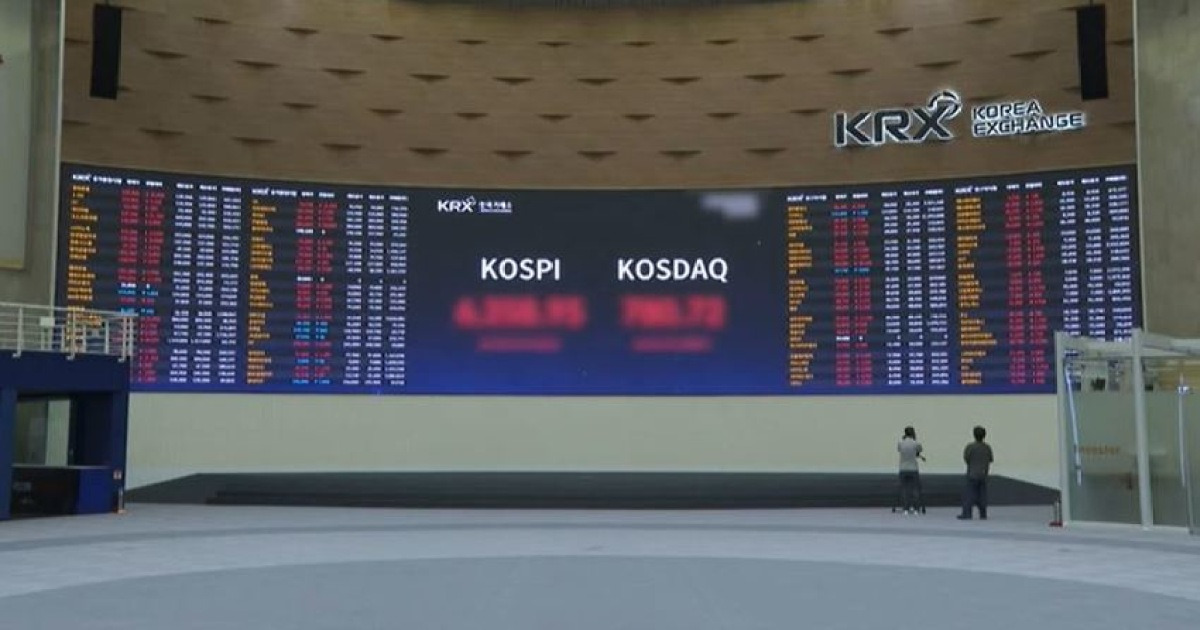
Goldman Sachs keeps saying 12,000. It raised the KOSPI target from 9,000 back in June and has refused to budge since, even as the index stumbled through a sharp correction that wiped out months of gains and left Korean retail investors — the so-called ants — staring at red portfolios. Timothy Mo, Goldman’s Asia-Pacific chief equity strategist, recently reaffirmed the outlook, and his reasoning is straightforward enough to state plainly: the memory supply squeeze ahead of us is going to be the tightest in decades, and the market hasn’t priced it in yet.
The real story here isn’t the target itself. It’s what Goldman is betting on underneath it, and whether that bet makes sense when you step outside the Seoul bubble.
What the Bull Case Actually Rests On
Mo’s thesis runs on a single, heavy variable — US big-tech capital expenditure. Goldman is now projecting that the hyperscalers will spend $1.2 trillion on CapEx next year, up from $800 billion previously. That’s a 50-percent increase in a single year, and most of that money has to go somewhere. Data centers. GPUs. And, critically, the memory required to make those systems function.
Mo put it bluntly: these companies have to keep investing even if they aren’t generating returns yet. AI infrastructure is a first-mover game, and sitting out it is riskier than overspending on it. That dynamic flows directly into memory demand, which benefits Samsung Electronics and SK Hynix — the two companies that together account for roughly three-quarters of the KOSPI’s semiconductor weight.
The valuation gap is what makes the trade look attractive right now. Both names are trading at roughly 3 times forward earnings based on 2027 estimates. KB Securities called next year’s memory environment the tightest supply situation in history. Nomura flagged the same undervaluation on Sept. 4, keeping target prices of 670,000 won for Samsung and 470,000 won for SK Hynix with buy ratings.
Three times earnings on a company riding the tightest memory supply cycle in decades sounds like a mistake by the market. Or it sounds like the market knows something you don’t.
The Thing Everyone in Seoul Is Underweighting
The strongest argument against the 12,000 call lives in a city you won’t find on most Wall Street maps: Hefei. That’s where Changxin Memory Technologies, or CXMT, is building capacity in China’s push to achieve memory self-sufficiency regardless of US export controls. Goldman itself flagged CXMT as a risk factor in its latest note.
Chinese memory fabs are years behind Samsung and SK Hynix on process technology, but they don’t need to be competitive on the cutting edge to matter. They only need to absorb demand in the mid-range segments where AI data centers are stacking DRAM and NAND in enormous quantities. Every gigabyte CXMT produces is a gigabyte that doesn’t have to come from Korea. In a supply-constrained market, that distinction changes the pricing power narrative.
This isn’t hypothetical. China has been subsidizing its semiconductor sector aggressively for years, and memory is one of the few areas where progress has been measurable. The US government is pushing back on data center expansion — a political risk Goldman specifically named — which could slow CapEx timelines and compress the window where Korea’s supply advantage actually translates into margin expansion.
The Won Problem
Citigroup cut both Samsung and SK Hynix targets significantly — to 430,000 won and 300,000 won respectively — citing won appreciation as a direct hit to reported earnings. This isn’t a minor footnote. When the dollar weakens and the won strengthens, Korean exporters report less revenue in dollar terms even if their unit sales and margins are unchanged. For a market that American and European institutional investors dominate, that currency effect is real money.
The won’s trajectory depends on Fed policy, Korean interest rate decisions, and risk sentiment across emerging markets. None of those variables are stable. Citigroup’s targets assume the won will continue to strengthen from current levels. If that assumption holds, the earnings that Goldman and KB Securities are modeling look smaller in dollar terms than the models suggest.
Who Wins, Who Loses
The winners in this scenario are clear: Korean memory companies if supply stays tight and Chinese competition doesn’t accelerate faster than expected, and global AI infrastructure builders who lock in memory supply at favorable terms before the next shortage cycle hits. The losers are anyone who bought Korean semiconductors assuming the 3-times-earnings multiple was a permanent discount rather than a reflection of legitimate structural risk.
Retail investors — the ants — are the most vulnerable group. They sold in panic during the correction and are now circling back because Goldman’s headline number looks tempting. That pattern has played out before in Korean markets, and it rarely ends well for individuals who time entries based on analyst target prices alone.
Institutional investors face a different calculation. The memory supercycle thesis is real. The question is whether 12,000 on the KOSPI already assumes the best-case path for supply, demand, currency, and geopolitics simultaneously.
What Happens Next
The next twelve months will test whether the memory supply constraint is as binding as Goldman believes. If US hyperscaler CapEx hits the $1.2 trillion estimate and CXMT’s output remains modest, the bull case holds and the KOSPI has room to run. If Chinese memory capacity ramps faster than expected, or if political friction slows data center construction in the US, the earnings revisions will move in the opposite direction — and they move fast in semiconductors.
Goldman’s target isn’t wrong. It’s just conditional on a narrow set of assumptions holding at once. The market will price that conditional reality whether or not it admits it outright.