Google's Magic Capture Is the Camera UX Pivot No One Saw Coming
Pixel 11's Magic Capture hands over the hard part of photography to AI — and Google is testing it in Japan first. What this means for Samsung, Apple, and the future of phone cameras.
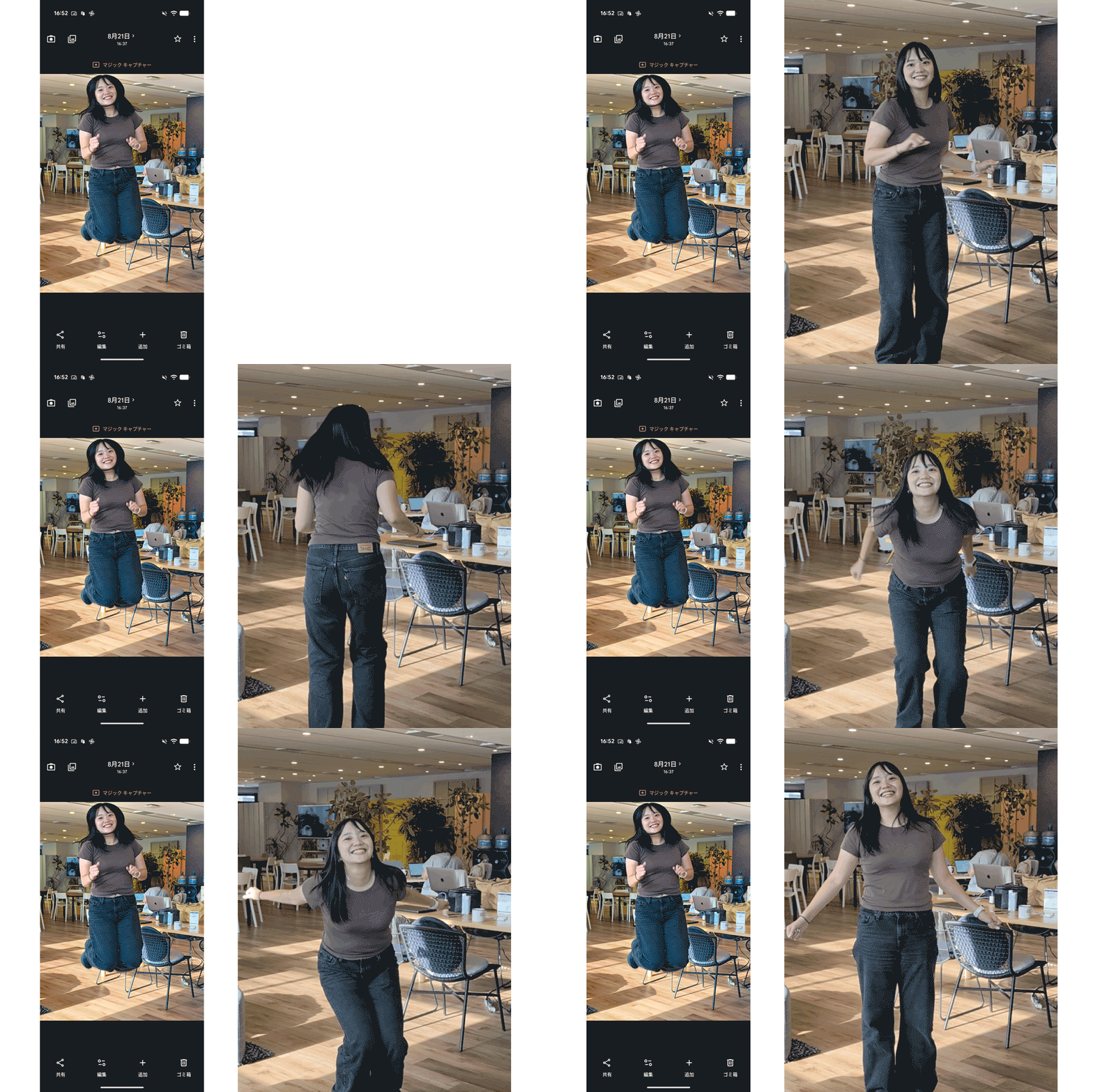
The Shot You Already Forgot
Somewhere in Japan right now, someone is holding their Pixel 11 up to capture a jumping child, a darting pet, or a moment that will exist for exactly one-seventh of a second before vanishing. With Google’s new Magic Capture feature, they don’t need to react fast enough to press the shutter. The phone does it for them.
Magic Capture, confirmed in Japanese testing ahead of the 2026 Pixel 11 launch, records video while Gemini continuously analyzes the scene — then automatically saves the best moments as 12MP still photos. You press record. The AI decides what matters.
That sounds incremental until you realize it flips the entire logic of smartphone photography on its head. For fifteen years, the bottleneck has been the human behind the lens. Magic Capture removes that bottleneck entirely.
How It Actually Works
The mechanics are deceptively simple. Tap the new star-shaped icon next to the photo and video buttons, hold the record for up to two minutes, and let Gemini do its work. The feature saves both the full video — at 1080p, not the 4K available in standard video mode — and several automatically selected still photos pulled from that footage.
If you disagree with Gemini’s taste, you can dig into the video and use a slider to manually extract any frame as a photo. That slider mechanism itself is not new — Google baked it into the Pixel 4 back in 2019. The leap is that you no longer have to scroll through hundreds of frames looking for the good one. The AI filters the noise first.
This distinction matters. The 2019 implementation demanded attention and effort from the user. Magic Capture demands none. The phone thinks so you don’t have to.
Why Japan First
Google’s decision to test and showcase Magic Capture in Japan is no accident. Japanese consumers represent one of the most image-conscious mobile markets globally, with a culture where phone photography is embedded in daily social behavior — from bento-box documentation to seasonal photo rituals. If a feature that surrenders creative control to AI can win over Japanese users, it has credibility anywhere.
Japan also tends to adopt AI-driven camera features earlier than other markets. Google has been quietly shipping AI camera improvements through Pixel updates in Japan for years, using the market as a real-world lab. Magic Capture follows that pattern: Japanese testers validate the feature, the data feeds back into training, and the global rollout arrives sharper.
It is worth noting that the Gizmodo Japan demo did not confirm a global launch date or pricing. The Pixel 11 series is expected in 2026, but timelines can shift.
The Pro Model Tells You Everything
Here is the part Google wants you to notice but probably won’t advertise loudly: Magic Capture records at 1080p. The Pixel 11 Pro, Pro XL, and Pro Fold can push video to 4K 10bit HDR when Video Boost is enabled. Google is quietly reinforcing the Pro upgrade path while positioning Magic Capture as a feature anyone can use.
The implication is clear. The base model gets the convenience. The Pro model gets the quality. It is a classic Google hardware segmentation move, and it suggests the company sees Magic Capture as a volume driver, not a premium differentiator.
That is a strategic choice. Magic Capture is most compelling for candid, fast-moving subjects — children, pets, sports. Those use cases do not necessarily need 4K. They need reliability. Google is optimizing for the moment that gets captured, not the resolution that fills a monitor.
The Bigger Shift: From Tool to Assistant
Magic Capture is a symptom of something larger happening across the smartphone industry. Cameras are transitioning from tools that require skill to assistants that make decisions. The user no longer needs to know when to shoot. The phone knows.
This is not unique to Google, but Google is furthest along. Apple’s Photographic Styles and Google’s existing AI tools like Best Take and Magic Editor all point in the same direction — AI-mediated photography. But Magic Capture is distinct because it operates in real time during recording, not as a post-processing step.
Samsung has not yet announced an equivalent feature for its next-generation Galaxy phones. The lack of a public response is itself a signal. Samsung’s camera strategy has leaned toward versatility — more lenses, higher megapixels, zoom ranges that stretch into absurdity. Magic Capture suggests the next competitive frontier is not hardware specification but decision-making intelligence. Who helps you choose the shot, not just who can take the sharpest one.
Apple is in a similar position. The iPhone camera ecosystem is deeply polished, but Apple has been notably cautious about AI-driven automation that removes user agency. Magic Capture forces Apple to answer a question it may not want to: is the point of a phone camera to give the user control, or to guarantee a good result regardless of skill?
Who Wins, Who Loses
Magic Capture wins for casual photographers — the people who already leave thousands of untouched videos on their phones and rarely go back to find the good frames. It also wins for Google, which gains a feature that is difficult to replicate without its Gemini integration and camera-trained AI pipelines. Samsung and Apple can copy the concept, but the execution quality depends on training data and model sophistication, areas where Google has been investing heavily.
The losers are harder to name but real. Professional photographers who value deliberate composition will dismiss Magic Capture as gimmicky. That is fair. But the people who will actually use this feature are not professional photographers. They are parents, pet owners, and anyone who has ever said “I should have taken a picture of that” while watching something irreplaceable scroll by.
What Comes Next
Expect Magic Capture-like features across the industry within two product cycles. Once Google proves the UX works, competitors will respond. The question is whether they add it as a standalone mode or bake it into their standard camera app.
The more interesting question is what happens when every phone can autonomously capture decent photos. Photography as a differentiator flattens. The competitive edge shifts to AI that understands context better — not just what looks good in a frame, but what story a sequence of frames tells. Google is already moving in that direction with Gemini-powered features. Samsung and Apple will need to follow or fall behind.
Magic Capture is not the end state. It is the first visible step toward a phone camera that does the thinking so you do not have to.
The shot you missed last week? The phone will not miss it next time.