Google’s First Orbital Data Center Just Launched — Here’s What Changes
Google launched its first TPU-equipped satellite in an orbital data center experiment. If it works, cloud compute could escape geography — and SpaceX is already copying the playbook.
The Launch That No Wire Focused On Correctly
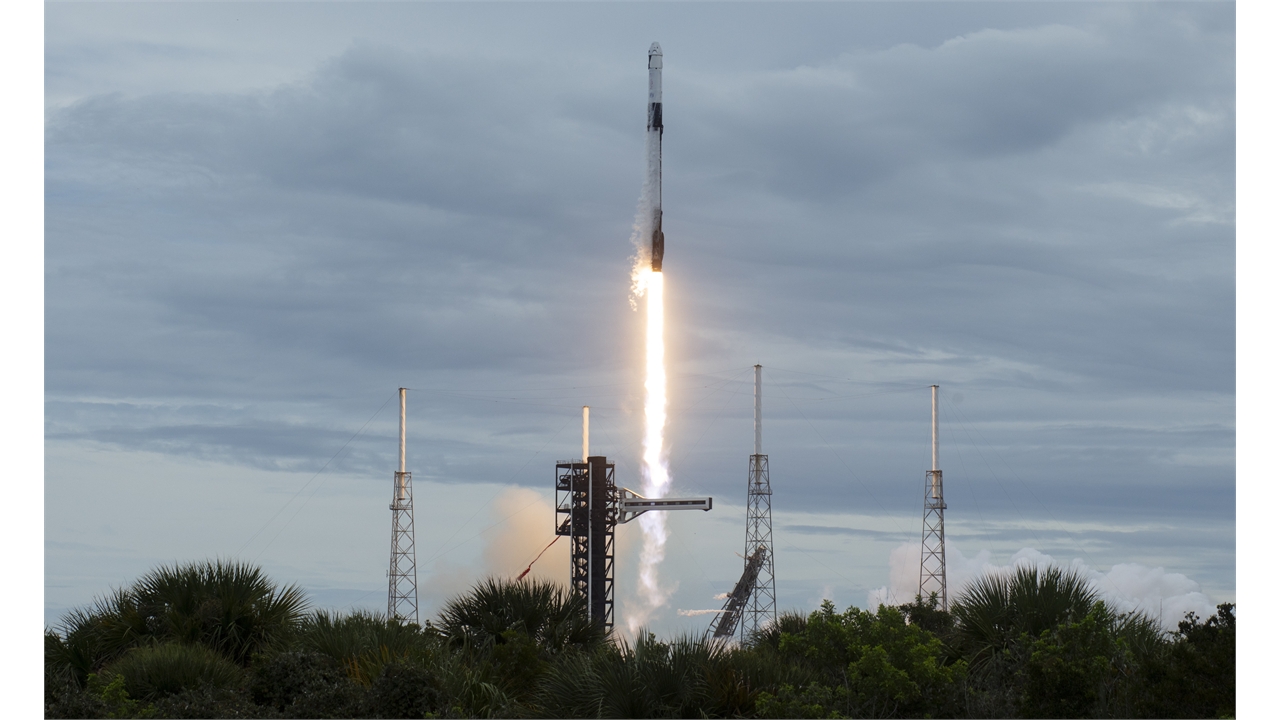
On October 1, a Falcon 9 rocket climbed out of Vandenberg Space Force Base in California carrying 130 payloads, including a prototype satellite hosting four of Google’s Tensor Processing Units. The satellites separated over an 11-minute window starting 54 minutes after liftoff. Everything deployed on schedule.
Most reporting framed this as another Google experiment. It isn’t. This is the first real test of whether cloud computing can decouple from geography — and the implications run far deeper than any single launch notice captured.
Google calls the project Suncatcher. The intent, stated plainly in the company’s own blog, is to determine whether space can scale into machine learning infrastructure. One year of orbital testing will measure how radiation affects TPU silicon and whether vacuum conditions allow viable thermal management. Both questions are existential for the concept. Fail either, and orbital compute stays a thought experiment. Pass both, and you have a fundamentally new architecture for where AI workloads live.
Why This Matters Beyond the Headlines
The conventional assumption is that data centers belong on the ground, anchored to power grids, fiber networks, and water supplies. Google’s hypothesis flips that. A low Earth orbit satellite sits in near-constant sunlight, generating up to eight times the solar power a terrestrial installation of comparable panel area could produce. The question isn’t whether you can put chips in space — SpaceX makes that routine. The question is whether the economics and reliability justify it.
Google’s longer plan involves linking multiple satellites into a constellation that processes AI workloads between them using laser communication. The company confirmed it will launch two additional satellites next year specifically to test that inter-satellite laser link. If that works, you are no longer thinking about individual satellites. You are thinking about a distributed orbital computer.
That changes who wins and who loses.
Who Wins When Compute Leaves Earth
The first winner is obvious: companies that need AI training capacity and cannot secure it on Earth. Power-hungry data centers face a growing crisis. Grid connections in places like Northern Virginia and the Taiwan semiconductor corridor are increasingly constrained. Land, water, and environmental permitting are tightening. An orbital data center bypasses all of that.
But the less obvious winner is the one Google may not want to advertise yet. If orbital compute becomes viable at scale, it shifts geopolitical leverage. Data centers currently concentrate power in specific regions — Iceland for cooling, Norway for hydro, Texas for deregulated grids. Space decentralizes that advantage. Any nation with launch capability could, in theory, build orbital infrastructure. The constraint becomes rockets, not real estate.
Then there is the customer. AI developers who need massive parallel compute but lack physical access to terrestrial capacity gain a new option. That is the business Google is selling. The one it is not selling, yet, is the implication that sovereign governments will eventually see orbital data centers as strategically outside the jurisdiction of any single country’s energy or zoning policy.
SpaceX Is Already Copying
Elon Musk’s SpaceX is not watching from the sidelines. The company is pursuing its own orbital data center concept using GPU satellites paired with solar panels produced in partnership with Tesla. Musk stated earlier this year that orbital data centers would become the cheapest way to train AI, predicting it would happen “within two years, at the latest three.”
That timeline is aggressive. Google’s Suncatcher is still in experimental phase, testing fundamental viability for an entire year before even attempting constellation-scale operation. SpaceX’s public statements suggest it believes it can compress that timeline dramatically, likely by leveraging its existing Starlink infrastructure and vertical integration. Whether it can is another matter. SpaceX has never built a data center of any kind — orbital or terrestrial — and the engineering problems of thermal management, radiation hardening, and orbital debris mitigation are nontrivial.
Who Loses
The losers are not fictional. They are people and institutions whose value derives from controlling terrestrial infrastructure. Grid operators in regions that sold excess capacity to cloud providers will feel the pressure first. Data center real estate developers in Texas, Ireland, and Japan built businesses on scarcity. Orbital compute undermines that scarcity argument.
There is also a more subtle loss. Terrestrial data centers, for all their environmental costs, are physically auditable. Governments can inspect them. Contractors can verify hardware. An orbital cluster orbits at 400 kilometers or more. Physical inspection is impossible. Security validation becomes an exercise in trusting the launching company’s claims. That is a governance gap, not a trivial one.
What Happens Next
Google’s immediate timeline is clear. One year of TPU testing in orbit. Two more satellites next year for laser communication trials. If those experiments succeed, the company moves toward constellation planning. If they fail — if radiation degrades chip performance or thermal management proves intractable — the project retreats to a footnote.
The more interesting question is what happens if Suncatcher works. Then every major cloud provider will announce a similar program. AWS has already filed patents related to orbital computing. Microsoft has explored on-orbit storage. The infrastructure race is beginning, and it will not look like the data center boom of the 2010s. It will look more like the satellite internet race, with launch cadence and orbital slots becoming the new competitive frontiers.
Google just put its first chip in orbit. The real experiment has not started yet. What happens over the next twelve months — and whether laser-linked constellations prove viable — will determine whether this is the beginning of a new computing architecture or an expensive proof of concept that never scales.
The launch was the easy part. Orbit is where the answer lives.