The Greenland Deal That Rewrites Arctic Strategy
The US has secured permanent military control over Greenland through a deal with Denmark — a sweeping strategic shift that locks out rivals, alters NATO's northern flank, and makes Washington the Greenland security guarantor forever.
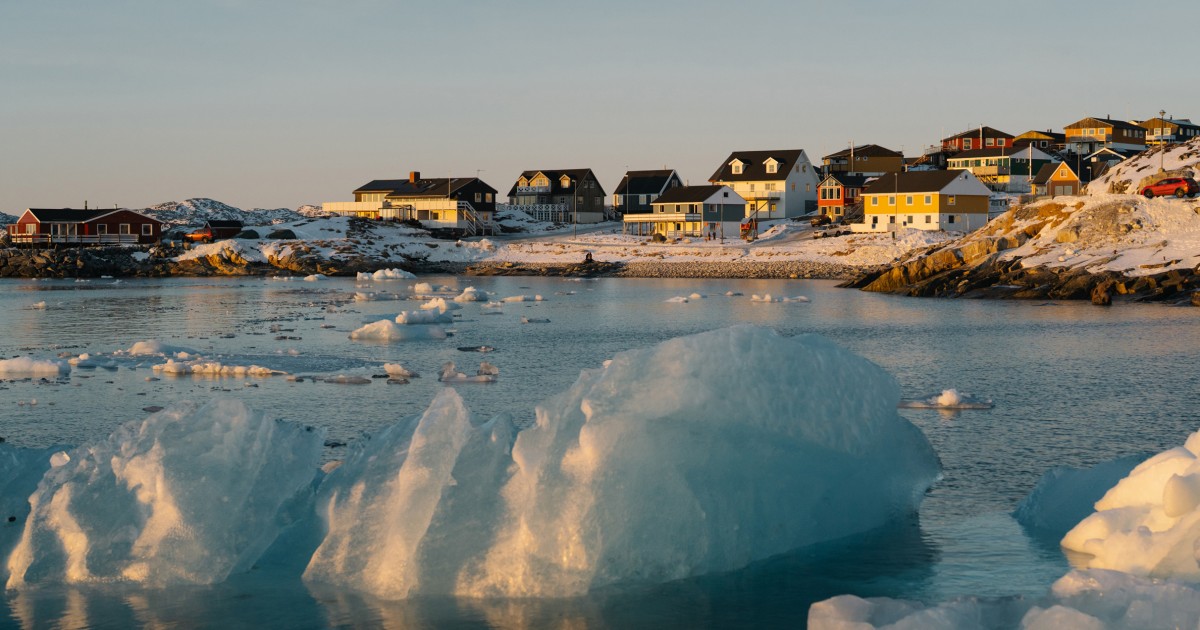
The permanent base that changes everything
The United States now holds a permanent key to Greenland’s security architecture. Announced Friday in a Truth Social post from President Donald Trump, the agreement with Denmark grants Washington what he called an “Infinite Life” deal — a military arrangement with no expiration date, no end clause, and no cost. The State Department confirmed it will remain binding even if Greenland becomes an independent country.
That last detail matters more than the rhetoric suggests.
Greenland’s path toward sovereignty from Denmark is a slow-burn political project, not an imminent event. But by writing the deal to survive any future constitutional rearrangement, the US has effectively pre-positioned itself as Greenland’s long-term security anchor regardless of what political shape the island takes. Denmark gets to keep its sovereignty narrative intact. The US gets permanent basing rights. Greenland gets a seat at the table in negotiations — and a deal its own government called “to the benefit of us all.” No one here loses outright. But the strategic balance in the Arctic just shifted.
A wall around the North Atlantic
The agreement’s most immediate effect is the cordon sanitaire it draws around Greenland’s defense perimeter. Any non-NATO base or troop presence is explicitly banned. Russia and China are screened out of sensitive investments. Other adversaries face the same barrier. Secretary of State Marco Rubio put it bluntly: “Greenland will forever be part of the strategic defense area of North America and exclude any adversary from it and the surrounding area.”
This is not a minor tweak to existing arrangements. It is a formalized exclusion zone.
Greenland sits at the center of the North Atlantic gap — the stretch of ocean between Greenland, Iceland, and the UK where Soviet and Russian submarines have historically slipped through unchallenged during the Cold War. The US already operates Thule Air Base in northern Greenland, a critical early-warning and space-tracking facility. But this deal expands the footprint dramatically. Trump said he wants to develop a “large military presence in the appropriate part of Greenland, of which there are many,” and the State Department confirmed the US can “increase the number of bases in Greenland as required.”
For NATO, that is both a gift and a recalibration. The alliance’s northern flank just got a permanent US military infrastructure boost without a single new NATO budget line. For Greenland, it means the island becomes the most heavily militarized territory in the Arctic by a wide margin.
Who wins, who loses
The US wins strategically. It secures its northern approaches with a permanence that no previous arrangement offered. The basing rights, overflight permissions, and exclusion clauses are locked in for generations. China’s growing interest in Greenland’s rare-earth minerals and shipping routes through the Northwest Passage now runs into a hard legal barrier — any sensitive investment requires written US approval.
Denmark wins politically. Prime Minister Mette Frederiksen framed the deal carefully: sovereignty intact, territorial integrity respected, Greenland’s right to self-determination acknowledged. Copenhagen avoided the appearance of a US annexation while securing a defense partnership that reduces its own burden in the Arctic. It is the kind of diplomatic framing that lets domestic critics call it a win.
Greenland’s leadership wins on its own terms. Jens-Frederik Nielsen, chairman of Greenland’s government, called the agreement a recognition of the island’s place in international cooperation. Greenland has long been caught between competing powers interested in its resources and position. Having the US as a security guarantor — rather than being a pawn in someone else’s game — gives Nuuk leverage it did not have before.
Russia and China lose access. Both countries have been circling Greenland for years. Russia sees the island through a military lens — every new US base shortens the window for its northern fleet to operate freely in the Atlantic. China sees it through an economic lens — rare earths, ports, and the commercial potential of Arctic shipping lanes. This deal closes both doors simultaneously. Any Chinese or Russian investment that looks like it could have strategic value will now be blocked unless Washington signs off.
Greenlanders who oppose US military expansion lose influence. Polls have consistently shown strong opposition to American annexation or military dominance on the island. Trump’s original threats to “take” Greenland sparked outrage. The current deal sidesteps sovereignty but not strategy — the US gets exactly what it wanted militarily, even if the language has been softened. The people of Greenland get a say in negotiations, but the broad strategic outcome was decided by three governments.
What happens next
The agreement is expected to be signed next week during the UN General Assembly in New York City. That timing is deliberate — it signals this is being treated as a multilateral moment, not a bilateral land grab.
The first test will come quickly. Trump said the administration will begin developing a larger military presence “immediately.” We do not yet know which sites will be expanded, how many additional bases will be built, or what the timeline looks like. But the State Department’s language is unambiguous: the US can place bases wherever it deems necessary, and it can do so permanently.
A second test will be enforcement. The agreement bars sensitive investments from adversaries. But investment screening is only as good as its implementation. China’s state-owned enterprises and Russia’s resource giants will test the boundaries. The US will have to decide what counts as “sensitive” and whether it has the bureaucratic appetite to block deals.
A third test is Greenland’s political trajectory. The agreement survives independence, but independence would still change the island’s domestic politics. A sovereign Greenland government could pressure the US for more favorable terms — or try to use its strategic position to extract concessions from other powers, despite the deal’s restrictions. The treaty is designed to prevent that, but treaties do not always outrun reality.
Why this matters beyond the Arctic
This deal is not just about Greenland. It is about what the US is willing to do to secure its periphery when it decides it needs to. The language Trump used — “FOREVER,” “complete ability,” “permanently and completely addresses our national security concerns” — signals a shift from temporary deployments to entrenched strategic presence. The Arctic is no longer a marginal theater. It is now home to permanent US military infrastructure with legal protections that survive political change on all sides.
NATO’s northern flank is stronger. Russia’s northern approach is more contested. China’s economic path into the high North is blocked. Greenland stands at the center of it all — no longer just a Danish territory with strategic value, but a permanently American-secured piece of North America’s defensive perimeter.
The ink is not yet dry. The details are still coming. But the architecture of the Arctic has already changed.