The Gulf War Is Destroying Ecosystems Worse Than It Burns Fuel
Satellite data reveals over 500 oil spills across the Gulf since February, cumulative acreage rivaling Wales. While global markets watch energy flows, a confined, climate-stressed marine system is suffering damage that could persist for generations.
The Visible Scars Beneath the Surface
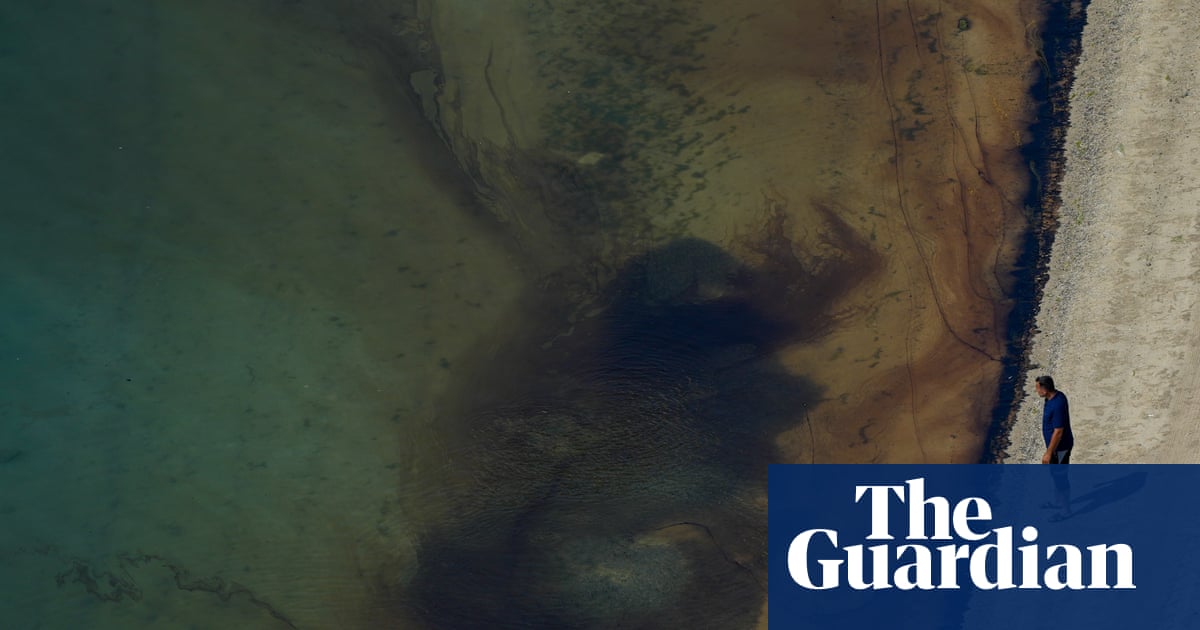
The headlines about the Gulf conflict centre on shipping lanes, insurance premiums, and crude prices. Satellite images tell a quieter, more persistent story — dark ribbons of crude spreading across waters so shallow and so hot that they amplify every toxin poured into them.
Greenpeace has tracked more than 500 individual spill events across the Gulf, the Strait of Hormuz, and adjacent Arabian Sea waters since the war began on 28 February. Stack those mapped footprints together and they cover roughly 20,000 square kilometres. That is nearly the area of Wales, layered repeatedly across a sea no larger than the North Sea.
Most Western reporting treats these spills as collateral damage to an energy dispute. The reality inside the water column tells a different story. This is an ecological siege on one of the most thermally stressed marine environments on Earth.
A Sea Already at the Brink
The Gulf is not a normal ocean. It is shallow, nearly enclosed, and exchanges water with the open ocean only through the narrow Strait of Hormuz. There is no deep cold-water current to mix in and buffer summer temperatures. What heats up stays hot.
Bernhard Riegl, a marine biologist at Nova Southeastern University who has studied these waters for over three decades, described the compounding effect plainly: atmospheric heat translates directly into ocean heat, which kills corals, algae, and fish. Add oil to that equation and you are not dealing with a temporary stain. You are dealing with a system that cannot flush itself clean.
“There is no such thing as a ‘clean war’,’” Riegl said. “Not for the unlucky humans drawn into it, nor for the unlucky environment in which the conflict takes place.”
Even before missiles and mines appeared, the Gulf’s ecosystems were under mounting pressure from shipping traffic, oil extraction, and coastal development. Mangrove forests fringe vulnerable shorelines. Coral reefs thread along island chains. Seagrass meadows serve as nurseries for commercially important fish species. Sea turtles nest on beaches now coated in tar residues that date back to earlier wars.
Who Is Striking, and Where the Oil Goes
The attack record is jagged and escalating. October alone saw more than 30 confirmed or reported strikes on tankers in and around the Strait of Hormuz, according to the Washington Institute for Near East Policy. The total since hostilities began exceeds 133, Greenpeace says.
Among the worst was the strike on the supertanker Gem No 2 off the UAE coast, which left a slick stretching more than 35 kilometres. Satellite imagery captured the black plume moving into waters near Umm Al Quwain on 19 October. The UAE responded by closing beaches, launching a cleanup operation, and monitoring desalination intake points.
An attack on the Liberian-flagged Minoan Pioneer on 3 August created a major spill off Oman. Two Iranian naval vessels hit in March continued leaking oil for months, according to Wim Zwijnenburg of the Dutch peace organisation Pax. An early June tanker strike produced a slick off Oman exceeding 600 square kilometres at its peak.
Responsibility is contested but concentrated. The Islamic Revolutionary Guard Corps has been blamed for most of the attacks. US forces have targeted tankers as well, disabling Iranian vessels attempting to cross a US naval blockade and striking others after Iranian missile attacks on American warships. The Wall Street Journal reported that the single largest spill traced to a UAE air force strike on oil storage tanks on Lavan Island, sending crude flushing into gulf waters and threatening the nearby Shidvar Island reserve.
The Recovery Timeline Nobody Is Discussing
Cleanups can clear a beachfront in weeks. They cannot extract oil trapped in sediment.
Nina Noelle of Greenpeace noted that contamination persists in shoreline deposits and mangrove roots long after surface slicks fade. She warned that repeated spills risk compounding damage across ecosystems already weakened by heat stress. Mangroves and coral reefs can take decades to recover, if they recover at all.
History offers uncomfortable precedent. A 2020 study traced widespread tar deposits on Qatari beaches to the 1991 Gulf War. A 2022 study found sediment on Saudi Arabia’s Abu Ali Island still contaminated by oil from the Nowruz spills of 1983–85, when the Iran-Iraq war saw tankers and loading facilities targeted and an estimated 80 million gallons of crude released.
Riegl pointed out that organisms like sea turtles digging into contaminated beach sand to lay eggs, or ghost crabs burrowing through polluted substrate, will encounter toxic layers laid down years ago. “The effects of large-scale oil pollution remain detectable for decades,” he said. “We could really lose something irreplaceable.”
Who Pays the Price
The energy markets will absorb price spikes. Insurers will adjust premiums. None of that addresses the fishermen whose catches dwindle as contamination moves up the food chain, or the coastal communities dependent on reefs that may not regenerate within any human lifetime.
Environmental organisations continue analysing satellite imagery, but establishing the full extent of damage requires ground investigations that remain extremely difficult. Several researchers and environmentalists contacted by The Guardian in Iran and Gulf states said domestic authorities had instructed them not to speak publicly about war-related environmental damage.
Without independent on-the-ground access, the record will remain incomplete. What satellite data can show is this: the Gulf is a confined, overheating basin absorbing repeated doses of crude from an active conflict zone. Each spill adds to a sedimentary archive that future generations of marine life — and the people who depend on it — will inherit.