Gulf States Under Fire as U.S.-Iran Tit-for-Tat Escalates
As U.S. and Iranian forces exchange strikes across the Middle East, Gulf allies face a widening maelstrom — with naval blockades, pipeline diversions, and direct attacks reshaping energy security and regional alliances.
A War No Longer Contained
The United States and Iran have resumed their tit-for-tat campaign with renewed ferocity, and this time the blast radius has swallowed the Gulf entirely. American precision strikes hit an IRGC missile site on Iran’s Qeshm Island — positioned directly within the Strait of Hormuz — in what Central Command described as a defensive response to Iranian attacks on U.S. assets in Bahrain. Hours later, Tehran’s Revolutionary Guard claimed its drones had targeted Patriot batteries and launch platforms at Ali Al-Salem Air Base in Kuwait. Both sides said they fended off the incoming munitions. Both sides were signaling: the conflict is no longer confined to a binary dispute.
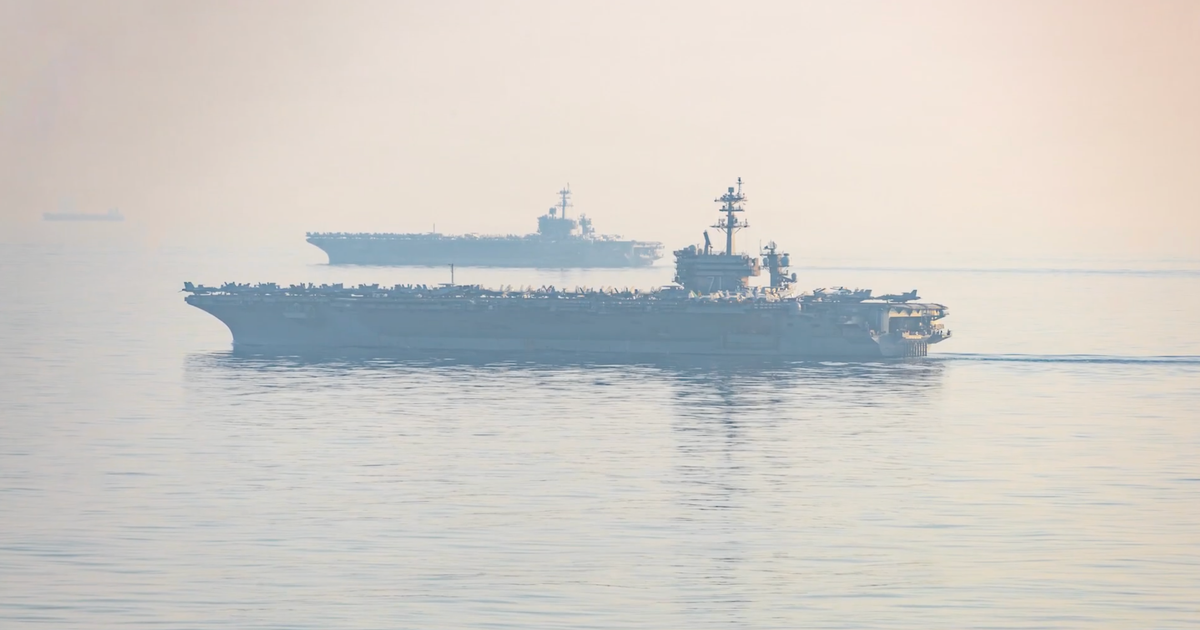
What distinguishes this escalation from previous rounds of posturing is the geographic spread. The U.S. has positioned three aircraft carrier strike groups in the Arabian Sea — southeast of the Strait of Hormuz — marking a naval footprint that the Israeli think tank The Institute for National Security Studies judges exceeds even theDeployment at the peak ofOperation Epic Fury in August. Twelve destroyers patrol the approaches. Yet conspicuously absent from INSS maps: American warships inside the Persian Gulf proper or at the Strait’s throat. That absence is not accidental. It reflects a deliberate refusal to sail into waters Iran has declared sovereign — a line drawn by Armed Forces Chief of Staff Ali Abdollahi that he told state television would remain unpassed “at any time.”
For Washington, the message is calibrated deterrence. For Tehran, it is a proof of concept: the Islamic Republic can strike U.S. holdings in sovereign Gulf territory and live to fight another day.
The Gulf Is No Neutral Ground
Bahrain and Kuwait joined Saudi Arabia and the UAE on Wednesday as direct targets of Iranian retaliation, shattering any remaining illusion that small Gulf states could fence off the great-power clash. Kuwait’s military confirmed it intercepted hostile drone threats. Bahrain’s air defenses did the same. The U.S. strike on Qeshm Island followed three attempted Iranian attacks on American installations in the last five days alone — all intercepted, according to CENTCOM, but none deterred.
Saudi Arabia, already fighting a reopened war against the Iran-backed Houthis in Yemen, is now bracing for a conflict that Western officials tell Reuters will stretch well into 2027. The ceasefire that held from 2022 fractured when the broader regional conflagration reignited this summer. Since then, Houthi rockets have killed at least 20 people inside Saudi Arabia and hit airports and oil infrastructure. Riyadh expects up to six more months of combat before any negotiations resume — though its position looks weaker by the day. Yementi government-aligned forces have pulled back from Red Sea coastal positions as Houthi fighters advance.
This is the second front burning alongside the primary U.S.-Iran axis, and it stretches Saudi resources thin at precisely the moment the kingdom needs them most concentrated.
Energy Corridors Reconfiguration Under Fire
While missile exchanges dominate headlines, a quieter transformation is remaking global energy logistics. Iraq resumed pumping crude through its pipeline to Turkey’s Mediterranean port of Ceyhan on Tuesday — a route that bypasses the Strait of Hormuz entirely. Initial capacity sits at 120,000 barrels per day, ramping toward 500,000. The line had lain idle since 2023 amid commercial disputes. Its revival reads less like routine commerce and more like emergency infrastructure planning.
The scale matters. Iraq’s output at full capacity would represent a modest fraction of the roughly 20 million barrels per day that historically transit the Strait of Hormuz — a chokepoint that the International Energy Agency estimates carries nearly a fifth of global petroleum consumption. Even a partial disruption sends shockwaves through pricing and shipping insurance. The UAE’s state oil firm ADNOC reported one crew member missing after a vessel was struck in the strait, with eleven others injured. Monitoring agencies report near-daily ship attacks in or near the waterway, many attributed to Iran or to U.S. enforcement of its blockade on Iranian ports.
No one is pretending the strait is closed. But the risk premium on every barrel moving through it is climbing steeply, and shippers are already rerouting where they can.
Nuclear Deal Adds Another Axis of Friction
Complicating an already overloaded region is the U.S.-Saudi nuclear agreement announced in July and still winding through verification. IAEA Director General Rafael Grossi called the safeguards arrangement “very satisfactory” at the agency’s board meeting Wednesday, noting Saudi Arabia had agreed to voluntary additional verification measures covering conversion, enrichment, fuel fabrication, and reprocessing sites. President Trump tied further progress on the deal to Saudi movement on the Abraham Accords — normalizing ties with Israel — adding a political condition to an already technical process.
To outside observers, the timing raises uncomfortable questions. An American ally seeking civilian nuclear capability while Iranian facilities sit under active military threat creates a perception gap that Tehran will exploit and that nonproliferation advocates will scrutinize. Grossi’s assurance of IAEA presence “if and when” construction begins does not yet translate into physical inspections on Saudi soil. Until they do, the deal remains a promise layered atop an active shooting war.
Internal Pressure Building Inside Iran
The regime’s external posture masks mounting domestic friction. Eyewitness accounts from the western town of Abdanan describe a protest over a bus crash that killed thirteen oil and gas workers morphing into an anti-government demonstration — a rare occurrence in Iran’s tightly controlled public sphere. State media downplayed the event, but Fars News acknowledged slogans took on a “political tone.” One resident told CBS News that chants turned toward the new supreme leader and, notably, included support for the exiled crown prince. Security forces dispersed the crowd with tear gas and warning shots.
Thousands of deaths and hundreds of thousands displaced in Yemen, retaliatory strikes on domestic infrastructure in allied Gulf states, and a crippling economic situation at home suggest the regime faces compounding pressures on every flank. The assassination plot denied in North Macedonia and Greece — which Tirana blamed on an Iranian national operating proxy actors — may reflect outward-directed aggression precisely because inward discontent cannot be openly expressed.
Who Wins, Who Loses, What Comes Next
The immediate winners in this escalation are hard to identify cleanly. Iran gains tactical leverage by proving it can strike U.S. bases in sovereign Gulf nations without triggering a decisive American response. The United States demonstrates reach and readiness but also reveals the limits of containment without direct escalation. Gulf states lose whatever insulation they once enjoyed from regional conflicts — Bahrain and Kuwait are now explicit participants, however reluctantly.
The long-term losers may be more significant. Global energy markets are prcing in a permanent risk premium for Strait of Hormuz transit. Shippers who relied on predictable routing are restructuring fleets and insurance policies. Iraq’s pipeline diversion is a low-capacity stopgap compared to what the strait handles, but it signals a direction of travel: alternate routes will multiply if the status quo persists.
The three-carrier grouping is temporary by design — rotation schedules dictate departures. When those carriers pull back, the question becomes whether the deterrent effect held or merely delayed the next round of provocations. Given the speed of escalation observed since late summer, the latter appears increasingly likely unless a diplomatic channel opens that all parties find viable — and none currently do.
Saudi Arabia’s preparation for a prolonged Yemen campaign through 2027 suggests Riyadh believes the regional order has permanently shifted. Whether it can defend itself across two fronts while managing domestic expectations remains the open question.