Hanwha's $2.99B US Bet Is About More Than Howitzers
Hanwha is pouring nearly $3 billion into US defense operations, acquiring a Navy shipbuilder and locking in K9 production in Alabama. The move rewrites the rules of who supplies America's weapons—and why Korea suddenly matters so much.
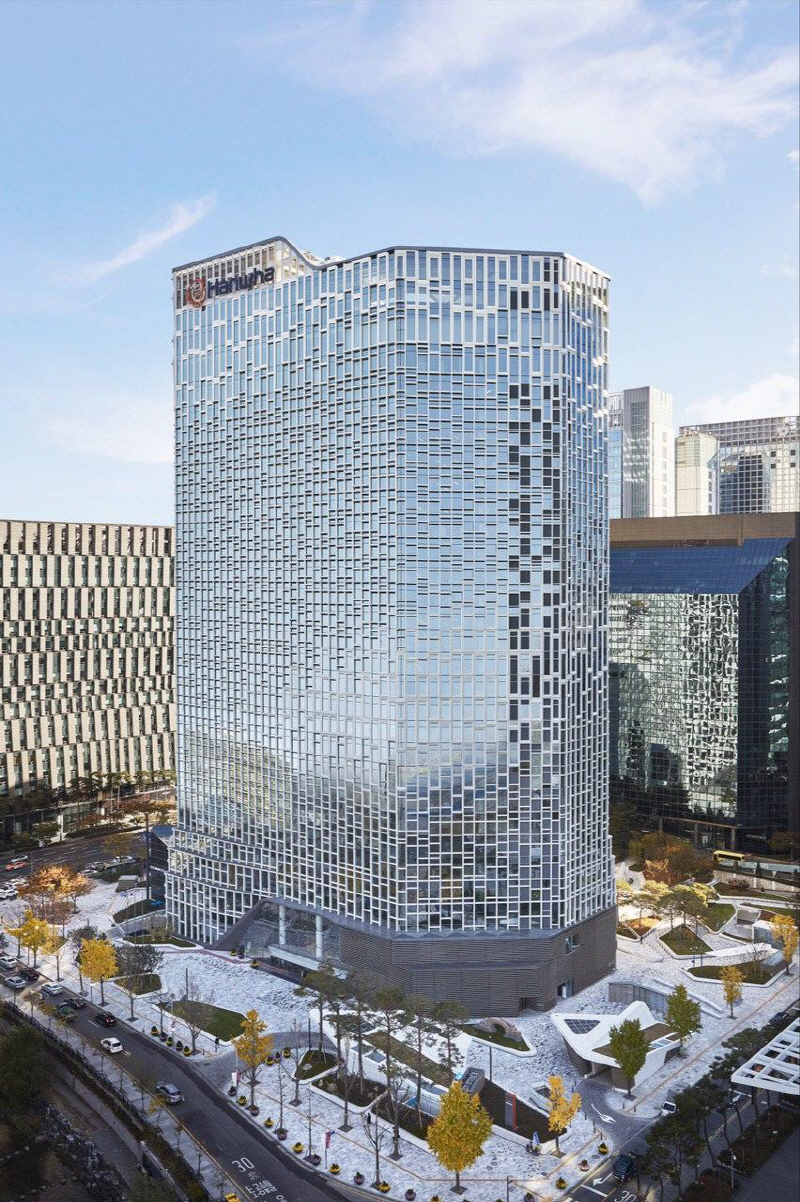
The $3 Billion Doorbuster
Hanwha is not asking for permission to build American weapons anymore. It is buying the factories, leases, and production lines it needs and proceeding as though the invitation was always implicit.
The numbers are blunt. Hanwha Defense USA and the investment vehicle Hanwha Future Proof both received capital increases totaling roughly $299 million — about 415 billion won — decided on in August 2026. Hanwha Aerospace alone is shouldering $149 million into its wholly owned US subsidiary and $75 million into Future Proof, which also carries stakes from Hanwha Ocean (18.75 percent), Hanwha Systems (18.75 percent), and Hanwha Solutions (12.5 percent).
That is Korea’s most direct, most expensive entry yet into the US defense industrial base. And it is only the opening move.
Why This Matters Now
The context is the US Army’s Mobile Tactical Gun (MTC) program — a replacement cycle for aging indirect-fire assets that the Pentagon has been trying to fund through repeated budget cycles. In August 2026, Hanwha Defense USA signed a contract to supply prototypes of the K9MH, the wheeled variant of Korea’s successful K9 Thunder self-propelled howitzer. This is not a research note. It is a production-ready vehicle competing inside an American procurement process against incumbents like BAE Systems and General Dynamics.
To back that bid, Hanwha Aerospace is leasing a vacant facility in Opelika, Alabama, near the existing US defense corridor that runs through Anniston and Fort Moore. The logic is not symbolic. US weapons programs increasingly require domestic sourcing, local supply chains, and demonstrable production capacity on American soil before they will award contracts that carry forward operational commitments.
Hanwha is building that presence while the window is still open.
The Ostal USA Piece Changes Everything
The most consequential detail in the reporting is smaller than the headline number. Hanwha Defense USA has submitted a non-binding acquisition proposal for Ostal USA, offering between $1.05 billion and $1.2 billion for full ownership. Ostal operates a naval shipbuilding facility that produces components and assemblies for US Navy vessels. If the deal closes, Hanwha gains a second US production site — one tied to the Navy rather than the Army — and a footprint that competitors Lockheed Martin and Raytheon would find expensive to dislodge.
This is the part English-language coverage often misses. Ostal is not a shell company or a branding exercise. It is an active manufacturing operation with existing Navy contracts, trained workers, and a physical footprint in a state that already hosts several major defense employers. Acquiring it converts Hanwha from a supplier trying to win contracts into an owner of US defense capacity — the exact category of player that Pentagon planners treat as strategically valuable.
Who Loses, Who Wins
Lockheed Martin and Raytheon lose first. Their advantage has rested on scale, lobbying relationships, and the assumption that foreign OEMs would compete through licensing deals rather than ownership. Hanwha is refusing that script. By owning factories and shipyards in Alabama and potentially elsewhere, it creates structural pressure on incumbents that no amount of contract history can neutralize.
The US government wins, but conditionally. Washington has been publicly urging defense prime contractors to diversify their supply chains and reduce single-source dependencies. Hanwha’s investment delivers exactly that — more capacity, more options, more competition in sectors where the US has grown brittle over decades of consolidation. The Army’s MTC program benefits from a second competitive source. The Navy gains a potential new shipbuilding participant.
Korean defense companies win next. Hanwha Defense USA, Hanwha Ocean, and Hanwha Systems each gain access to US procurement channels that were previously gated behind layers of joint-venture requirements and technology-sharing negotiations. The K9MH prototype contract is a ticket into the MTC evaluation; Ostal is a ticket into naval supply chains. Neither is guaranteed. Both are dramatically harder to obtain without physical US presence.
The Indo-Pacific Implication
Here is what most reporters miss: Hanwha’s US push is simultaneously a Korean strategic asset. When a Korean contractor operates major US defense facilities, it creates bilateral infrastructure — not just commercial revenue but political leverage. US policymakers who encounter Hanwha’s Alabama operations on site visits, congressional briefings, and supply-chain reviews are less likely to treat Korea as a market than as a partner with manufactured capability. That shift in perception compounds over time.
It also changes the arithmetic of Indo-Pacific security cooperation. Korea has already exported K9 howitzers to Poland, Norway, Australia, and Finland. The US has not bought K9 platforms for its own forces at scale. Hanwha’s US investment could change that calculus. A Korean-owned, US-based K9MH production line removes political friction around technology transfer, domestic content rules, and end-use monitoring. It turns a foreign export into domestic manufacturing — the kind of arrangement that survives administration changes and budget fights.
What Happens Next
Three things to watch.
First, whether the MTC prototype contract converts into a production award. The Army has funded evaluations but has not committed to a full-rate purchase. Hanwha’s Alabama facility and local workforce will be scrutinized during any such decision.
Second, whether the Ostal USA acquisition proceeds. The $1.05 billion to $1.2 billion range is a proposal, not a deal. CFIUS review, financing arrangements, and integration costs will determine viability. If Hanwha completes the purchase, it becomes the first Korean company to own an active US naval shipbuilding facility — a milestone that rewrites assumptions about alliance defense industrial cooperation.
Third, whether other Korean defense firms follow. Hanwha’s structure — multiple group companies funding a single US expansion — demonstrates a replicable model. If the MTC and Ostal moves succeed, Hanwha Ocean and Hanwha Systems will have built institutional knowledge about US procurement that competitors will need years to match.
The 415 billion won investment is large. The real signal is that Hanwha is treating US defense capacity as something to acquire, not merely to sell into.
That distinction matters more than the dollar figure.