Kane's Ballon d'Or breaks a 25-year English drought
Harry Kane ends a quarter-century Ballon d'Or drought for England. What his win means for the Premier League's identity and Europe's football hierarchy.
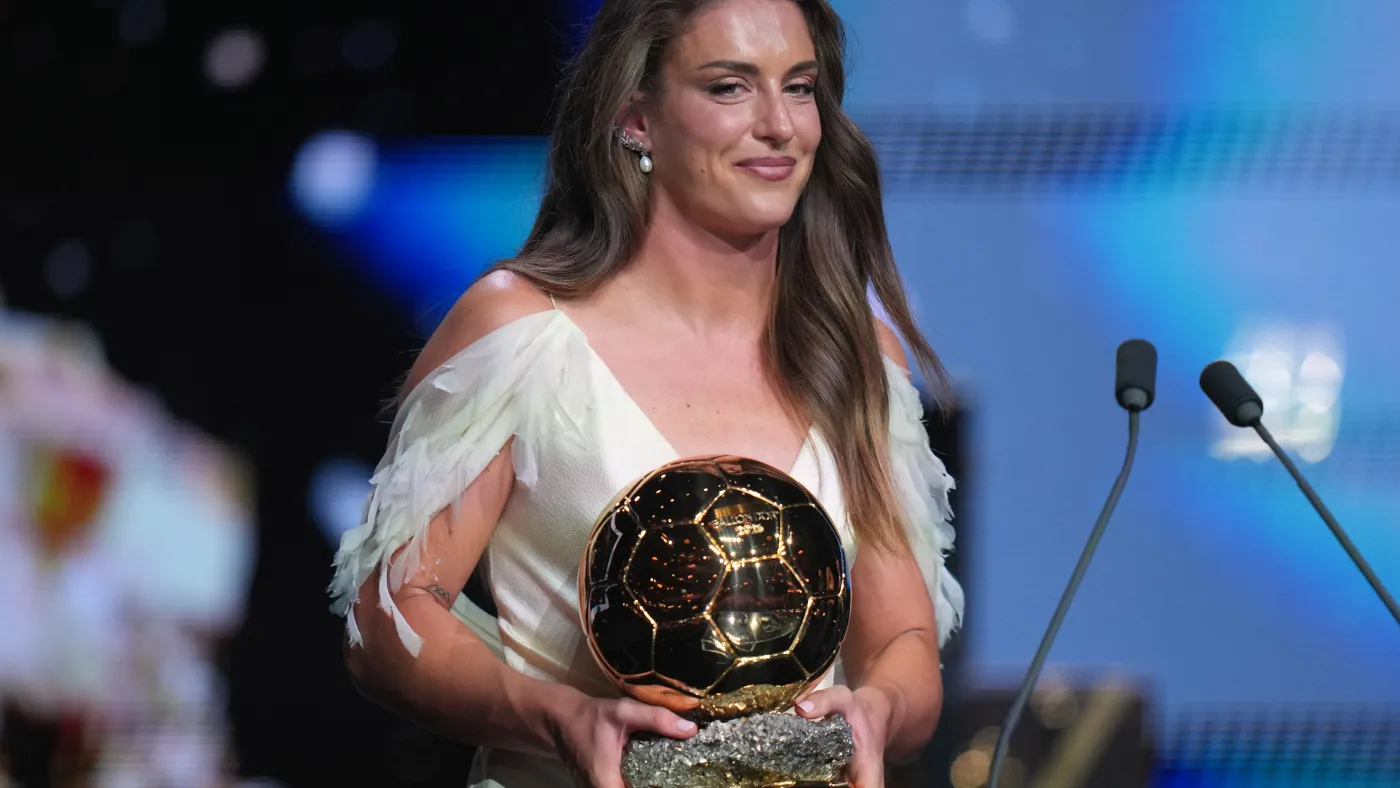
The longest wait in modern English football history just ended
Harry Kane did not simply win a trophy on Monday night. He interrupted a 25-year silence that has been quietly shaping how the football world talks about England.
The ceremony at the London Palladium brought the Ballon d’Or back to British soil for the first time — a deliberate nod to the tournament’s inaugural winner, Stanley Matthews, in 1956. That timing was no accident. It created a full-circle narrative: England birthed the award, and after decades of watching other nations collect it, England has its voice back in the global football conversation.
Kane, 33, scored 73 goals across club and country last season. He led Bayern Munich to the Bundesliga and German Cup double, including a hat trick in the cup final against Stuttgart. He also captained England to a third-place World Cup finish, scoring six tournament goals to surpass Gary Lineker as England’s all-time leading World Cup scorer. His lineup took down France 2-1 in the third-place playoff — a match that mattered less on paper than it did symbolically.
The last Englishman to lift the Ballon d’Or was Michael Owen in 2001. That was before the Premier League became the richest sports league on earth. Before streaming deals reshaped global distribution. Before England’s golden generation looked genuinely golden at Euro 2020 and then fell apart in a shootout. Kane’s win arrives at a moment when English football’s domestic dominance has never been clearer — and its individual excellence has never felt more deferred.
What the 25-year gap actually says
The Premiership of clubs does not equal the supremacy of individuals. That distinction matters. England’s clubs have flooded the transfer market with expensive forwards over the past two decades. The league generates more revenue than any other. Yet no English player has won the Ballon d’Or since Owen — a period that spans the entire Premier League era of global commercial expansion.
Germany won the men’s Ballon d’Or in 2020 when Robert Lewandowski took it. Poland took it the year before when Lewandowski’s Bayern colleague finished second. France has produced three winners in the past decade. Spain, too, with Modric and Bellingham both on shortlists this cycle. England’s absence from that list is not a failure of output. It is a failure of perceived narrative. England produces quantity of elite players. It has struggled to produce a single individual the football world agrees deserves the crown.
Kane’s case is different. He was Europe’s top scorer. He won a domestic double in a league increasingly recognized as one of the most competitive in the world. He took England to its best World Cup finish in 60 years. None of that is accidental. It is the product of a career built on consistency, resilience, and a willingness to leave home at 28 for a challenge that almost no English player would have accepted a decade ago.
The Premier League’s brand problem — and opportunity
Here is the uncomfortable truth the Premier League has avoided: winning the domestic title and delivering a Ballon d’Or winner are two different achievements. The league has excelled at the former. It has barely participated in the latter. English clubs have chased prestige by buying stars. They have rarely cultivated them.
Kane’s trajectory is the exception that proves the rule. He came through Tottenham’s academy. He fought through loan spells and early career setbacks. He did not arrive as a generational prospect destined for the top. He earned it. His acceptance speech acknowledged the long, undramatic climb — something the Premier League’s new-money ethos often obscures.
His move to Bayern was a risk that paid off. It also signals something about English football’s future: the very best players may now look elsewhere to validate their greatness. That is a double-edged sword. It elevates Kane individually but raises questions about whether the Premier League’s ecosystem can still produce Ballon d’Or candidates from within its own ranks.
The ceremony’s London location changes the calculus slightly. Hosting the event domestically puts the award’s prestige on English soil and creates a cultural moment that transcends sport. The streets around Oxford Circus filled with fans. People climbed light poles for a glimpse. This is not just a football story — it is a national story.
Putellas and the parallel reckoning
Alexia Putellas won her third Ballon d’Or, matching the record. The Spanish midfielder’s victory — after tearing her ACL, watching Aitana Bonmati sweep the award for three straight years, and rebuilding from scratch — mirrors Kane’s narrative in ways that extend beyond the pitch.
Both winners carry the weight of prolonged waiting. Both emerged from periods of doubt that could have ended their careers. Both returned to the top at an age when most forwards and midfielders are already thinking about retirement. Putellas, 32, described her return as a perfect story. Kane described his as built on resilience, determination, and self-belief.
The women’s game has been growing in global visibility faster than many expected. Putellas’s win, coming months after her move to London City Lionesses, adds another layer of cultural significance to an award that is increasingly about more than statistics.
What happens next for English football
Kane’s Ballon d’Or will be remembered as a moment of national vindication. It will also force a conversation that England has avoided for too long.
The Premier League’s global brand is unmatched. But unmatched does not mean unbeatable. Germany has been building its footballing identity around individual excellence and tactical innovation. England has been building around commercial power and squad depth. The two approaches are not mutually exclusive — but England needs to decide which one it wants to prioritize when the moment matters most.
Kane won at 33. The next generation of English players — Bellingham, Foden, Saka — are still developing. Whether any of them can sustain the kind of year that produces a Ballon d’Or win remains to be seen. Kane proved that an English player can reach the summit. The question now is whether he was the exception or the beginning.
Thomas Tuchel called Kane the leader England was lucky to have. That is generous. It may also be the point. England has spent 25 years waiting for someone to carry that weight publicly. Kane did not just win the award. He shouldered it.