Ronaldo's Exit Redefines Portugal's Football Era
Cristiano Ronaldo has retired from international football at 41, ending a 23-year run marked by records, trophies, and a final rupture with manager Jorge Jesus. The move reshapes Portuguese football and raises questions about longevity in modern sport.
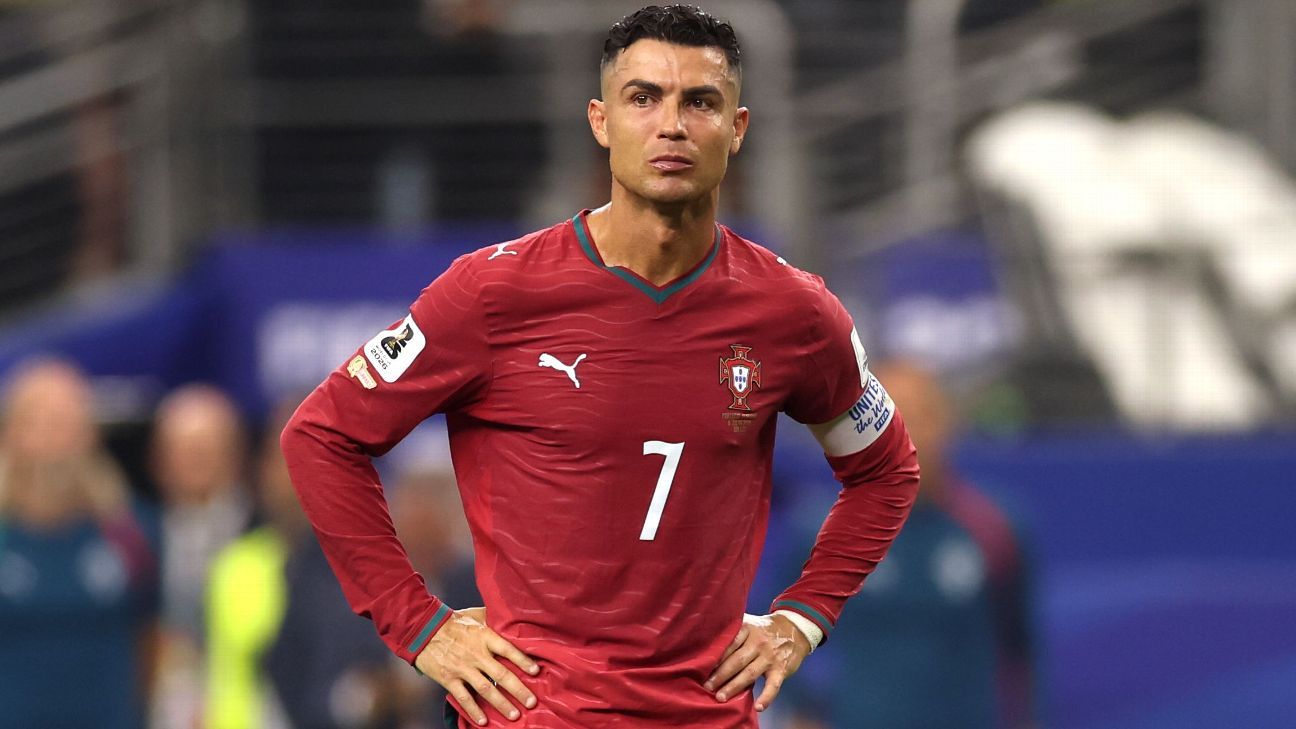
The Day the Shirt Changes Hands
Cristiano Ronaldo announced his retirement from international football on Thursday, bringing to a close 23 years that rewrote the record books and, in many ways, rewrote what Portuguese identity looks like on the global stage. He is 41. He has 146 goals in 234 appearances — the most by any man in men’s international history, by a margin that still feels almost indecent. He is leaving the national team on terms that will be debated for years: a rupture with coach Jorge Jesus over playing time, a 30-day suspension he served for walking out of the previous camp, and a final match in September 2024 in which he went 18 years without coming off the bench only to sit unused once more.
The gesture — handing back the number seven shirt — was carefully staged, posted as a video on Instagram. “To the Portuguese people, the day has come to hand back the number seven shirt of the national team that belongs to us all,” Ronaldo said. “I never felt it was exclusively mine.” The speech carried its usual mixture of vulnerability and gravitas. But the timing was the real story. Ronaldo announced his exit one day before Jesus was scheduled to name his squad for the upcoming Nations League fixtures against Denmark and Wales. He did not apologize to Jesus. He apologized to his teammates. The line was deliberate.
What the Exit Means for Portugal
Portugal enters a post-Ronaldo era with a paradox. The team has won the 2025 Nations League — its second title — with Ronaldo still in the squad. The 2016 European Championship triumph and the inaugural 2019 Nations League crown sit alongside that. But Ronaldo’s final appearance came in a 1-0 win over Wales in September 2024; his last squad call saw him listed among the substitutes and unused for a 2-1 victory at Norway in October. The data does not lie: his minutes were already being rationed. His departure is not a collapse. It is a managed transition that the federation has been quietly preparing for.
The numbers are the easy part. The harder question is what Portugal becomes now that the face of its golden generation is no longer wearing the armband. Ruben Dias, Bruno Fernandes, Bernardo Silva, and Raphinha form a core that can compete at the highest level without Ronaldo in the final third. But the psychological weight of carrying a nation — something Ronaldo embodied more completely than any player in Portuguese history — does not transfer to a spreadsheet. That is a vacuum Jesus will have to fill, or fail to fill.
The federation’s statement on Thursday was modelled in gratitude and restraint: “More than just an outstanding athlete, our captain was an inspiring leader, a model of dedication and the ultimate symbol of the spirit of our national team.” It also noted Ronaldo’s role in raising Portugal’s profile globally. That is not a throwaway line. Ronaldo has done more for the commercial and cultural visibility of Portuguese football than anyone who came before him. The question now is whether the next wave of players can sustain that momentum or whether they inherit a platform that was built on a single extraordinary individual.
The Longevity Argument
Ronaldo’s retirement from international duty at 41 forces a conversation that does not get enough airtime in football analysis: what does it mean when the longest-reigning star in the sport’s history decides the time has come? He continues at club level with Al Nassr in Saudi Arabia, where he is chasing his 1,000th career goal. He sits on 985. The math is tight. Whether he reaches that milestone remains uncertain — no one can say with confidence — but the pursuit itself is part of the narrative he is constructing.
The modern game is structured around youth recruitment, contract windows, and squad turnover. Players rarely extend their top-level careers beyond their mid-30s without facing structural pressure to make room. Ronaldo has defied that logic for over two decades, and his international retirement is not a defeat — it is a recalibration. He is stepping back from the national team while remaining active at club level, a path that few players in history have navigated with any success at this magnitude. The model he is now living may become more common: the aged superstar who retains club relevance while relinquishing international duty to younger players who need the exposure.
Messi played his final game for Argentina less than a month before Ronaldo’s announcement. Two players, two different trajectories, two eras closing simultaneously. The comparison is almost compulsory — Messi’s exit came after a World Cup win that completed his trophy cabinet at international level, while Ronaldo leaves with six World Cups played and no triumph at the tournament. The asymmetry matters less than the fact that both are choosing when to stop rather than being forced out by deterioration. That agency — the ability to define the terms of one’s own retirement — is itself a product of Ronaldo’s extraordinary longevity.
What Comes Next
The immediate consequence is a squad that Jesus must build without its most recognizable name. The Nations League matches against Denmark and Wales will be the first tests. The Europa League and domestic campaigns at Al Nassr remain Ronaldo’s focus. The Portuguese federation has promised a fitting tribute at a later date. Ronaldo himself framed the moment as a passing of the torch: “Portugal will always need young people who dream, players who never give up, new generations who believe it is possible to reach places no one has reached before.”
The sentiment is generous. The reality is messier. Ronaldo’s career has never been generous without an edge. His refusal to apologize to Jesus, his public acknowledgment of broken promises, the calculated timing of this announcement — all of it suggests a player who understands the optics of his exit as carefully as he once understood the optics of a winning goal. That is not cynicism. It is professionalism of a sort that transcends the pitch.
What Portugal loses in Ronaldo is quantifiable. What it gains by forcing a reckoning about identity beyond its greatest ever player is harder to measure but perhaps more important. A country that builds its footballing mythology around one man is a country that will always risk heartbreak when that man decides to walk away. The question now is whether Portuguese football can survive that moment — and whether Ronaldo’s example, however complicated, will inspire the next generation to believe they can reach places he already has.