Hawaii's Second Storm in Days Exposes a Fracturing Resilience Model
Tropical Storm Moke arrives at Hawaii just days after Hurricane Lala, compounding damage already estimated at $47.6 million. The back-to-back hits raise urgent questions about insurance viability, infrastructure fatigue, and what repeated Pacific storm clustering means for island preparedness.
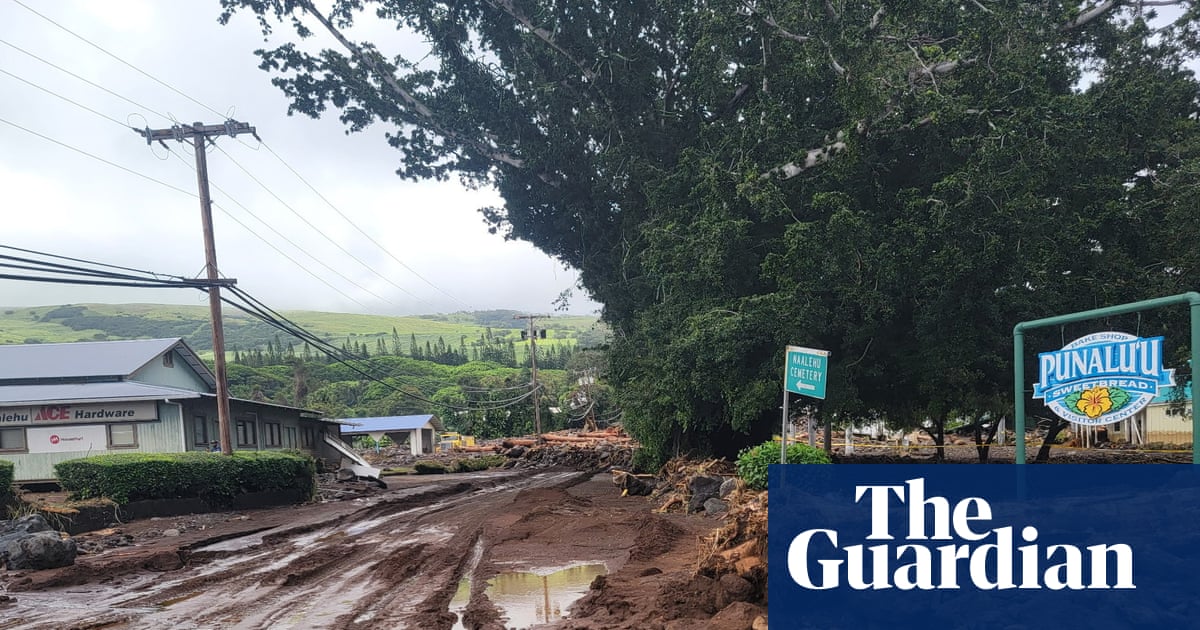
A Territory Pushed Past Its Reset Button
Hawaii does not have the luxury of recovery before the next storm arrives.
Tropical Storm Moke is closing on the Big Island this weekend, tracing a path just south of the state that will still dump five to ten inches of rain on windward and southeastern slopes, with isolated pockets seeing up to fifteen inches. That comes on top of Hurricane Lala, which struck just days earlier, leaving at least $43 million in infrastructure damage and another $4.6 million in residential harm. Governor Josh Green did not soften the arithmetic on Saturday: there will be a lot more to account for, and recovery will take time.
The timing is the story. Two system hits in rapid succession is not a routine seasonal occurrence for Hawaii — it is a compounding event that exposes how brittle the island’s readiness has become under cumulative stress. The ground has not dried. The roads have not been fully cleared. The insurance ledgers have not settled. And the atmosphere is already sending another system toward the same coordinates.
What Moke Changes on the Ground
National Weather Service meteorologist Casey Oswant described Moke’s impact as likely “a little bit more limited than what we saw with Lala.” That is a relative assessment, not a comfort. Five to ten inches of rain falling on already saturated soil produces a very different hydrological outcome than the same rainfall on dry ground. Flash flooding and mudslides are the explicit warnings, especially across steep terrain where Lala already loosened slopes and stripped vegetation.
East Maui could see up to four inches. The rest of the chain, one to two. The National Hurricane Center flagged dangerous rip currents and life-threatening flooding alongside the mudslide risk. These are second-order hazards that do not discriminate between storm number one and storm number two — they accumulate.
Green’s advice to residents was blunt: restock food, medicine, and essentials. No coastal watches or warnings were in effect early Saturday, but the absence of an official watch does not mean the absence of risk. Saturated ground does not announce itself with a headline.
The Insurance Question No One Is Asking Yet
The visible damage is measured in millions. The invisible damage is measured in policy renewals.
Back-to-back storm events of this nature create a compound trigger that insurance markets treat differently than sequential independent events. When two storms strike the same geographic area within days, reinsurers begin to model the territory not as a collection of separate peril events but as a single prolonged exposure window. That changes how capital is priced, how deductibles are structured, and whether coverage remains available at all in the long run.
Hawaii’s insurance landscape has been under strain for years — rising wildfire risk in Maui, increasing flood exposure statewide, and a national retreat by some carriers from Pacific markets. A dual-hit scenario like Lala plus Moke accelerates the pressure. Claims will pile up before adjusters finish the first round of inspections. Policyholders who believed they were recovering from Lala will find themselves filing a second claim in the same zip code.
This is not yet a crisis of coverage withdrawal, but it is a stress test. The next three months — claims processing, reinsurance reset, premium renewal cycles — will reveal whether the market absorbs the shock or begins to price Hawaii as a progressively higher-risk jurisdiction.
Tourism Economics Under Repeat Shock
Hawaii’s tourism engine runs on predictability. Visitors book months ahead against forecasts that assume seasonal norms. A category-one hurricane followed by a tropical storm in the same fortnight shatters that assumption at the point of sale.
The Big Island bore the brunt of both systems. Windward and southeastern communities — areas that include resort-adjacent corridors and critical supply routes — face continued disruption. Hotel occupancy may not collapse from a tropical storm alone, but the narrative does. Travel advisories, flight delays, and images of saturated roads and mudslide threats travel faster than any marketing campaign can counter.
The economic math is straightforward: each successive storm during recovery season reduces the window for the high-value winter travel stretch to catch hold. If Moke causes even limited additional infrastructure damage, repair crews are pulled away from Lala-related work, extending closures and degrading visitor experience at exactly the moment the industry needs restoration to show.
The Pacific Clustering Pattern
What makes this moment worth watching extends beyond Hawaii’s immediate borders. The Pacific basin has been producing storm clusters with increasing frequency — systems that form in proximity, track in parallel, or follow sequentially through the same regions. Climate scientists have long projected that a warming ocean supplies more energy to developing systems, but clustering is a different phenomenon than intensity. It is about timing and geometry.
Hawaii sits in a corridor that historically sees one significant tropical encounter per season, sometimes fewer. Two within days is an outlier event, but outliers are how climate risk becomes visible. The question is whether this is a singular coincidence or an early signal of a new baseline.
Governor Green’s news conference focused on preparedness and recovery resources. It should have also addressed the structural question: when storms stop giving territory time to recover, resilience planning has to shift from response to redundancy. That means hardened infrastructure, diversified supply chains, insurance market stability, and a tourism economy that can absorb sequential shocks without collapsing into cancellation spirals.
Moke may pass with lighter damage than Lala. But the combined toll — financial, ecological, and institutional — will be greater than either storm alone. Hawaii is learning, again, that climate risk does not arrive on a schedule.