Hormuz Hit-and-Run: The US-Iran Truth War Over Tanker Explosions
Iran and the US are locked in a competing narrative over an oil tanker explosion in the Strait of Hormuz — a dispute that could signal a shift from proxy warfare to direct kinetic friction in the world's most critical chokepoint.
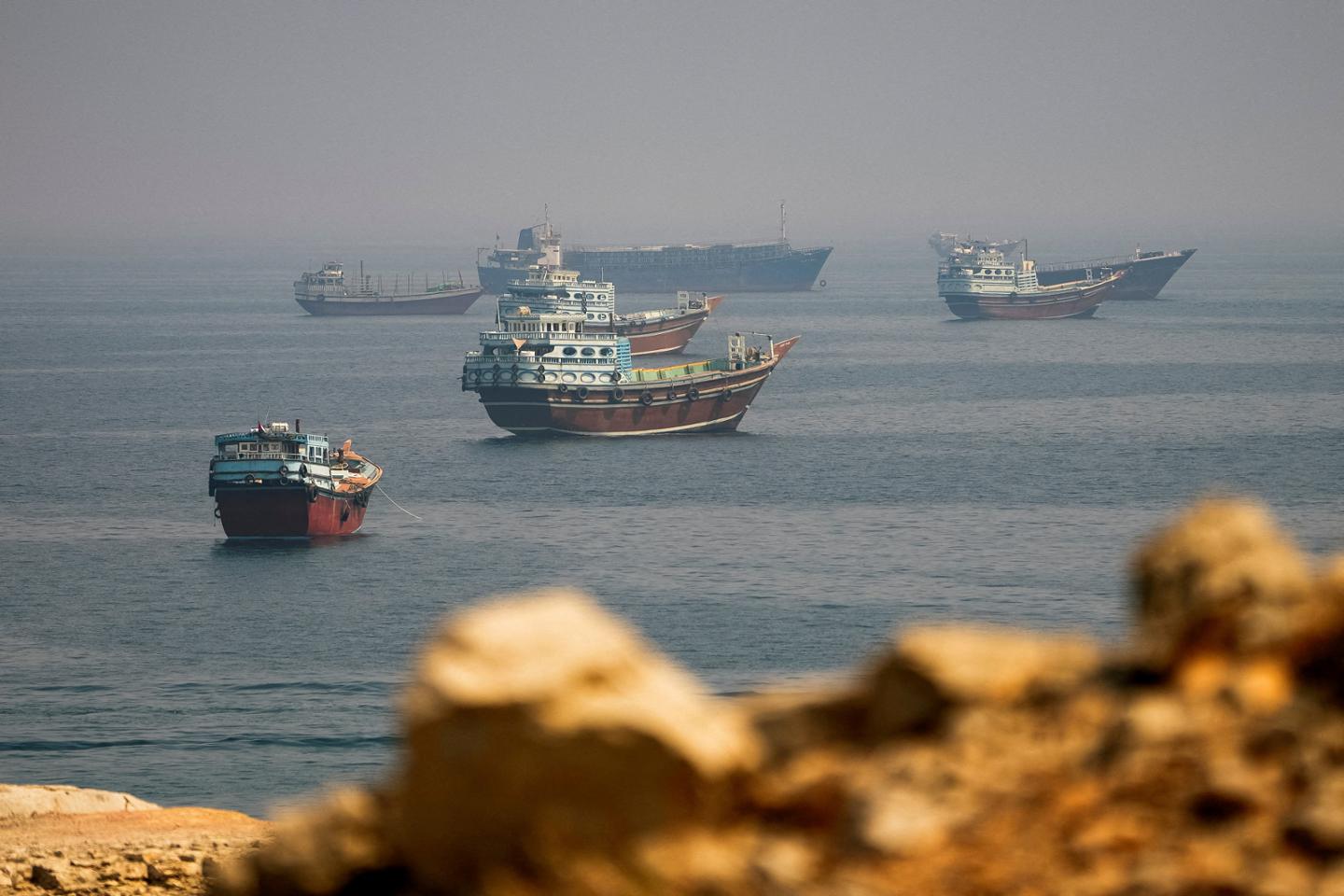
The Tanker That Changed the Equation
Two stories emerged from the Strait of Hormuz on September 14, and neither one was true — or at least, not the one both sides agreed on. Iran said a Panamanian-flagged ultra-large crude carrier called the El Gaia struck a mine after crossing into a restricted zone it had declared its own. The United States said the same ship had already been crippled by an Iranian missile strike days earlier, then finished off by a drone attack near the Omani coast. Whichever version held up would determine whether the world’s most vital oil chokepoint was sliding toward open confrontation or staying just shy of it.
The real casualty may have been the truth itself. That is what makes this moment sharper than previous flare-ups. When ships burn in the Hormuz, the question has always been who lit the match. This time, Washington and Tehran are openly contradicting each other on the record — and both sides are using the incident to redraw the rules of engagement before anyone has checked the damage.
How the Narrative War Unfolded
The El Gaia, a 28,799-ton vessel tracked through Equasis as Panama-flagged, was the latest target in a string of attacks that began escalating through mid-September. Iran’s Islamic Revolutionary Guard Corps naval command released a statement on the 14th claiming the tanker had hit a mine after ignoring repeated warnings about transiting a so-called restricted area. The IRGC framed the Hormuz as under complete Iranian surveillance and control, effectively announcing a blockade without formally declaring one.
CENTCOM pushed back within hours. The US Central Command said the El Gaia had already been rendered non-operational by an Iranian missile strike the previous month, and that a separate drone attack near Oman had completed the damage. Washington called the Iranian mine claim “yet another lie and intimidation attempt” designed to deter commercial shipping. It also stated that US forces had already cleared mines from the strait — a direct rebuttal to Tehran’s narrative.
What is notable here is not just the contradiction but the cadence. In prior incidents, accusations flew through intermediaries or were buried in diplomatic cables. Now both sides are issuing simultaneous, public, mutually exclusive accounts within a single news cycle. That speed suggests a deliberate strategy: shape the international perception before fact-finding missions, satellite imagery, or independent investigations can establish what actually happened.
Traffic Plummeting as Fear Takes Over
The numbers tell a steeper story than the rhetoric. Kpler data showed only four cargo ships passing through the Hormuz on September 14, down from ten the day before. The drop came even as both governments insisted the strait remained navigable — a contradiction that matters more than it sounds. Shipowners do not need a formal blockade to reroute; they need enough uncertainty to make the risk premium unaffordable.
The UK Maritime Trade Operations agency reported on the 13th that another vessel had been struck by an unidentified weapon in the same waters. India’s foreign ministry confirmed that 13 of 14 Indian crew members aboard the El Gaia were rescued, with one still missing. Neither agency offered a causal determination. Even neutral observers are withholding judgment, which in a crisis environment functions as tacit confirmation that the picture is deliberately obscured.
Iran also claimed on the 14th that two fishing boats near the Kangan port were struck by enemy drones, killing or displacing several fishermen, and that it had shot down an advanced MQ-1 drone overhead. Whether that claim is verified or not, it extends the theater of violence beyond commercial shipping into the daily lives of coastal communities — a pattern that has appeared in prior escalations but now feels more systematic.
The Price Signal
Markets do not wait for inquiries. Brent crude closed at $105.68 a barrel on September 14, up 1 percent, and approached $110 intraday. West Texas Intermediate reached $101.39, nearly touching $105. Both benchmarks were pricing in the possibility that the Hormuz could tighten further — and that possibility has weight because roughly 20 to 21 million barrels of oil per day flow through the strait, according to IEA estimates.
The price spike is modest compared with the 1990 Gulf War surge or the 2019 Abqaiq attack that knocked nearly half of Saudi output offline. But it is sustained and directional. The market is not reacting to a single incident; it is reacting to the erosion of confidence that the Hormuz will remain transparent and passable. When that confidence fractures, the insurance premiums, diversion costs, and route adjustments compound faster than physical supply ever could.
A Shift in the Type of War
What distinguishes this moment from earlier rounds of US-Iran proxy friction is the move toward direct kinetic contact. In the past, attacks on shipping were typically attributed to non-state actors or carried out through covert means that preserved plausible deniability. The Houthi campaign in the Red Sea, for instance, was explicitly linked to Tehran but operated through a regional partner. The Hormuz confrontations, by contrast, involve US military forces and Iranian Revolutionary Guard vessels operating in the same waters, trading public accusations in real time.
Iran’s insistence that the Hormuz is under its “complete control” while simultaneously engaging in a information war with Washington suggests a new posture: contesting the strait openly rather than through proxies, and forcing the issue into the daylight where every claim and counterclaim becomes part of the battle. That is a different kind of escalation. It is not about winning a war of attrition in Yemen or Syria. It is about controlling the geography that controls the global energy system.
Negotiations Frozen, but Not Dead
Donald Trump repeated his assertion that Iran wants a deal, a framing that Iran’s Mohsen Rezaei, secretary general of the Supreme National Security Council, dismissed outright. Rezaei said the dynamics around oil and the strait had already changed, and that no negotiations would occur until Iran’s conditions were met. The phrasing is deliberate: “conditions” plural, suggesting a checklist rather than a single grievance.
That list almost certainly includes sanctions relief and guarantees against further military action, but the exact terms remain unclear. What is clear is that Iran is using the Hormuz crisis as leverage to reset the terms of any future agreement — turning a maritime incident into a negotiating proposition. Whether that strategy strengthens Tehran’s hand or accelerates a miscalculation depends on how Washington responds, and whether the next ship hit is commercial or military.
What Happens Next
Three outcomes are plausible in the near term. The first is de-escalation through ambiguity: both sides accept that the truth is contested, return to shadow competition, and allow the incident to fade as markets absorb the shock. This is the pattern of 2019–2020, when tit-for-tat strikes produced headlines but not structural change.
The second is a controlled escalation: Iran tests the strait with additional incidents targeting specific nationalities or vessel types, forcing the US to respond proportionally while keeping the conflict below the threshold of full military engagement. This path risks an accidental collision between US and IRGC assets, as the waters are too narrow and the tension too high for safe maneuvering.
The third, and least likely but most consequential, is a major incident that crosses the threshold — a ship sunk with significant loss of life, a US vessel hit, or an Iranian strike on Omani or UAE infrastructure that drags regional allies into the fight. Each prior escalation cycle has ended with an event that everyone said would not happen, followed by a period of recalibration that favored the side better prepared for continuity disruption.
For now, the Hormuz remains open but contested. The El Gaia is being towed. The mine claims and missile claims sit side by side without resolution. And the price of oil carries the weight of uncertainty — which is exactly what both sides seem to want right now.
The question is whether uncertainty is a strategy or a symptom of one.