Hormuz Is No Longer the Only Chokepoint. That Changes Everything.
Saudi Arabia's East-West Pipeline is down and Houthi forces control more of the Red Sea coast. Two simultaneous disruptions to the world's most critical shipping lanes are reshaping tanker economics and setting up a sharper price shock for Asia.
The map has shifted under global oil
The Strait of Hormuz has long been treated as the single most important chokepoint in energy markets — roughly 21 million barrels per day of crude and refined products pass through it on a normal week. The US naval blockade reinstated on July 14 has effectively ended Iranian crude exports through that corridor. Kpler, Vortexa, and TankerTrackers.com confirm zero successful Iranian cargoes have crossed since. Commercial vessel transits through Hormuz have dropped to single digits in recent readings.
That alone would be a major disruption. But the wider picture is worse than a single-strait problem, and it is getting worse faster than most market commentary has acknowledged.
Saudi Arabia’s bypass is broken
A drone attack last week badly damaged Saudi Arabia’s East-West Pipeline, the critical land-based route that carries crude from the Eastern Province to the Red Sea terminal at Yanbu. Repairs could leave the pipeline largely out of service for three to five weeks, according to the source reporting. The pipeline had been moving between 2.6 million and 4 million barrels per day in recent weeks — a meaningful volume that gave refiners and traders an alternative to Hormuz-dependent shipments.
When that line goes down, the crude that would have flowed west now has to find another path. That means more tanker demand through Hormuz itself, more exposure to Houthi attacks in the Red Sea, or longer routing around Africa. Each option raises costs.
The Houthis are consolidating around Bab el-Mandeb
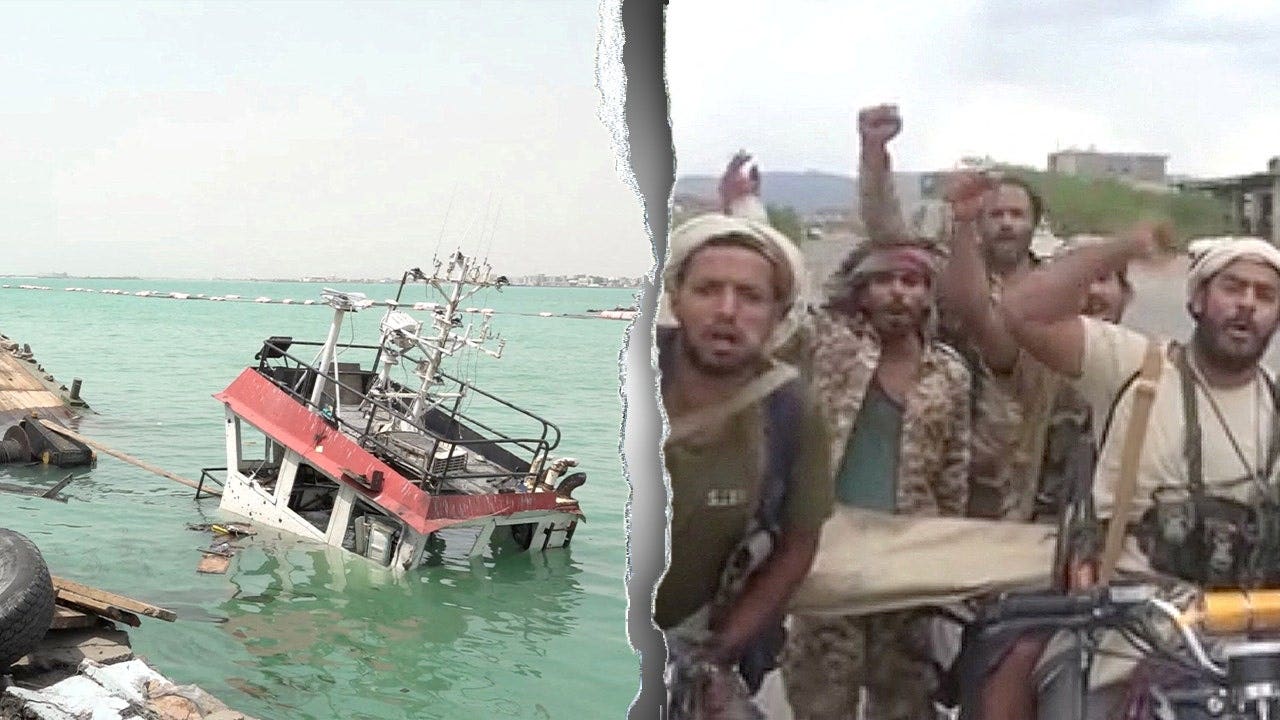
Meanwhile, Iran-backed Houthi rebels have seized additional territory and strategic islands around the Bab el-Mandeb Strait — Mayun Island, the port city of Mocha, and the Greater and Lesser Hanish islands. These moves expand Houthi reach around one of the world’s most important shipping corridors, the waterway that connects the Red Sea to the Gulf of Aden and the Indian Ocean.
The Houthis have not attempted a total closure of the strait. They continue to allow many vessels to pass. That restraint is deliberate: a full blockade would invite a far more aggressive military response and risk drawing Iran into a wider conflict it may not want. But the partial pressure is enough to raise insurance premiums, slow transits, and deter some shippers entirely.
Who loses first
The asymmetry in exposure is stark. Japan, South Korea, and India import the vast majority of their crude through Hormuz and the Red Sea. A dual disruption across both corridors compresses their options dramatically. The US, by contrast, is a net exporter of refined products and has far more diversified supply routes. That is one reason American diesel prices have already hit a record national average of $6.23 a gallon while Brent crude climbed toward $110 a barrel — the shock is real but unevenly distributed.
Refiners in Asia that depend on Middle Eastern crude for their feedstock face the sharpest margin squeeze. They cannot easily substitute suppliers on short notice, and the tanker fleet available to move alternative volumes is already stretched. Spot rates forVLCCs and Suezmax tankers trading between the Persian Gulf and East Asia are likely to spike further as the East-West Pipeline remains offline and Houthi activity constrains Red Sea routing.
The tanker economics are rewriting themselves
Here is what the source material makes clear but does not always state plainly: the traditional model of crisis routing — divert Red Sea traffic around Cape of Good Hope when needed — is losing its redundancy value. When both major passages are simultaneously degraded, there is no clean fallback.
Tanker operators are already pricing in extended layups, higher war-risk premiums, and longer voyage distances. The cost of moving a barrel from the Gulf to Asia has risen materially. That cost does not stay trapped in shipping lines’ P&L statements. It flows through to refining margins, then to fuel prices, then to consumer pumps and to the cost of everything shipped by sea.
The second-order effects are already visible. US diesel at $6.23 a gallon is a threshold number. Groceries, Amazon packages, and new homes are all more expensive for the same reason — energy is embedded in every link of their supply chains.
Iran’s leverage is fracturing
Arash Azizi, an Iran expert quoted in the reporting, noted that Tehran has effectively recognized its ability to dominate the Strait of Hormuz is weaker than it once claimed. The regime encouraged and materially supports the Houthis, but does not exercise full operational control. The Houthi-Saudi conflict has dynamics of its own.
This matters because it means the pressure on Bab el-Mandeb is not reliably controllable by Tehran. Iran wants to raise the cost of holding out for its adversaries, but a broader regional conflict also makes it harder to achieve its overriding objective: preserving the Islamic Republic and beginning postwar reconstruction. The strategy is a double-edged sword, and the blade is cutting both ways.
The question is no longer whether Iran is hurting
It is whether the pain is translating into concessions. Miad Maleki of the Foundation for Defense of Democracies said there are indications the combined pressure of sanctions, the naval blockade, and diplomatic isolation is working. Iran’s crude and condensate loadings fell to roughly 220,000 to 255,000 barrels per day in August, down from about 740,000 in July and roughly 2 million in March. The regime can cushion financial blows by printing currency and paying salaries. It cannot print gasoline.
Azizi suggested Iran may already be prepared to move and that its negotiating position has softened from earlier in the conflict. The regime’s principal red line is its own survival. Some Iranian officials may still believe continued pressure on global energy markets could improve Tehran’s hand, particularly ahead of US midterm elections. But the imbalance in economic pain remains stark: Iran is selling no oil, while daily American life is largely uninterrupted.
What happens next
If the East-West Pipeline stays offline for the upper end of the repair window — five weeks — the market will absorb the shock but at a higher price level. If Houthi control around Bab el-Mandeb tightens further, the pressure compounds. The most likely near-term outcome is a sustained elevation in Brent and refined-product spreads, with Asian refiners absorbing the steepest cost increases.
The alternative — a wider regional war that fully closes one or both chokepoints — would push Brent well above $110 and trigger a much deeper shock. Neither Washington nor Tehran appears to want that outcome. But the space between controlled disruption and full escalation is where the next price discovery will happen, and it is narrower than it was before the pipeline was hit.