Hormuz Opens, Iran Stares at Zero Oil Exports
CENTCOM confirms complete mine clearance in the Strait of Hormuz, reopening a vital artery for 750 million barrels of oil. But the same operation has left Iran's own crude exports at zero — a stark asymmetry in the escalating naval standoff.
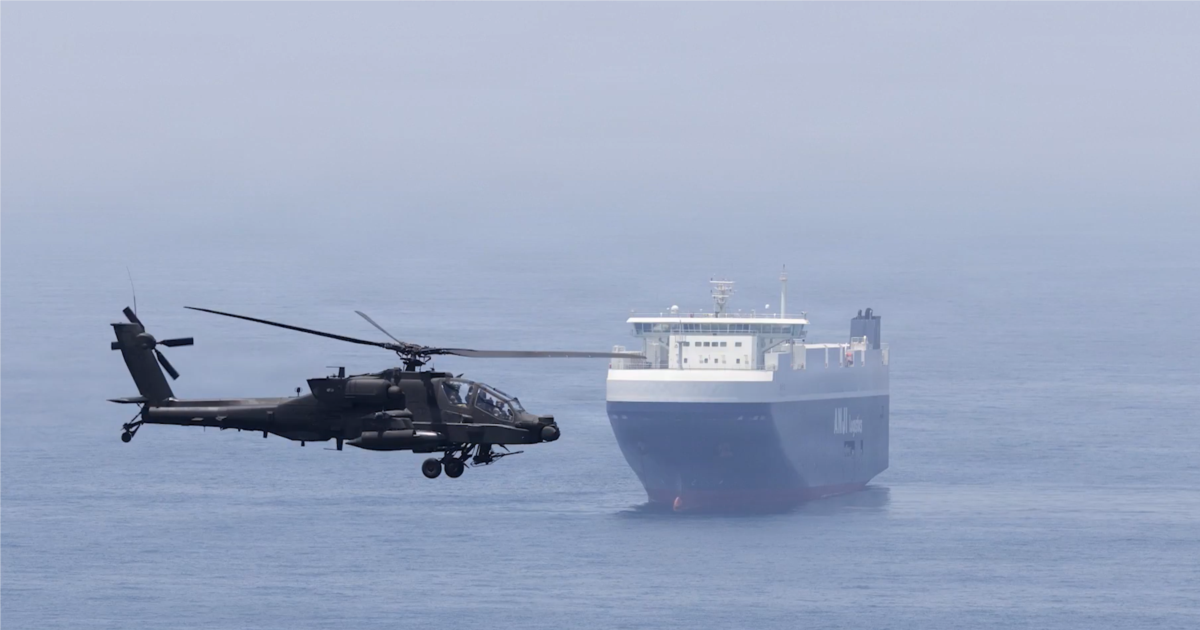
The Strait Is Open. Iran Is Locked Out.
The Strait of Hormuz, the narrow chokepoint through which roughly 20 percent of global oil consumption passes, is officially free of Iranian mines. On August 27, CENTCOM commander Admiral Brad Cooper held a video briefing and announced that every mine laid by the Islamic Revolutionary Guard Corps across the international traffic separation scheme had been neutralized. The lane is open. For the first time in months, the world has an unambiguous signal that the waterway is safe for commercial shipping.
But the more interesting story isn’t the mines — it’s the math behind what their removal changed.
750 Million Barrels, One Side Only
According to Cooper’s briefing, around 1,500 commercial vessels transited the Hormuz corridor over the preceding months under organized US escort. Those ships carried approximately 750 million barrels of oil toward global markets. That is not a rounding error. It is enough crude to fill roughly 47 supertankers, a volume that could power the daily consumption of major consuming nations for an extended stretch.
Simultaneously, Cooper confirmed what analysts have suspected but rarely seen so cleanly stated on the record: Iranian oil exports have been completely blocked. Zero barrels. The same US force structure that secured the lane for the world also sealed the Iranian coast off from its own customers.
This is a dual-channel operation with perfectly asymmetric results. One side sees its oil flow. The other sees nothing. That is not incidental — it is the operational design.
Why the Mines Mattered More Than They Appeared
Iranian naval mining is not a new tactic, but deploying them inside the Traffic Separation Scheme — the internationally recognized shipping lanes — was a deliberate escalation. Mines do not discriminate. A minefield does not care whether the ship passing over it carries American, European, or Japanese fuel. By seeding the TSS, Iran was making a calculated bet that the economic pain of disrupted shipping would force downstream pressure on the United States to stand down.
The strategy assumes two things: first, that commercial shippers will simply stop using the strait when mines appear, and second, that the resulting supply shock will be so sharp that major economies will prioritize de-escalation over confronting Iran. Both assumptions are now under stress.
The US response was to treat the strait not as a problem to be avoided but as a mission to be solved — with naval divers, SEAL teams, and joint air, land, sea, and marine assets committed to clearing and holding the corridor. That decision shifted the risk calculus. Instead of Iran weaponizing uncertainty, the US weaponized certainty. The lane is now a monitored, secured, and reopened artery.
The Insurance Math Behind the Crisis
What changed most dramatically during the mine campaign was not just physical shipping volumes but the financial architecture surrounding them. War-risk insurance premiums on vessels transiting the strait spiked to levels not seen since the 2019 oil facility attacks on Abqaiq and Khurais. Some carriers simply refused to transit at any price, rerouting around the Cape of Good Hope and adding weeks to delivery timelines. That rerouting itself became a secondary supply constraint — tanker availability tightened globally as the longer routes absorbed vessels that normally would have plied the shorter Hormuz corridor.
Now that the strait is cleared, those premiums are expected to fall, but not to pre-crisis levels. Insurers will price in the residual risk that Iran can re-mine the corridor on short notice. The question for charterers is whether to pay a higher ongoing premium for faster transit or to accept the longer lead times of alternative routes.
Who Wins and Who Loses
The winners are transparent: global oil markets, which have been operating under an ongoing threat premium since the mining campaign began. Shipping insurers, which priced in extraordinary war-risk surcharges. And allied consumers — particularly in Asia, where Japan, South Korea, and China depend on Hormuz-bound crude — who can now plan around a predictable transit window rather than a daily gamble.
The loser is Iran, and it is not subtle. The country sits on the world’s fourth-largest proven oil reserves and one of its largest natural gas fields. Yet its crude exports are at zero. That means revenue from oil — historically a significant portion of state budgets and a key funding stream for regional proxy networks — has effectively dried up. The Iranian government faces a choice: de-escalate and negotiate a path back to market access, or double down on asymmetric naval tactics that have already failed to close the strait.
There is also a quiet winner in the logistics chain. The 750 million barrels that moved through the strait under US escort demonstrate that the corridor can function at scale when protected. That changes how insurers, charterers, and trading houses model the Hormuz risk premium going forward. It may not return to pre-crisis levels overnight, but the worst-case scenario has been credibly rebutted.
Second-Order Effects Across the Region
The consequences of this asymmetric outcome extend well beyond the immediate oil trade. Iran’s economic isolation through Hormuz is likely to trigger internal pressures that ripple across its proxy ecosystem. Hezbollah in Lebanon, the Houthis in Yemen, and various militias in Iraq and Syria have all depended on Iranian financial transfers funded by oil revenue. When that funding dries up, the operational capacity of these groups degrades — a development that Washington and its allies view strategically favorable but one that could produce unpredictable fragmentation if Iranian leadership decides to redirect resources toward domestic stabilization.
Meanwhile, the US naval presence that enabled the clearance operation is now permanently more visible in the Gulf. That visibility is a deterrent, but it is also a target. Every vessel patrolling the corridor is a potential asset for Iranian attack drones or fast-attack craft. The cost of sustained presence will accumulate, and political will at home may eventually fray under the weight of ongoing commitments.
What Happens Next
The immediate question is durability. Mine clearance is not a one-time event. Iran has the stockpiles and the boats to lay new fields quickly. CENTCOM’s posture in the Gulf will determine whether the strait remains open or reverts to a toggle the moment US ships pull back.
Cooper’s framing — that the US will continue to guard the passage for global economic stability — signals a longer-term commitment than a simple reassurance. But sustaining that posture requires persistent naval presence, which carries its own political costs at home and escalation risks abroad.
For markets, the reopening removes a near-term supply risk that has been priced into crude throughout the conflict. The question is whether that relief is temporary or structural. If Iran returns to mining, even at a smaller scale, the premium will rush back in within hours. If the US commitment holds, Hormuz settles into a more stable risk profile — and Iranian isolation hardens.
The tighter the US holds the lane open for everyone else, the tighter the noose around Iran’s own exports. That paradox is the defining feature of this crisis: securing the global flow of energy has become the most effective weapon against a single producer’s ability to sell it. The strait is open. Iran is not. For how long — on both sides — remains the question no one in the Gulf can yet answer.