How a Tariff Threat Is Reshaping Seoul's Chip Strategy
Washington is using targeted semiconductor tariffs as a blunt instrument to force Samsung and SK Hynix to build fabs on American soil — and Seoul may need to trade troop deployments for investment concessions. The implications go far beyond bilateral relations.
The Threat Is Real, and It’s Personal
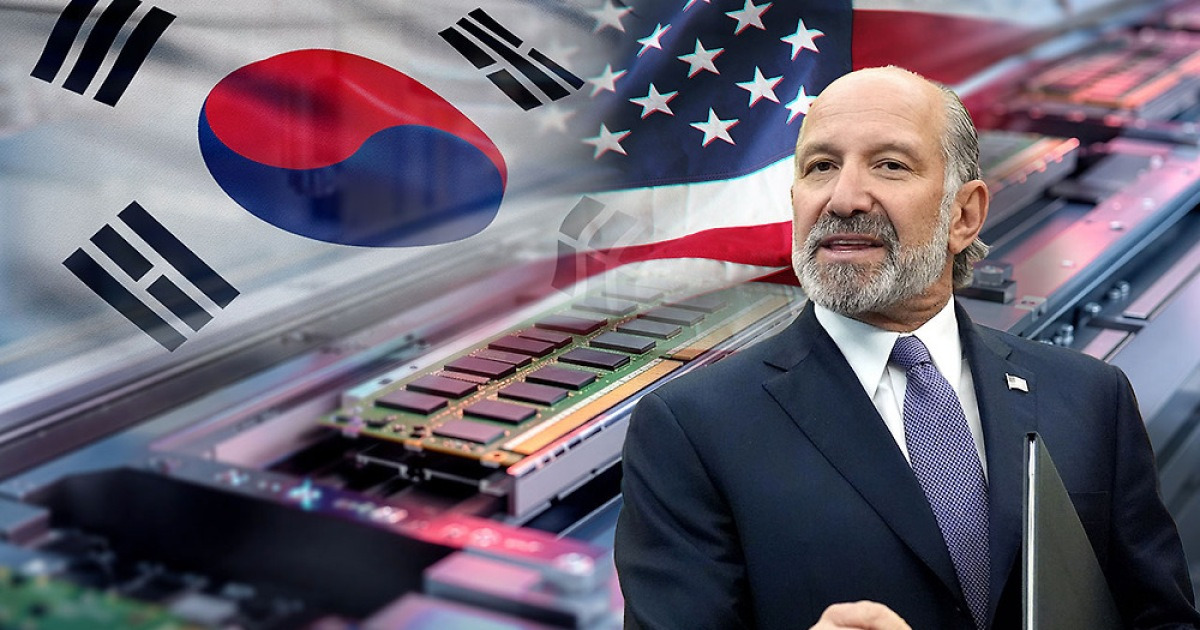
American Commerce Secretary Lutnick didn’t mince words last week. He told journalists that targeted semiconductor tariffs are coming — aimed squarely at Samsung and SK Hynix. The message was blunt: if you don’t build fabs on US soil, you pay a premium to access the world’s largest chip market.
This isn’t a vague policy signal. Lutnick confirmed the targeting directly when asked whether Samsung and SK Hynix were in his crosshairs. His answer: they will build factories there, and they must.
Two months earlier, in July, he had stood at a Micron construction site and said he wanted to bring Samsung and SK Hynix over and make them build too. Nothing happened. So he escalated.
What makes this moment distinct is the escalation pattern. Trump-era negotiation operates on a simple rhythm — strike first, then offer relief. Kim Gwang-seok of the Korea Economic Research Institute put it plainly: the strategy is to hit with the whip before offering the carrot. The question for Seoul is whether accepting a troop deployment request to the Hormuz Strait could become the carrot Trump trades back.
Why Samsung and SK Hynix Specifically
The tariffs aren’t generic. They’re aimed at the two companies that dominate the high-memory-chip space Samsung in DRAM and SK Hynix in both DRAM and HBM memory. These are the chips powering AI data centers, and the ones where the US has no domestic manufacturing presence at all.
Micron builds in Texas. Intel is rebuilding its fabs. But for high-bandwidth memory and advanced DRAM — the products fueling the current AI buildout — Samsung and SK Hynix are essentially irreplaceable in the near term. That gives Washington leverage, but it also means tariffs on these products would be self-harming. The US chip design industry depends on HBM from SK Hynix. Every AI cluster in America runs on Korean memory.
So the tariff threat sits in an awkward spot. It’s credible enough to pressure investment decisions, but blunt enough to damage the very supply chain the US wants to secure. That tension is where the real negotiation happens.
The Hormuz Connection
Here’s what English-language coverage has largely missed: the tariff pressure and the troop deployment demand are not separate issues. They’re threaded together in the same negotiation basket.
Seoul has been asked to contribute forces to the Strait of Hormuz — a request that has drawn resistance even from Japan, which has publicly said it cannot deploy. South Korea’s position is described by officials as leaving room for deployment within limits that don’t compromise its defensive posture. But the timing is revealing.
US officials are applying maximum pressure on two fronts simultaneously — trade and security — which suggests Washington is treating them as linked. If Seoul commits troops to Hormuz, it gains political capital to ask for tariff relief or investment flexibility. If it refuses, it faces both pressures escalating in tandem.
The Korea Economic Research Institute’s analysis captures the dynamic: Trump’s playbook rewards concession with relief. The calculation for Seoul is whether giving on Hormuz buys enough economic breathing room to make the fab investment less painful.
What Happens Next
The Korean government says it will announce its first major US investment project this month. Trade Minister Kim Jeong-gwan has been in the US negotiating directly. But the public tariff warning from Lutnick — coming while the minister was still on American soil — signals that the US is unwilling to wait for a quiet deal.
Several scenarios are plausible:
Seoul concedes on Hormuz and accelerates fab commitments. This would be the path of least friction. Seoul gains tariff relief, the US gets more Korean capital on American soil, and the alliance stays coordinated. Samsung and SK Hynix would still face massive capex decisions, but at least the political environment would be stable.
Seoul resists on both fronts. Tariffs land. Memory chip costs rise in the US. The AI industry — already grappling with supply constraints — faces a new shock. Washington reevaluates. This is the most disruptive outcome and the one most US industries would quietly oppose, even if public rhetoric stays hard.
A side deal emerges. Seoul announces a fab commitment without tying it to Hormuz. The US takes the win publicly. Both sides claim success. This is the most likely middle ground — but it requires Trump to accept a narrative where he got a result without explicitly trading one concession for another.
The Bigger Picture
This isn’t just about Samsung and SK Hynix. It’s about what happens when a major ally’s most competitive industries become leverage in a broader geopolitical negotiation.
The US has spent years building the CHIPS Act framework to onshore semiconductor production. Now it’s supplementing subsidies with sticks. Other allies — especially Japan and Taiwan — are watching closely. Japan has already been pressed on energy infrastructure (Trump’s claim about an Alaska pipeline, which Seoul denies exists, is a good example of the informational warfare component). Taiwan faces even more concentrated risk given TSMC’s singular position.
For South Korea, the challenge is structural. Its economy depends on semiconductor exports. Its security depends on the US alliance. Both are being weaponized in the same negotiation cycle. The optimal path isn’t obvious — and that uncertainty is exactly what makes this moment significant.
The next few weeks will tell whether Seoul treats the tariff threat as a standalone economic pressure or as part of a package deal where security cooperation buys industrial room to maneuver. Either way, the era of automatic alliance goodwill in trade negotiations is over.