How a Former Sheriff and War Photographer Will Guard Berkshire's Soul
Howard Buffett's appointment as Berkshire Hathaway chairman is less about capital allocation and more about institutional immortality. With Greg Abel already moving fast on deals, Howard's real job is keeping the Buffett way intact—or deciding when to let it go.
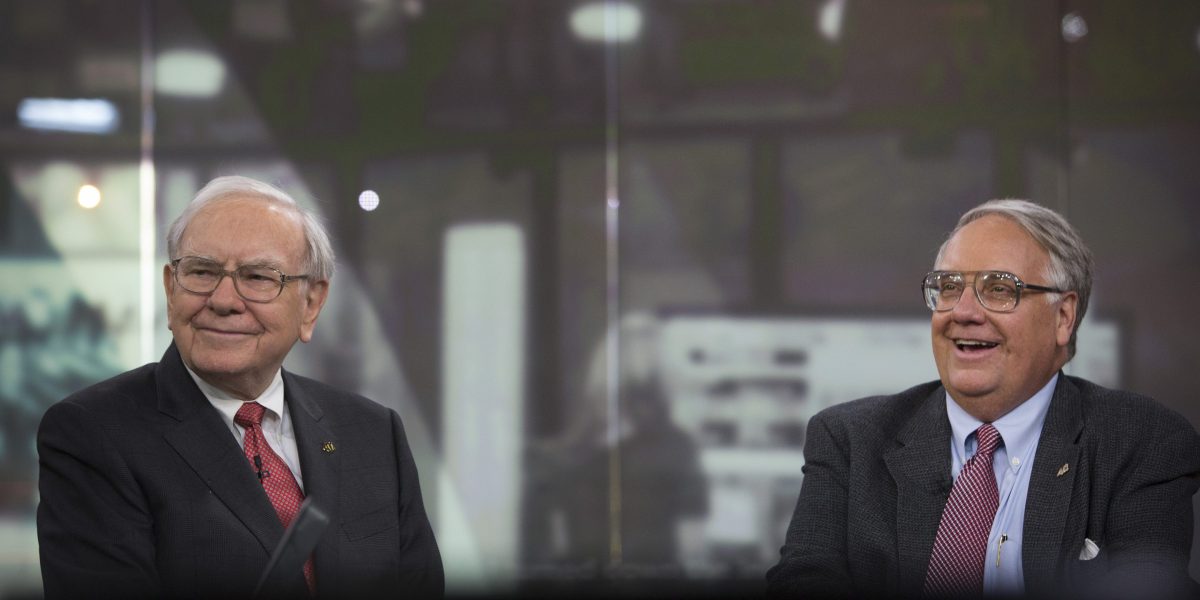
The Sheriff of Omaha
Howard Graham Buffett has spent his life operating far outside the rarified world of institutional investing. He farms thousands of acres in Illinois, Arizona, and South Africa. He was elected sheriff of a central Illinois county—a job that, yes, involves actual law enforcement—and still holds the title of undersheriff. He has photographed wars and wildlife across roughly 130 countries, producing books and earning diplomatic honors from Mexico, Colombia, and Rwanda.
And now he is chairman of Berkshire Hathaway, the trillion-dollar conglomerate once described by its founder as a “paradise for capitalists.”
The appointment, announced this week by Warren Buffett, has drawn attention for its sheer improbability. But the real story is not what Howard Buffett will do at Berkshire. It is what his father thinks will happen when he stops doing everything himself.
Culture as a Position
Buffett’s letter describing the transition was unusually poetic for a corporate governance document. He wrote that Greg Abel, the CEO, would run the company while Howard would guard its culture and values, calling them worth more than anything on the balance sheet. Buffett went further: he suggested shareholders should think of Howard as a policy they own and hope never to claim against.
Translation: we hope you never need him.
That framing is telling. In most corporate successions, the successor inherits both strategy and execution. At Berkshire, the two jobs are deliberately split. Abel, who took over as CEO in January, has already deployed $10 billion into Alphabet and acquired homebuilder Taylor Morrison for $6.8 billion—with a total enterprise value of $8.5 billion. He is moving quickly, making decisions that require deep familiarity with capital markets, deal structures, and sector dynamics. He is a professional operator.
Howard Buffett is not. He has spent his entire career outside finance. His expertise lies in conservation agriculture, conflict zones, and the informal governance of rural communities. That makes him the wrong person to allocate capital. It may make him the right person to protect the culture that makes capital allocation work at Berkshire in the first place.
The Buy-and-Hold Problem
Berkshire’s investment approach is idiosyncratic by design. The company buys businesses and holds them indefinitely, granting operating managers enormous autonomy. This model depends on a shared set of assumptions about patience, trust, and the primacy of the holding company’s reputation over short-term financial engineering. It is not a model that reproduces itself automatically.
Abel’s early activity suggests he will preserve the structure while aggressively modernizing the portfolio. That is likely the right instinct. A trillion-dollar compounder cannot keep growing at 15 percent a year by buying insurance float and mid-market manufacturers forever. It needs exposure to public equities, technology, and sectors with larger addressable markets.
But the shift carries institutional risk. Every major deal Abel cuts tests whether the new leadership treats Berkshire subsidiaries the way Buffett did—hands-off managers, long time horizons, zero tolerance for Wall Street theater. If Abel starts treating Berkshire like a conventional private equity firm, Howard Buffett’s presence as chairman is supposed to be the circuit breaker.
Whether that works in practice remains an open question. A chairman’s power is largely ceremonial unless the board structure gives him veto authority over specific categories of decisions. Buffett has not clarified what Howard can block. More importantly, Howard has never demonstrated an interest in corporate governance contests or boardroom maneuvering. He is a farmer, a sheriff, and a photographer—not a fighter.
The Philanthropy Question
Howard Buffett’s foundation has committed over $1 billion to regions where governance is weak or absent: Sudan, the Democratic Republic of Congo, and other conflict-affected areas. In a January conversation with his siblings Susie and Peter, he argued plainly that funding alone cannot solve poverty when the rule of law has collapsed.
“There’s a lot of things you can fund that will go nowhere,” he said. “If you’re not addressing the real issue of rule of law then you just can’t have success.”
That observation applies equally to Berkshire’s succession. Money has been allocated—the $145 billion Buffett fortune, roughly $500 million annually distributed across the children’s foundations. But distributing wealth does not guarantee that the institutional architecture Buffett built will survive the transition intact. The harder question is what systems, incentives, and norms will replace the personal authority that held them together.
Who Wins, Who Loses
Shareholders win if Howard Buffett’s role keeps Berkshire disciplined during a period of inevitable portfolio transformation. Abel needs someone who can publicly defend the cultural orthodoxy while he quietly dismantles parts of the portfolio Buffett built over decades.
Institutional investors may lose out on the kind of concentrated, undervalued positions Berkshire held under Buffett. Abel is clearly willing to pay market prices for exposure—Alphabet at $10 billion is not a fire sale. The discount Berkshire enjoyed as a buyer of last resort is eroding.
Howard Buffett himself occupies a curious position. He is arguably the most politically experienced member of the Buffett family—having held elected office and served in law enforcement—yet he has never sought to leverage Berkshire’s name for influence. That restraint is exactly why his father appointed him.
What Happens Next
Three years from now, the test will be visible. Will Berkshire still buy businesses without demanding immediate returns? Will its operating managers still enjoy unusual autonomy? Will the company still resist quarterly earnings pressure?
Abel will be the one making those calls. Howard Buffett will be the one defending the answers. The system Warren Buffett built depends on both men doing their jobs—and on Howard remaining the guardian his father designed him to be, not the operator his resume does not suggest he wants to become.