How Houthi Control of Red Sea Routes Is Rewriting Global Oil Risk
As the US and Israel target Iran, Houthi forces are securing alternate maritime corridors that could choke off a second major oil chokepoint. The world's energy supply chain just lost its redundancy.
When Two Chokepoints Become One Problem
The world’s oil supply has always relied on redundancy. If the Strait of Hormuz — through which roughly 21 million barrels per day flow — became unavailable, tankers could reroute around Africa or shift volumes through the Bab el-Mandeb strait and into the Red Sea. That balance is now breaking.
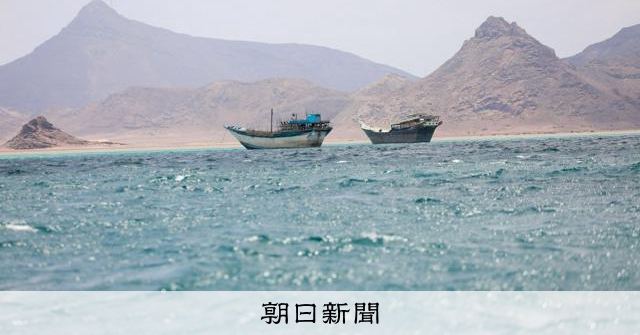
According to reporting from Asahi Shimbun, Houthi forces have moved to secure alternative maritime routes that bypass or supplement the Strait of Hormuz, effectively putting a second critical artery under militant control at the same time the US and Israel are conducting strikes on Iran. The implications for global energy markets are compounding and largely unpriced.
The news came as the pipeline connecting to Saudi Arabia’s Yanbu port — a vital alternative outlet for eastern oil fields — was hit by a drone attack and forced to halt operations. Yanbu was built precisely to reduce Saudi dependence on the Strait of Hormuz. If that pipeline is compromised, Riyadh’s geographic hedge evaporates overnight.
Who Gains Leverage Overnight
Houthi commanders have sent a calculated signal: Saudi vessels will be sunk, while Japanese and other non-aligned ships may be permitted passage under conditional terms. This is not random piracy. It is coercion with a commercial logic — isolate adversaries, keep trade flowing, maintain revenue streams.
The strategic gain is asymmetric. The Houthis do not need to control every inch of the Red Sea to extract maximum pressure. They need only to make transit uncertain enough that insurance premiums spike, charter rates climb, and shippers hesitate. That alone can slow volumes without a single ship being sunk.
Saudi Arabia faces a dilemma that defines the broader conflict. The kingdom is hitting back at Iranian targets but cannot afford to escalate its strikes on Houthi positions without inviting retaliation against its own oil infrastructure. The Yanbu pipeline attack demonstrates what happens when deterrence fails — the cost of inaction is immediate operational loss.
Meanwhile, the US and Israel are stretched by a maritime blockade of Iran that occupies naval and intelligence assets across multiple vectors. Every frigate patrolling the Strait of Hormuz is one less vessel monitoring the Red Sea. The Houthis understand this arithmetic better than Western commanders admit.
The Numbers Most Analysts Are Skipping
Here is what the market is not fully absorbing. The Strait of Hormuz handles approximately 21 million barrels per day — roughly a fifth of global petroleum consumption. The Red Sea and Suez corridor, while smaller in absolute volume, carries an estimated 10 to 12 million barrels per day and serves as the primary export route for Saudi eastern-field crude destined for Europe and Asia. Both corridors are now under active threat simultaneously.
When one chokepoint narrows, tankers divert. When both narrow, there is no divergence. The Suez Canal has seen container traffic collapse in previous Houthi campaigns — dropping 90 percent at its lowest point — but oil tanker movements are harder to block entirely because they operate on different schedules and with different risk tolerances. That does not mean they are safe.
Insurance markets move faster than shipping lanes. War-risk premiums for the Red Sea have already spiked above pre-conflict levels. If Houthi control of alternate routes solidifies, those premiums will compound. Tanker owners who absorb the cost will pass it to charterers. Charterers will pass it to refiners. Refiners will pass it to consumers.
Why Japan Should Care Right Now
The Asahi’s Istanbul correspondent noted something worth taking seriously: many Japanese citizens still view war as a distant affair. That perception is eroding fast.
Japan imports over 90 percent of its energy from the Middle East. Nearly all of it transits the Strait of Hormuz or the Red Sea corridor. When both routes face coordinated pressure, Tokyo has no meaningful alternative corridor to fall back on. The Strait of Malacca detour adds weeks and billions in fuel costs. Pipelines from the Middle East to Japan do not exist.
The structural shift is not limited to energy. US-China rivalry is expanding across the Indo-Pacific at the same moment the Middle East is fragmenting. Japan is caught between a security architecture built on Cold War assumptions — alliances, freedom of navigation, open seas — and a region where those assumptions no longer hold.
This is not a prediction. It is a description of what is happening right now.
What Happens Next
The most likely near-term outcome is not full closure of either corridor but a sustained state of elevated risk pricing. Tanker traffic will continue, but at higher cost, longer transit times, and greater variability. Spot oil prices will reflect that uncertainty before physical shortages appear.
The more dangerous scenario — and it is far from ruled out — is a coordinated escalation in which Iranian forces or proxy networks target Saudi or Emirati infrastructure directly, turning a blockade into a supply shock. The Yanbu pipeline strike is a preview of that logic: limited damage, maximum signaling.
Western energy ministries are monitoring the situation closely. Commercial traders are positioning for volatility. But neither group is yet pricing in the possibility that two of the world’s three most critical maritime chokepoints — Hormuz and Bab el-Mandeb — could face simultaneous degradation within the same operational window.
That is the gap. And gaps like this are where markets get surprised.
The Bigger Picture Nobody Is Leading With
This story is unfolding alongside coverage of direct US-Israel strikes on Iran, which dominates headlines. But the second-order effects — the compression of alternative routes, the erosion of redundancy, the recalibration of how militant groups project maritime power — may ultimately matter more for global economics.
The Cold War order assumed that chokepoints would remain open unless a state actor formally closed them. Non-state actors are rewriting that rule. The Houthis are demonstrating that a lightly equipped force with drone and missile capability can impose costs on global supply chains far beyond their military weight.
That capability is now layered on top of an existing crisis at the Strait of Hormuz. The combination is what makes this moment structurally different from previous Red Sea disruptions.
Energy markets will adjust. Shipping routes will adapt. But the adjustment period will be expensive, and the new equilibrium will carry higher baseline risk than anything the past decade has seen.