How a new drug could turn pancreatic cancer from death sentence into interceptable disease
A breakthrough drug plus early detection is reigniting hopes for pancreatic cancer interception — a strategy that could triple five-year survival rates. But translating mouse success to humans remains the billion-dollar question.
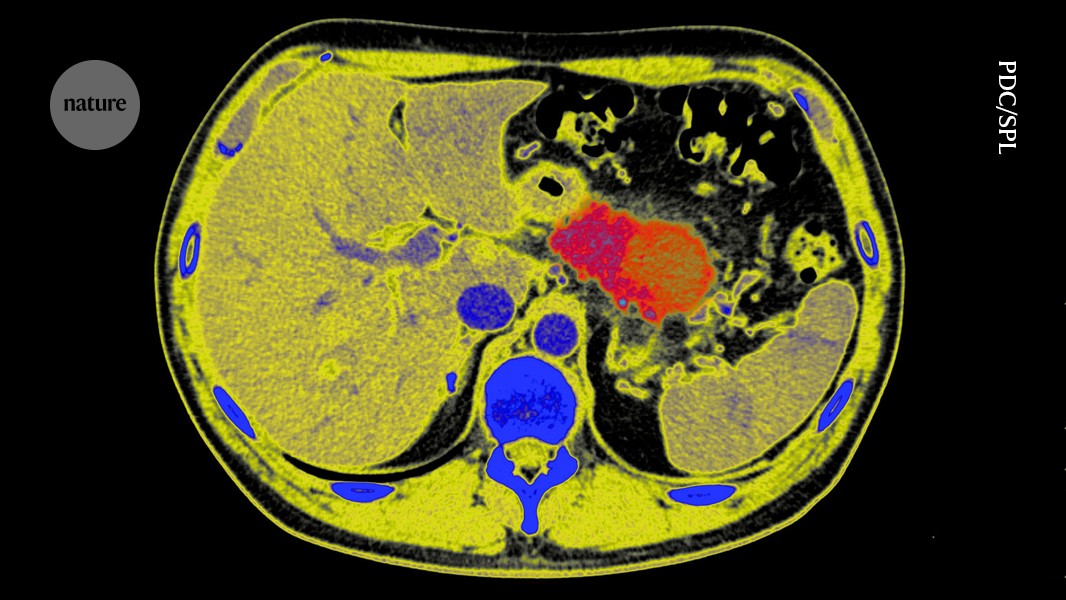
The intercept model is coming for pancreatic cancer — and that changes everything
Pancreatic cancer has long been considered the Cinderella of oncology: a disease that drags its feet into diagnosis, spreads ruthlessly, and resists nearly every treatment thrown at it. More than half of patients receive a diagnosis only after the cancer has metastasized. Five-year survival sits at a stubborn 13.7%. For thirty years, that number has barely budged.
Now researchers are proposing something bold: stop trying to treat pancreatic cancer after it appears and start intercepting it before it ever becomes lethal. The strategy, known as cancer interception, involves identifying abnormal tissue growths and treating them preemptively — quashing tumours while they are still small, localized, and surgically removable.
A new drug called daraxonrasib, approved by the US FDA in August, has given the approach its first credible pharmacological weapon. Combined with aggressive early-detection efforts, interception could more than triple five-year survival to 50%, according to Diane Simeone, director of the Moores Cancer Center at UC San Diego Health.
That figure is aspirational. But the fact that it is being discussed openly at a major medical conference marks a shift in how the field thinks about this disease.
Daraxonrasib: the drug that opened the door
Daraxonrasib was the headline drug at last week’s AACR Conference on Pancreatic Cancer in San Diego — the first such meeting held after the FDA approval. The drug targets KRAS mutations, the genetic drivers found in the vast majority of pancreatic cancers. By disarming KRAS and related cancer-promoting proteins, daraxonrasib shrinks tumours that previously refused to respond to anything.
It is currently approved only for advanced pancreatic cancer. But the logic of interception is straightforward: if the drug works on established tumours, it should work even better on precancerous growths caught early. That is the hypothesis driving a wave of new research presented at the conference.
The animal data is encouraging. Ben Stanger’s team at the University of Pennsylvania studied mice carrying KRAS mutations that produce precancerous pancreatic growths. When treated with a daraxonrasib-like drug, the animals’ survival improved significantly. “It is super exciting,” Stanger said, though he cautioned that translating the results to humans could take years.
Who wins, who loses
The interception model redistributes risk and reward across the entire cancer care ecosystem.
Patients win if early detection works. Five-year survival for early-stage pancreatic cancer already tops 80%. The problem has never been treatment — it has been finding the disease before symptoms appear. Vague abdominal pain and weight loss, the classic warning signs, arrive only after the cancer has had time to spread. If interception becomes standard, patients diagnosed at Stage 0 or Stage I could face a completely different prognosis.
Screening programs win if they can prove survival benefit. Simeone’s PRECEDE study is the largest effort of its kind, enrolling 20,000 high-risk individuals — people with family history, abnormal pancreatic growths, or elevated genetic risk. Over 12,000 have already signed up. More than 50 participants have been diagnosed with pancreatic cancer, many at the earliest stages. PRECEDE will also test whether daraxonrasib given immediately after surgical removal of precancerous tissue can prevent recurrence. The study is designed to answer both questions: does screening save lives, and can interception extend that benefit?
Drug companies win if interception expands the addressable market. Daraxonrasib is currently approved only for advanced disease — a narrow patient pool. If interception becomes standard of care, the drug would be prescribed to thousands of high-risk patients years before cancer develops. That transforms a cancer therapy into a preventive one, potentially multiplying revenue.
Health systems face the hardest calculus. Widespread screening requires infrastructure, follow-up capacity, and the willingness to operate on people who do not yet have cancer. Overtreatment is a real risk. Not all precancerous lesions progress. Some will regressed on their own. The challenge is distinguishing the dangerous ones from the benign without exposing patients to unnecessary surgery or drug toxicity.
Why this matters beyond oncology wards
Pancreatic cancer accounts for roughly 3% of all cancer diagnoses but 7% of cancer deaths globally. It is the fourth leading cause of cancer death in the United States and the third in much of Europe. In Japan and South Korea, where pancreatic cancer rates have risen sharply alongside dietary Westernization, the disease is already among the top five cancer killers.
An interception framework that works for pancreatic cancer would not stay contained. The same logic applies to other deadly cancers with late-diagnosis problems: ovarian, liver, and esophageal cancers all share the characteristic of silent progression. If thePRECCEDE model proves that population-level screening combined with pharmacological interception can move the survival needle, it becomes a blueprint.
AI is entering the equation too. Simeone’s team plans to use artificial intelligence to detect abnormalities on pancreatic scans before they become visible to radiologists. AI-driven detection could compress the timeline from “suspicious finding” to “confirmed early cancer” from months to days — and that speed matters. Pancreatic cancer does not wait.
The gaps that remain
The optimism at AACR is real but conditional. Several uncertainties loom large.
First, daraxonrasib has not been tested in the interception setting. It is approved for advanced disease. Using it in pre-cancerous tissue — where patients are otherwise healthy — requires a different safety calculus. Side effects that are acceptable in Stage IV patients may not be acceptable in someone being treated preventively.
Second, the KRAS target is narrow. Not all pancreatic cancers carry the same mutations. An interception strategy built around one drug may miss a significant subset of high-risk patients.
Third, screening adherence is unpredictable. PRECEDE relies on voluntary enrollment among high-risk populations. Convincing asymptomatic people to undergo repeated imaging and blood tests over years is a behavioral challenge that clinical trial data rarely captures.
And finally, the mouse-to-human gap is real. Stanger’s results in mice are promising but not predictive. Pancreatic cancer in humans is biologically distinct from the KRAS-mutant models used in research. What works in a lab mouse may not translate cleanly to a 70-year-old with a decade of accumulated genetic damage.
What happens next
The next 18 to 24 months will be decisive. PRECEDE is expected to publish interim survival data as participants continue to be monitored. If early-stage detection combined with daraxonrasib shows a survival advantage, the FDA could expand the drug’s indication to the interception setting — a move that would fundamentally alter the standard of care.
Regulators in the EU and Asia are likely to follow. Japan’s National Cancer Center and South Korea’s National Cancer Center both have large pancreatic cancer registries and could accelerate adoption of interception protocols if US data validates the approach.
The broader implication is a redefinition of what pancreatic cancer treatment means. For decades, the disease has been managed reactively — diagnose late, treat aggressively, hope. Interception flips that script. It treats pancreatic cancer as a preventable condition rather than an inevitable one.
That is a bold claim. But for a disease that has resisted every conventional approach, bold is no longer optional. It is the only strategy left.