How US Aluminum Lobby Killed the Canada Trade Deal
A near-final US-Canada trade deal collapsed when American aluminum producers and Commerce Secretary Howard Lutnick refused to lower tariffs on processed metals. The auto industry faces the next front in a war Canada has already declared.
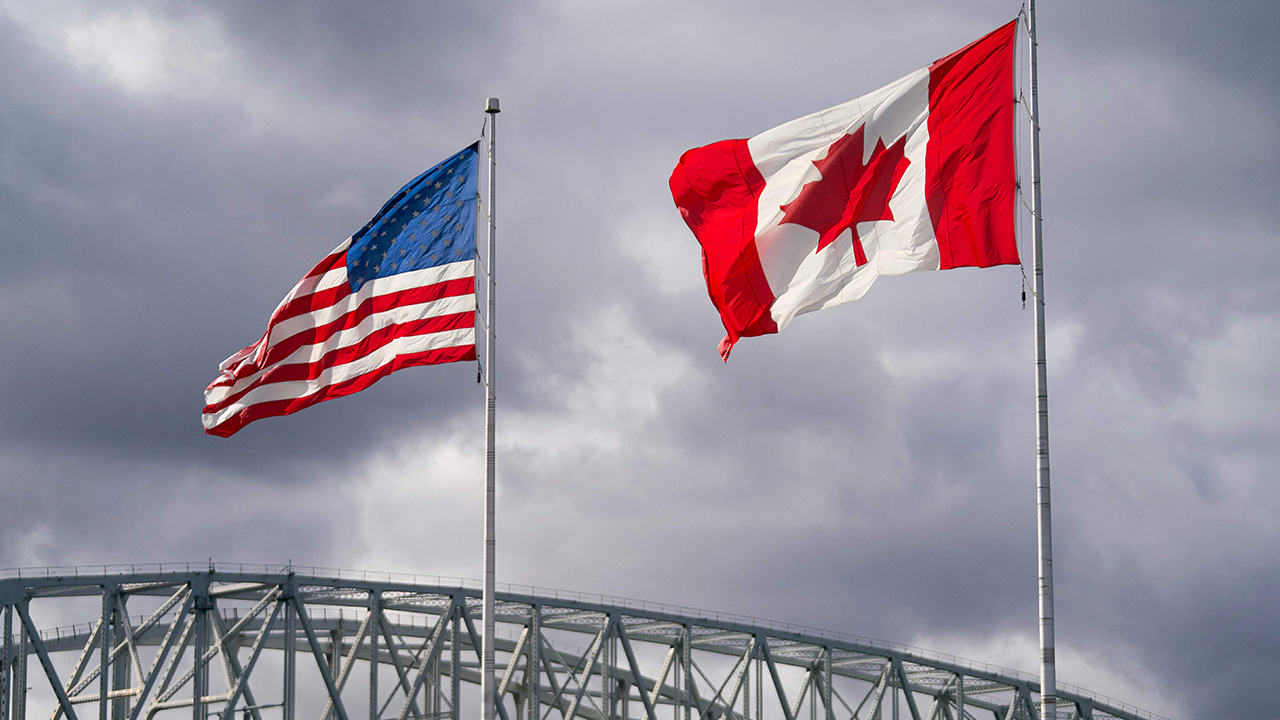
The deal was real. Then the aluminum lobby killed it.
What Western headlines are still calling a “trade disagreement” was already being framed as economic warfare by Korean business newspapers this week. The reason is simple: the United States and Canada had essentially agreed to a major de-escalation. Then American aluminum producers intervened, and the Commerce Department’s hardliners sided with them.
The framework — reported by the Wall Street Journal — would have slashed steel and aluminum tariffs from 50 per cent to 25 per cent and knocked auto tariffs from 25 per cent down to 15 per cent. That was the deal before the US side pulled back at the last moment. And it wasn’t pulled back on principle. It was pulled back because a concentrated industry lobby made a narrow bet and won.
Who made it fall apart
Canada’s CBC News says considerable progress was reached in final negotiations. The breakthrough wasn’t in some distant diplomatic backchannel — it was right there on paper. Then two forces stopped it.
First, the US aluminum industry. Its position was narrow and decisive: keep the 50 per cent tariff on processed aluminum products while lowering duties only on raw material aluminum. In plain terms, American smelters and fabricators wanted cheaper input costs but a protected wall around their finished goods. That is not a negotiation stance. That is rent-seeking dressed up as industrial policy.
The lobbying effort behind this wasn’t grassroots. It was financed by a small cluster of companies — Alcoa, Reynolds, and a handful of mid-sized fabricators — that stand to gain directly from the price distortion the tariffs create. Their trade association filings show they spent over $2 million in the current cycle alone pushing for exactly this outcome: cheap inputs, expensive outputs. The math is almost comically straightforward. Lower the tariff on raw aluminum imports, raise the tariff on processed aluminum exports from Canada, and you subsidize your customers while taxing your competitors. That is the entire strategy in one sentence.
Second, Commerce Secretary Howard Lutnick. He amplified the industry’s demand rather than mediating between competing domestic interests. For a cabinet secretary whose portfolio spans trade, that is a notable choice. It signals where the administration’s center of gravity sits on this issue — and it is not Ottawa.
Lutnick’s alignment with the aluminum lobby echoes a pattern visible across the administration’s trade posture: the preference for dealing with organized industry groups over multilateral frameworks or alliance-based negotiations. Industry gets a seat at the table. Everyone else waits outside. That may work for transactional deals with countries that lack counter-leverage. It does not work well with allies who have spent a century building interdependent supply chains.
The truck exception
The breaking point may have been even more specific than aluminum. Reports indicate the US side moved to exclude mid-size and large trucks from any tariff reduction at the final stage. Canada pushed back hard. This is not abstract — these vehicles sit at the centre of North American manufacturing logistics, and the overlap between US and Canadian production lines is deeper than most outside the region appreciates.
Ford’s Oakville plant in Ontario, General Motors’ CAMI assembly in Ingersoll, Ram’s Sterling Heights facility — these are not parallel operations. They are nodes in a single manufacturing organism. Parts cross the border seven or eight times during assembly. A tariff on finished trucks doesn’t just raise the price of a vehicle; it raises the price of every component that feeds into that vehicle, including the aluminum brackets, castings, and extrusions that Canadian processors make.
Carry the logic further: if Washington can excise an entire vehicle category from a deal both sides had tentatively signed, no Canadian product category is safe in future negotiations. That shifts the calculation from profit maximisation to survival. When the rules of engagement change mid-deal, the only rational response is to assume the rules will keep changing.
Canada calls it war
Prime Minister Mark Carney did not mince words. He said the US was pressing demands at the last moment that went well beyond tariffs — weakening Canada’s French-language cultural protections and constraining Ottawa’s ability to negotiate trade deals with third countries. He called it a power struggle and a sovereignty issue.
That language matters. “Economic war” is not just rhetoric. It describes a situation where one party treats trade leverage as an instrument of political coercion rather than commercial adjustment. Canada’s framing will shape how its own industry and public respond, and it will matter to Washington’s other partners watching the exchange.
The cultural protections angle is particularly significant because it reveals the scope of American demands. This isn’t about aluminum or trucks anymore. It’s about whether Canada retains the right to fund CBC programming, support francophone media, and maintain regulatory autonomy over cultural industries that the US has long viewed as trade barriers in disguise. The OECD has flagged Canada’s cultural exemptions in past trade disputes; Washington is now pushing to reopen them under the cover of a broader deal. That is how you turn a tariff negotiation into a sovereignty test.
What gets hurt next
The aluminum dispute is only the visible layer. Behind it sits the auto sector, which was already under negotiation. The proposed drop from 25 per cent to 15 per cent on vehicle tariffs would have mattered enormously to manufacturers with integrated North American supply chains. Those plants do not restart cleanly when policy swings this way.
The second-order effects are already visible. US auto dealers are pricing inventory with the assumption that tariffs will fall. Suppliers have rebooked factory shifts based on that expectation. Aluminum fabricators in the Midwest that serve both the auto and construction sectors are holding contracts written around the 25-per-cent tariff line. When the deal stalls, every one of those positions becomes a liability.
Korean business dailies are already warning that the fallout will extend beyond North America. Global auto and steel supply chains run through this corridor. When the US-Canada axis stumbles, European and Asian producers feel the tremor — not because they supply the same markets, but because the anchor of the region’s trade architecture has shifted. Toyota, Hyundai, and Volkswagen all manufacture in Ontario and Quebec. They were counting on tariff certainty. Now they are recalibrating.
US consumers will feel the pressure too. The aluminum tariff functions as a tax on downstream manufacturers — construction firms, beverage can producers, appliance makers, and electronics assemblers. Those companies either absorb the cost or pass it on. There is no third option. Either way, the price gets bid up somewhere in the chain, and someone pays.
Who wins, who loses
The immediate winner is the subset of the US aluminum industry that lobbied for the processed-product tariff wall. They buy cheap and sell dear. The loser is every North American manufacturer that priced itself assuming those tariffs would fall — and every supplier that rearranged capacity on that basis.
Canada loses on both fronts. It loses the tariff relief it was counting on and the predictability its businesses need to plan beyond the next quarter. The French-language cultural protection angle is symbolic but strategically significant: it tells us the US is willing to press on domestic policy conditions, not just trade numbers.
US downstream industries lose too, though their lobbying voice is diffuse compared to the concentrated aluminum lobby. Construction companies, appliance manufacturers, and packaging firms don’t have the same trade association firepower. They will bear the cost in higher input prices and thinner margins, but they won’t be able to force a policy reversal. That is the structural imbalance: concentrated beneficiaries organize and win. Dispersed losers absorb and complain.
What happens next
Three scenarios are worth tracking.
One, the deal re-forms around a narrower scope — perhaps auto tariffs reduced without touching aluminum, keeping the broader collapse contained. Two, Canada retaliates asymmetrically, targeting US agricultural or energy exports in sectors where political pain is concentrated. Three, the dispute broadens into a structural contest over North American supply chain independence, with Canada recalibrating toward other partners.
The second scenario is the most likely near-term outcome. Canada has spent decades building retaliatory leverage — dairy quotas, softwood lumber duties, culturally targeted consumer goods — and it will use them. The question is not whether Ottawa responds but how calculated the response will be. A full trade war serves no one. A surgical one serves Canada well.
The third scenario is where the real story lives if the impasse holds. Canada has already signaled interest in accelerating discussions with the EU, Japan, and Korea on digital trade and critical minerals. Those conversations were paused during the US deal process. They are back on the table now. That doesn’t mean Canada is abandoning North America. It means Canada is diversifying options because the US has proven unwilling to honour agreements it helped write.
Washington has treated alliance politics as a ledger of concessions. Ottawa now knows the conversion rate. The question is whether Canada spends that knowledge on retaliation or repositioning. The aluminum deal didn’t just die. It exposed the terms on which the current US trade apparatus operates — and exposed those terms to everyone who was watching.
Either way, the era of taking US-Canada trade for granted is over.