How Huang, Musk and Zuckerberg Killed the AI Regulator Before It Landed
The Wall Street Journal reports that Nvidia, Meta and SpaceX CEOs personally lobbied Trump to block an industry-funded AI watchdog — a move that exposes who really writes the rules of the AI era.
The Kill Shot Came From the Top
A regulatory body for artificial intelligence, conceived by one of Google’s chief scientists and modeled on the self-regulatory architecture that governs American securities markets, has been stopped before it ever left the drawing board. The Wall Street Journal reported the outcome on the 17th, but the more interesting story is who pulled the lever and how.
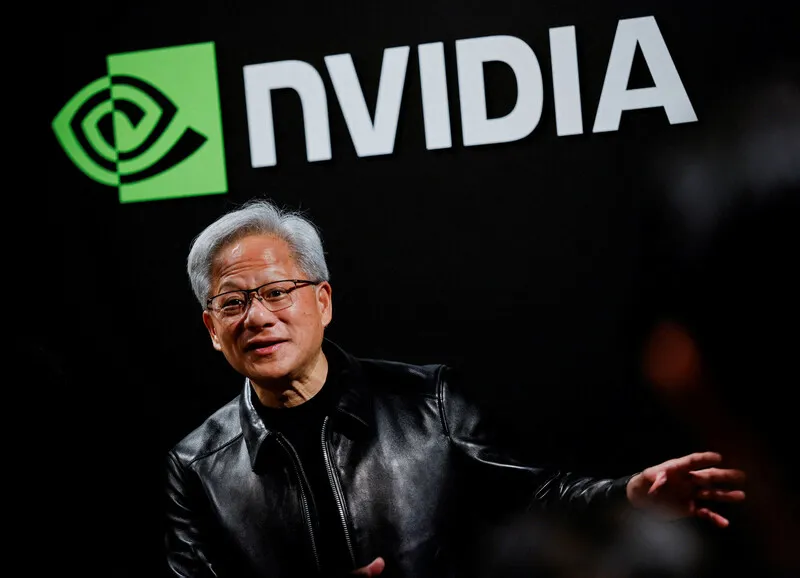
Jensen Huang of Nvidia, Mark Zuckerberg of Meta and Elon Musk of SpaceX (X) personally conveyed their objections to Donald Trump. They opposed the creation of an industry-funded oversight body that Demis Hassabis, Alphabet’s chief scientist, had been pitching to White House officials for weeks. According to the Journal, the lobbying worked. The proposal is dead, at least for now.
The Real Battle Over Who Gets a Seat
This was never simply a debate about whether AI needs regulation. The fight was about who controls the architecture of that regulation.
Huang and his allies reportedly told Trump’s team that any new oversight body would concentrate power in OpenAI, Anthropic and Google — the three organizations behind the Dario Amodei proposal to slow AI development through mandatory safety testing and independent evaluation. Nvidia, Meta and SpaceX would be outside the tent, subject to rules written by competitors.
That concern is both selfish and strategically coherent. OpenAI and Anthropic currently hold first-mover advantage in frontier model development. A regulatory body that grants them privileged access — or, worse, formal veto power over rival releases — would harden their lead into an institutional moat. Huang and Zuckerberg understood this and moved fast.
Musk occupied a slightly different position. He publicly aligned with Amodei’s call for slower development and stronger safety testing, but he drew the line at government oversight. Instead, he proposed a system of corporate cross-verification: competitors would share access to their models before launch and audit each other. It is, in effect, a market solution to a governance problem — one that keeps regulators at arm’s length while still producing the appearance of accountability.
The White House Was Already Fractured
The internal politics at the White House reveal how close this issue came to another outcome. For months, senior officials met almost daily on AI safety and regulation, and they were deeply divided.
On one side: White House Chief of Staff Susie Wiles, Treasury Secretary Scott Bessent and National Cyber Director Sean Countryside — all advocates for stronger government oversight. On the other: David Sacks, chair of the Presidential Advisory Council on Artificial Intelligence, who has consistently pushed for a minimal-regulation approach and has deep ties to the tech industry. Sacks is also Trump’s son-in-law, which is not a structural detail to dismiss.
The factional map matters because it shows how easily the scales can tip. Wiles, Bessent and Countryside had the institutional machinery on their side. Sacks had the ear of the president. When Huang, Zuckerberg and Musk walked into the room, they didn’t arrive as lobbyists — they arrived as economic powers who could threaten investment decisions, job creation narratives and strategic competition with China. That weight tipped the balance.
Trump’s own position sealed it. On the 14th, he posted on his social media platform dismissing claims that AI poses an existential threat as “fake.” The message was unambiguous: the administration would not entertain regulation framed around catastrophic risk. The regulatory body had lost its political cover before it was formally proposed.
What Dies With This Proposal
Several things vanish when the industry-funded oversight model dies.
First, the pretense that the United States is building a systematic, transparent safety framework for frontier AI. Without a dedicated body, there is no independent audit mechanism, no mandatory evaluation standard and no public record of how frontier models are being tested before release. The companies will continue to self-assess. The results will remain proprietary.
Second, the possibility of a US-led alternative to the European Union’s AI Act. The EU has already enacted the world’s most comprehensive AI regulatory regime. A US industry-funded body — imperfect as it would have been — could have served as a rival standard, one shaped by American tech firms rather than European legislators. Its death removes that option entirely, leaving a regulatory vacuum that either defaults to the EU’s framework in global markets or produces nothing at all.
Third, the leverage that safety advocates held inside the industry. Amodei, Altman and Hassabis formed a coalition that had real staying power. Their proposal wasn’t fringe — it came from three of the most technically credible voices in the field. Blocking the regulatory body doesn’t kill their argument, but it does kill their institutional pathway. The conversation will shift from governance to voluntary standards, from public bodies to private agreements.
What Lives Instead
The alternative framework is already taking shape. Musk’s cross-verification model is one version. Google’s own governance work — including its External Reviews Board and partnerships with the Stanford Institute for Human-Centered Artificial Intelligence — represents another. Both are voluntary. Both depend on corporate goodwill. Neither has enforcement power.
That distinction matters. Voluntary frameworks cannot compel a competitor to share model weights or testing data. They cannot freeze a product launch. They cannot impose penalties. What they can do is create normative pressure — and in an industry moving at the speed of quarterly earnings cycles, normative pressure is often indistinguishable from no pressure at all.
The Takeaway
The immediate lesson is straightforward: three tech CEOs showed up at the Oval Office and a regulatory proposal disappeared. But the deeper lesson is about the structure of AI governance in America. When the companies that build the technology also control access to the executive branch, regulation becomes a negotiation rather than a decision. The question is never whether AI will be governed. It is who gets to govern it — and so far, the answer keeps pointing toward the same three names.
For readers outside the United States, this should register as a warning signal. The EU’s AI Act is already law. The UK has opted for a pro-innovation, sector-by-sector approach. China is building its own comprehensive framework. The United States, meanwhile, now has no federal AI regulatory body at all. The gap between American governance and American capability is about to widen, and the companies filling that gap will be the ones sitting closest to the president.