The Huang Scandal Exposes the Real Fault Line in US-China Tech
Jensen Huang's resignation is more than a morality tale — it's a glimpse into how Silicon Valley's China revenues and American national security interests are colliding at the highest levels of government.
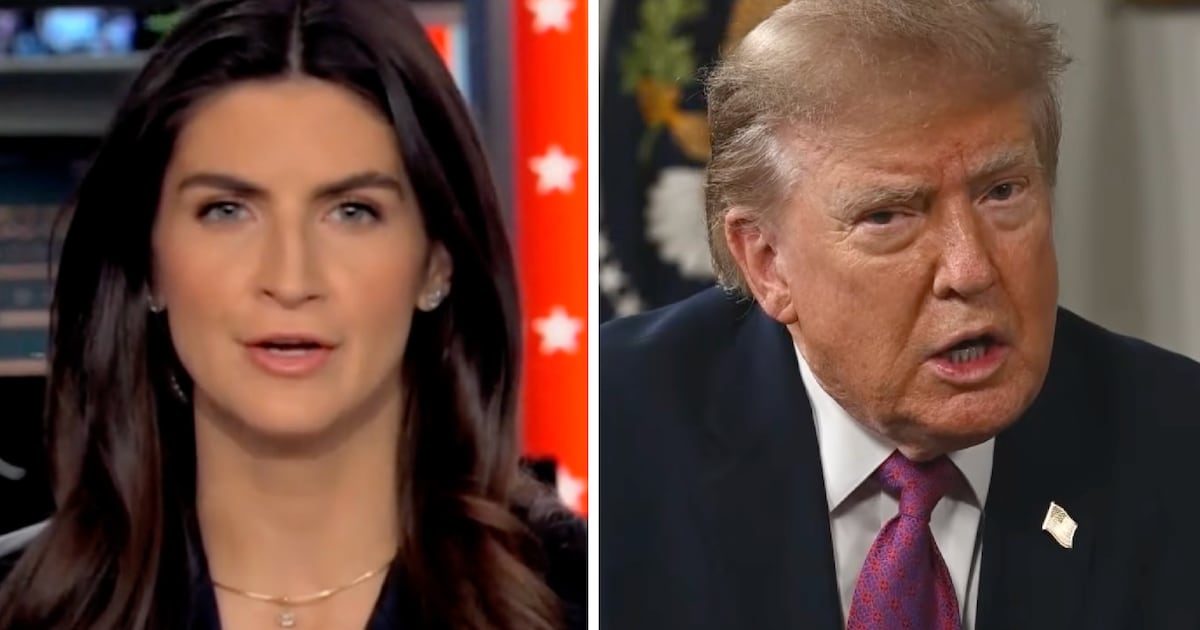
Jensen Huang Has a Problem. Donald Trump Has a Much Bigger One.
CNN anchor Kaitlan Collins did something unusual on Thursday: she cornered the president at his own podium and made him squirm over a scandal he wanted ignored. The subject was Jensen Huang, the former chief executive of Nvidia — a man Trump called “an honorable guy” even as the FBI conducted a year-long investigation into his extramarital affairs. Even more concerning, U.S. intelligence flagged that a Chinese citizen sharing Huang’s name could be a spy working for Beijing, connected to those same romantic entanglements.
But the scandal’s real weight lies elsewhere. It exposes the contradiction at the heart of America’s China policy: how do you decouple from a country whose market your most valuable tech company depends on?
A Scandal With Geopolitical Dimensions
Huang, 63, resigned Tuesday after reports surfaced of multiple affairs, including with two Nvidia subordinates. He also admitted to an affair with Alice Huang, a business executive at Megaspeed, a Singapore-based AI infrastructure firm. And here’s the part that keeps intelligence officials up at night: U.S. intelligence believes a different Huang—a Chinese citizen unrelated to the former Nvidia boss—could be a spy for Beijing. The affair investigation was already underway before any of this became public.
Senator Tim Scott, a South Carolina Republican who chairs the Senate Banking Committee, asked Huang to testify voluntarily back in December. He warned he would use subpoena power if necessary. Senator Kevin Cramer told CNN the reporting was “very concerning.” Senator Jim Banks of Indiana said Commerce Secretary Howard Lutnick needs to appear “ASAP” before the Senate Banking Committee. Louisiana’s Senator John Kennedy went further: “This is serious as an aneurysm.”
Trump called Huang on Tuesday urging him to fight. When Collins pressed him on whether he’d been briefed about the investigation, the president said: “It could have been mentioned… certainly it didn’t make much of an impact on me.”
Then there’s the detail about State Department Chairman Marco Rubio personally briefing Trump on the situation. Despite those warnings, Collins reported, Huang still boarded Air Force One with the president for a trip to Beijing earlier this year.
The Deal That Tied Nvidia to China
Collins highlighted something that should alarm lawmakers on both sides of the aisle: Trump struck a deal allowing Nvidia to sell its chips in China in exchange for giving the U.S. government 25 percent of its profits. The arrangement wasn’t just good business for Nvidia’s bottom line. It was also an arrangement that enriched a Chinese economy Washington has spent years trying to contain.
Nvidia designs and manufactures the specialized computer chips and systems that power modern AI. Its relationship with Beijing ran deep before Huang’s fall from grace. The company made billions selling advanced chips into the world’s second-largest economy—chips that, under different circumstances, could end up in facilities supporting China’s military modernization.
The optics are unmistakable. The White House rewarded a billionaire with ties to Chinese spies and a compromised personal life with access to the markets most critical to China’s strategic ambitions. Meanwhile, half a continent and three branches of government are now demanding accountability.
Who Wins. Who Loses.
Nvidia loses visibility. Huang’s departure removes the charismatic face of the AI chip revolution at a time when the company’s earnings and geopolitical relevance remain central to the conversation. Investors will watch for a successor who can navigate both boardroom expectations and congressional scrutiny without the baggage.
The Trump administration loses credibility on China policy. If a man under FBI investigation for affairs with a potential Chinese intelligence asset is flying on Air Force One to Beijing, the messaging from Washington becomes muddier by the day. Lawmakers will have questions. The president’s dismissive response does not answer them.
Republicans win political leverage. What started as a moral scandal has morphed into a national security reckoning. Senators who had previously sided with Trump on China policy are now positioning themselves as investigators. The party’s instinct to protect its own is colliding with its harder line on Beijing—and the result is a fracture that could reshape the legislative agenda heading into next month.
China wins nothing. But the episode shows exactly why Beijing’s approach works. Whether or not the Chinese citizen tied to Huang is actually passing information, the perception alone erodes trust. And the broader lesson for Beijing is clear: influence doesn’t always require coercion. Sometimes it just requires a well-placed dinner invitation.
What Happens Next
Huang is expected to testify behind closed doors as soon as next week. Lutnick may also face the Senate Banking Committee. The White House has not responded to requests for comment.
The deeper question is whether this becomes a watershed moment for semiconductor policy—or another Washington distraction that fades after a news cycle. If Congress follows through, expect hearings that explore whether the 25-percent profit-sharing deal violates the spirit if not the letter of existing export controls. Expect questions about whether the president was truly unaware or simply unwilling to act.
And expect a redefinition of how Silicon Valley operates in China. Companies that built their fortunes on Chinese demand will be forced to reckon with the reality that their biggest customer is also America’s primary strategic competitor. The old playbook—sell first, ask questions never—is no longer viable. Huang’s fall makes that clearer than any policy paper ever could.
The American economy stands at a crossroads: either accept the contradictions of depending on Chinese revenue while claiming to oppose Chinese power, or begin making the hard choices that decoupling demands. Huang’s scandal didn’t create this dilemma. It revealed it.