Huang, Zuckerberg, Musk Just Redrew the AI Governance Map
Three tech CEOs walked into the Oval Office and killed a proposed private-sector AI regulatory body before it could be born. The real story is not the victory itself but who is now on which side of the 'slow down' line, and what the absence of U.S. AI governance means for every other country building its own rules.
The Lobbying That Mattered Was Already Done
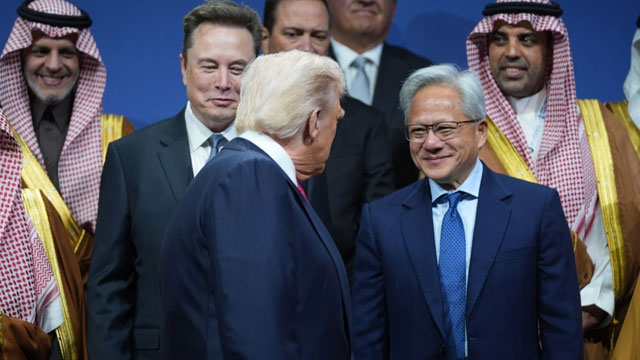
The Wall Street Journal reported last week that Jensen Huang, Mark Zuckerberg, and Elon Musk each met individually with President Trump over the past few weeks and successfully killed a proposal to create a private-sector AI regulatory body. The body, first floated by Google Chief Scientist Demis Hassabis, would have functioned as an industry-led oversight institution, something between a trade association and a standard-setting council. It never got off the drafting table.
That is the headline. The more interesting story sits one layer down: the objection these three CEOs raised was not abstract. They told Trump that the proposal, as structured, would concentrate power in exactly three firms — OpenAI, Anthropic, and Google. In other words, the people most exposed to competitive scrutiny would write the rules of the game. Huang, Zuckerberg, and Musk framed this as a structural conflict of interest so acute it justified killing the idea outright rather than fixing it.
Whether that framing was disingenuous or genuinely worried, the result is the same. No AI regulatory body will be chartered under this administration. Trump, true to form, posted on Truth Social that “a pathological conspiracy” was being waged against American AI and data centers, and that “only China” would welcome any slowdown. The message to the global market: the U.S. intends to build at full throttle, and anyone who slaps a speed limit on that build-out is implicitly helping Beijing.
Who Won, Who Lost, and Why It Is Not Settled
The winners are clear. NVIDIA, the company that sells the shovels to every AI gold rush, does not want a body that could second-guess compute allocation or impose safety gates before models ship. Meta’s open-weight Llama strategy depends on shipping fast and iterating in public; a review process owned by OpenAI, Anthropic, and Google would be the one mechanism through which those rivals could slow a competitor to a crawl. SpaceX and, by extension, xAI (Musk’s separate AI venture) gain the same breathing room: no third-party checkpoint between a new model and deployment.
The losers are less visible but consequential. Dario Amodei, Anthropic’s CEO, had publicly argued in recent weeks that the development pace needed to be tempered. He was joined by Sam Altman at OpenAI and by Hassabis himself. That alignment — the three frontier-model labs saying “slow down” while the three infrastructure-and-attention platforms saying “floor it” — is a realignment that did not exist eighteen months ago. OpenAI and Anthropic, the companies actually training the frontier models, are now on the regulatory side of the ledger. The companies selling them chips, hosting them, and feeding them user attention are on the deregulation side. The traditional assumption that model builders would always push for lighter rules has inverted.
None of this is final. Inside the White House, the split is documented. Chief of Staff Susie Wiles, Treasury Secretary Scott Bessent, and National Cyber Director Sean Cansmore have each pushed for stronger AI oversight and guidelines. David Sacks, the administration’s chief science-and-technology advisor, has lobbied Trump for the minimum-regulation path. The outcome in the Oval Office is not a settled policy; it is a knife-edge that could shift with the next viral post or the next election cycle.
The Private-Body Concept and Why It Would Have Been Unresolvable
Worth pausing on: the proposed body was private, not federal. It would not have been a Congressionally chartered agency with subpoena power. It would have been closer to an IETF or a standards body, but with the authority to set expectations for the three most powerful AI organizations on Earth. The objection Huang and his peers raised — that composition decisions (who gets a seat, who chairs) would determine which labs got to set the pace for everyone else — is not wrong. It is a legitimate structural critique.
But the fix was never to kill the idea. The fix was to change the membership rules, to add academic and civil-society seats, to build in sunset clauses. By taking the entire concept to the scrapheap, the three CEOs removed the only institutional mechanism that could have produced voluntary norms without Congress writing a law. What replaces it, if anything, will be something more diffuse: bilateral pressure between the U.S. and the EU, unilateral model cards and safety reports, and the occasional congressional hearing. None of those carry the same weight as a standing body with named chairs and published proceedings.
What This Means Outside Washington
For South Korea, Japan, the EU, and the wider set of countries building national AI strategies, the implication is direct. If the United States — home to roughly four of the top six frontier-model labs and the dominant chip ecosystem — opts for a “no standing AI regulator” posture, the regulatory gap does not close. It migrates. The EU’s AI Act, with its tiered risk framework and enforcement fines up to 7 percent of global revenue, becomes the de facto global standard for anyone who wants a compliance-ready model by the time it ships to a European customer. China’s approach, which already blends state licensing with export controls on sensitive models, gains leverage in markets where the U.S. simply will not touch the supply chain.
South Korea, in particular, sits in an awkward position. The country is a major semiconductor supplier (Samsung, SK Hynix) and is investing heavily in domestic AI through the KAIST ecosystem and the sovereign-AI-datacenter plan. A deregulated U.S. market means cheaper American compute and faster model releases, which is a short-term tailwind. But it also means no shared safety floor, which complicates any Korean attempt to position its own models as “trustworthy” in consumer and government procurement. The Korean government, which has been drafting its own AI governance framework, now has to decide whether to follow the U.S. light-touch lead or build a parallel regime that diverges from its largest trading partner.
The Next Twelve Months
The WSJ reporting puts the lobbying window at the past few weeks. That timing matters. Amodei’s public “slow down” post likely triggered the industry discussion that Hassabis formalized into the private-body proposal. The fact that it died so quickly, within the span of a few individual Oval Office conversations, suggests the opposition was organized in advance. Huang, Zuckerberg, and Musk did not walk in with ad-hoc objections; they walked in with a coordinated position.
What happens next is uncertain, but one trajectory is probable. As the frontier labs (OpenAI, Anthropic, Google DeepMind) continue training larger and more capable models, the absence of any U.S. oversight body becomes a growing political liability, especially if a safety incident lands on American soil. The White House split — Wiles, Bessent, Cansmore on one side; Sacks on the other — will resurface in budget deliberations, in the next National Security Council session, and certainly in the 2026 midterm legislative agenda. The private-body idea is not dead in principle; it is dead in this configuration, under this president, with these three CEOs in the room. Change one variable and the conversation restarts.
For now, the template these three set is simple: identify the regulatory mechanism that would constrain you, take it directly to the person who can veto it, and argue that the alternative is a closed oligopoly. It worked. Whether it scales to a world where the regulated and the regulator are the same five companies is the question the next generation of AI policymakers will have to answer — and the U.S. has just demonstrated that, at present, nobody inside the building wants to ask it.