South Korea's AI Gambit: A Dual-Track Race Against US-China Dominance
Seoul is splitting its national AI ambition into two parallel programs — one for homegrown foundation models applied in industry, another chasing frontier-level performance. The GPU grab and the Mythos shock reveal what's at stake before the window closes.
Seoul split its AI bet. Here’s why.
South Korea watched its closest rival build something it couldn’t ignore. When Samsung Electronics and LG Electronics unveiled their domestic large language model, Mythos, at a preview earlier this year, the performance numbers landed harder than most officials expected. The gap between where Seoul thought it was and where the technology actually was overnight felt less like a lag and more like a chasm.
The Ministry of Science and ICT responded by splitting its national AI strategy into two distinct tracks — a move that signals both continuity and urgency. It is also, perhaps unintentionally, an admission that South Korea cannot win this race by doing only one thing well. The dual-track approach reflects a government that has concluded it must hedge across the full spectrum of AI capability rather than commit to a single path.
The first track: keep the homegrown models alive
The Independent AI Foundation Model program, known domestically as dokpamo, continues on its original schedule. Three teams entered the final stretch — SK Telecom, Upside AI, and the LG AI Research division. By February, two will remain. Those two keep access to roughly 1,000 GPUs and the government’s backing as they push toward production-ready models.
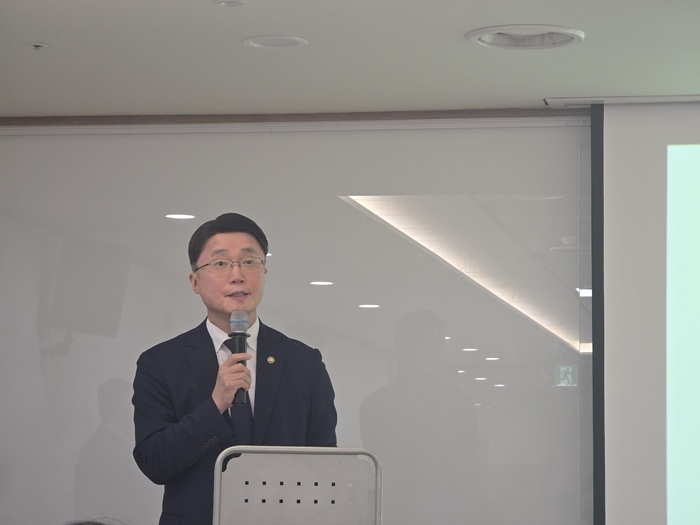
What makes this track different this round is the explicit pivot toward industrial application. Deputy Minister Ryu Je-myung stated plainly that the goal is no longer just technical capability but real-world deployment across manufacturing, finance, healthcare, and public services. Vice Minister Bak Hyung-bun framed it on social media as building AI that gets chosen by the people who actually use it.
That shift from lab to factory floor is the program’s defining characteristic now. South Korea has enough domestic compute appetite to sustain models that work inside its borders even if they don’t chase leaderboard rankings. The question is whether that’s enough, strategically, when the global race is accelerating.
The industrial focus carries significant second-order implications. If South Korean models prove strong in vertical applications — semiconductor design assistance, logistics optimization, Korean-language customer service — they could carve out defensible niches even without matching open-ended frontier capability. This mirrors how Japan has approached AI differently, prioritizing sector-specific deployments over general-purpose models. But it also risks creating a ceiling: models optimized for local industrial workflows may struggle to scale internationally or contribute meaningfully to the broader frontier conversation.
The second track: frontier AI, fast
The Frontier AI program is the newer, more aggressive arm. It was born directly out of the Mythos shock — officials concluded that the existing investment framework and development approach were calibrated for a different era of competition. Ryu told reporters that participants across the government consultation process agreed on one thing: the AI contest has moved to a different dimension, and the old scaffolding won’t hold.
Frontier AI runs a separate procurement process. The two teams that survive the dokpamo final cut can compete, but so can companies that haven’t participated at all. The ministry explicitly said it wants startups with technical depth and talent to enter the pool. If the surviving dokpamo teams have a leg up, the specifics will be worked out during Frontier AI’s design phase, not written into law today.
The timeline is aggressive. Dokpamo’s third evaluation wraps in mid-February. Frontier AI selections could follow by early March, with development kicking off that same month. Next year’s budget cycle will lock in the funding — meaning the National Assembly’s deliberations in the coming weeks are the actual bottleneck, not the ministry’s planning.
The urgency here reflects a broader regional anxiety. China’s DeepSeek breakthrough earlier this year demonstrated that frontier models could be built more efficiently than Western assumptions suggested, compressing timelines and raising the stakes for late movers. Japan’s own frontier initiatives face similar pressures. Seoul’s dual-track response is partly an attempt to stop the clock — to signal that South Korea remains a credible participant even as the competitive field intensifies.
The GPU question nobody’s answering cleanly
One detail surfaced that matters more than the policy architecture. Motive, a Korean AI company, secured 1,000 GPUs despite not making it into the dokpamo final two. That isn’t a rounding error. A thousand high-end accelerators is a resource bucket that can determine whether a company builds a competitive model or stalls waiting for chips.
It also raises a structural question: South Korea needs GPUs to execute either track, and global supply remains constrained. When Motive walked away with a GPU allocation outside the official programs, it signals either flexible sourcing or shadow procurement — both of which point to the same underlying pressure. Every major AI player in East Asia is reaching for the same limited hardware. China has its own constraints and workarounds. Japan is approaching this differently. Seoul is trying to do both tracks with the same scarce resource pool.
The GPU scramble reveals a deeper vulnerability in South Korea’s AI strategy. The country has world-class chip design capabilities through Samsung Foundry and SK Hynix memory, but it does not manufacture the leading AI accelerators itself. That means even domestic GPU allocations depend on global supply chains that favor US and Chinese buyers. Any escalation in export controls or supply disruptions would hit both tracks simultaneously, undermining the diversification the dual strategy is meant to provide.
Who wins, who loses
The dual-track structure buys Seoul political cover. If frontier models fail to close the gap, the dokpamo track still delivers domestic capability for industrial use. If frontier models succeed, South Korea has a credible entry in the top tier. The risk is that both tracks draw from the same budget and the same GPU allocation, diluting what either can achieve.
For the three dokpamo teams, the pressure is immediate. Only two advance. For Motive and other capable firms outside the program, the Frontier AI track is an open door — but only if they can match the momentum of teams that already have government relationships and infrastructure.
The broader geopolitical question is whether this split strategy slows down or sharpens South Korea’s positioning. A single massive bet on frontier performance could have failed catastrophically. Two simultaneous bets spread the risk. But they also split focus, and in AI, focus is the scarcest input after compute.
There is also a talent dimension that complicates both tracks. South Korea faces a chronic brain drain in AI research, with top graduates increasingly choosing to work in Silicon Valley or Chinese labs where funding and infrastructure outpace domestic options. The dual-track strategy assumes that retaining or attracting talent is feasible — but without parallel investments in research culture, compensation, and academic-industry collaboration, even well-funded programs may struggle to find the engineers who can execute them.
What happens next
The February evaluations will determine which two teams carry the dokpamo banner forward. The March Frontier AI selection will signal whether Seoul is willing to bet on new entrants over incumbent favorites. The budget approval process in the National Assembly will confirm whether this is a real investment or a policy announcement in search of funding.
The Mythos preview changed the calculus. The dual-track response is the consequence. But the real test will come later this year, when both tracks are simultaneously executing under resource constraints that neither was designed to absorb. If South Korea can demonstrate that focused industrial models and frontier ambition can coexist without cannibalizing each other, it may offer a template for middle-power AI strategies elsewhere. If the split frays under pressure, the lesson will be stark: in a race defined by scale, partial commitments produce partial results. What comes next depends on whether Seoul can execute both tracks well enough to matter — or whether splitting the bet leaves it behind both strategies.