Hyundai Bets Everything on Full Self-Driving, Leaves Nvidia Behind
Hyundai Motor is deliberately delaying its autonomous driving rollout to 2029, refusing to ship half-finished Level 2++ systems. The move cuts ties with Nvidia-dependent incrementalism and reshapes the global race against Tesla.
The Delay That Isn’t a Delay
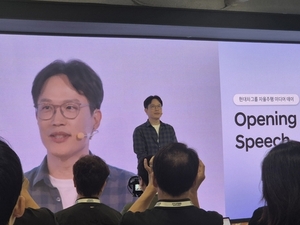
Hyundai Motor Group has drawn a line in the asphalt. Park Min-woo, president of Hyundai and Kia, told reporters on November 11 that the company could field faster results by leaning on Nvidia’s existing platforms — but chose not to. Instead, Hyundai is targeting late 2029 for the mass production of vehicles running its own end-to-end autonomous AI, dubbed Arttria. The message was blunt: the company would rather wait than ship what he called an “awkward Level 2++” — a half-finished autonomy system that promises more than it delivers.
This is not a technology gap. It is a strategy gap, and Hyundai is widening it deliberately. The executive framed it as a lesson learned the hard way. His single biggest failure at both Tesla and Nvidia, he said, was burning out talent by rushing. Now he is applying that lesson at scale.
The Two-Track Bet
Hyundai’s plan splits into two lanes. The first lane runs through Nvidia. Starting in early 2028, Hyundai will offer Level 2+ vehicles built on Nvidia’s automotive AI computing platform and its autonomous driving software. By late 2028, those same Nvidia-dependent systems will graduate to Level 2++. This is the stopgap, the bridge, the product you sell while you finish building the house.
The second lane runs solo. Parallel to the Nvidia track, Hyundai’s subsidiary 42Dot and its AVP unit are refining Arttria, an end-to-end AI system trained on real driving data. That system is slated for late 2029, when Hyundai plans to put it into mass-production vehicles as a Level 2++ offering. In parallel, 42Dot is also developing a Vision-Language-Action model — VLA — that fuses visual perception with language-based reasoning. Both E2E and VLA share the same data and compute infrastructure, giving Hyundai the option to deploy whichever model fits a given scenario as the technology matures.
The architecture matters because it gives Hyundai something most carmakers lack: an off-ramp from third-party AI platforms. If Nvidia’s roadmap diverges from what Hyundai needs, or if licensing terms shift, the company can pivot. Tesla already operates this way. Most others do not.
Data Is the Real Product
The engine behind Arttria is what Hyundai calls a “data flywheel” — vehicles collect real-world driving data, AI models learn from it, and improved models get pushed back into the fleet. Right now, Hyundai runs about 40 dedicated data-collection vehicles that log edge cases: road construction zones, bad weather, sudden lane changes, cars parked on side streets. The system uses automated hard example mining to flag the situations AI struggles with, then continuously retrains on those clips.
Hyundai also recomputes real driving data in three dimensions to create virtual test scenarios for dangerous or rare events. Korean and American development teams operate on shifted schedules so that work never stops. And a system called SER automatically records key driving moments for later review.
All of this data, Hyundai says, belongs to it — even the data gathered during the Nvidia collaboration period. That ownership is the strategic moat. Nvidia supplies the chips and the software stack, but Hyundai retains the learning loop. In the long run, the company with the best data flywheel wins. Chips are commoditized. Data is not.
The Nvidia Question
Hyundai’s stance is a quiet rebuke to the dominant narrative in automotive AI. Nvidia has spent years convincing carmakers that its platform is the fastest path to autonomy. Most major manufacturers have signed up. Hyundai signed too — but on its own terms, and with an exit ramp built in.
The implication for Nvidia is uncomfortable. Hyundai is one of the world’s largest carmakers by volume. If it successfully launches a self-driving system in 2029 without relying on Nvidia’s full stack, it proves that the Nvidia dependency is optional, not essential. Other manufacturers will notice. The议价 power Nvidia holds over automotive clients weakens exactly when the company needs to defend its margins against competition from AMD and Intel in the data center.
Nvidia will likely still supply compute hardware to Hyundai for the 2028 models. But the software layer — the part that actually learns — is increasingly Hyundai’s own. That is the fork in the road.
The Tesla Shadow
Park Min-woo’s career path reads like a roadmap to Tesla’s competitor. He worked at Tesla, then at Nvidia, then ran the autonomous driving push at Hyundai. His criticism of rushed timelines and talent burnout echoes complaints he would have heard at both companies. The difference is execution speed. Tesla has been shipping Autopilot and Full Self-Driving updates to millions of cars for years. Hyundai is aiming for its first true SDV in 2029.
The gap is real, but so is the opportunity. Tesla’s autonomy stack is proprietary, yes, but it is also narrow — built around a single camera-centric approach and a single company’s vehicle fleet. Hyundai’s two-track strategy, its cross-continental development teams, and its multi-model architecture (E2E plus VLA) give it flexibility Tesla does not. If Arttria works, Hyundai can apply it across its brands — Hyundai, Kia, Genesis — and potentially license it later. If it fails, the Nvidia backup remains.
Tesla faces the opposite problem. Its autonomy path is all-in. Any misstep is existential. Hyundai’s is diversified.
The Regulatory Anchor
There is one variable that no amount of AI can solve: regulation. Hyundai’s own testing reveals a frustrating gap. In the United States, HDA-4 (Highway Driving Assist version 4) lets a car change lanes and enter ramps without driver confirmation. In South Korea, the same function requires the driver to verify every move. The technology exists. The law does not.
Hyundai says it is working closely with regulators to close that gap. But regulation moves slower than software. If Hyundai ships a Level 2++ system in Korea in 2029 and American regulators have not caught up, the company will have a product without a market — at least for the autonomy features that matter most.
What Happens Next
Hyundai plans to reveal more next spring at an event called Pleo 27, where it will showcase its SDV and autonomous driving strategy alongside robotics integration. The company is also considering test drives for the public — a significant step if it follows through. A prototype SDV facecar is already complete and will enter Korea’s Gwangju autonomous driving test program, while developers will log commuter routes between Seoul and Pangyo to harvest real-world edge cases.
The bigger story is strategic. Hyundai is refusing the incremental path that most of the industry has accepted. It is betting that waiting 18 extra months to ship a system that actually works is better than shipping something today and eroding trust. It is betting that data ownership matters more than chip partnerships. And it is betting that Tesla’s lead is closer than it looks — provided it can execute without burning out the team that built the advantage.
The auto industry is about to find out whether conviction beats speed.