Hyundai and POSCO Put Rivalry Aside in America — For Now
Two arch-rival South Korean steelmakers are pooling $8 billion to build America's first electric-arc furnace car-steel plant in Louisiana. The partnership makes strategic sense today — and raises the question of what happens when the tariff shield comes down.
A rivalry that crosses the Pacific
Hyundai Steel and POSCO have spent decades fighting for the same customers, the same market share, the same contracts with Hyundai Motor and Kia. They compete in everything from plate steel to rebar across Asia. When these two meet in a boardroom, someone usually leaves disappointed.
But in Donaldsonville, Louisiana — a town of roughly 6,000 people in the Mississippi Delta region — they are sharing a job site.
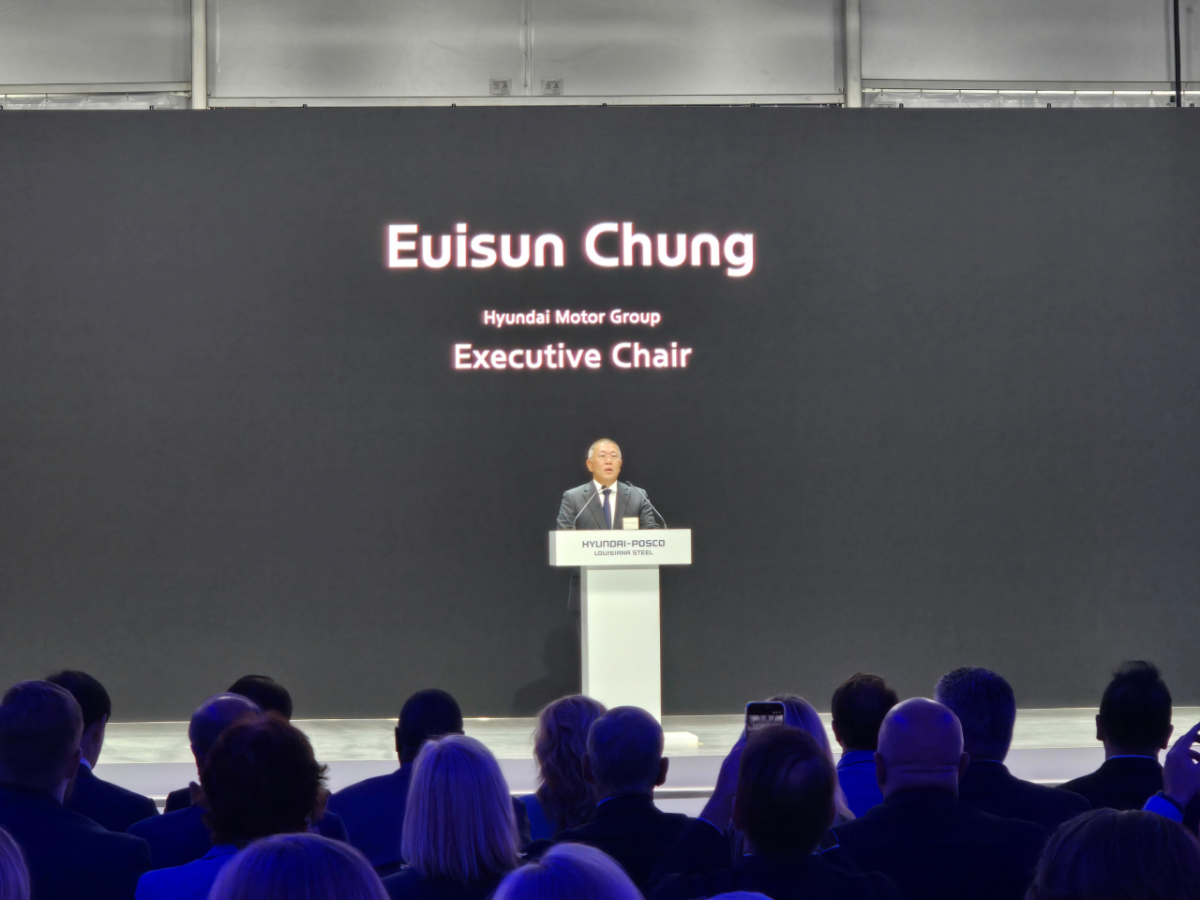
The groundbreaking of Hyundai-POSCO Louisiana Steel (HPLS) on September 4 was the kind of photo opportunity Korean corporate leaders rarely stage together in public. CEO Chairman Jay Y. Lee of Hyundai Motor Group stood alongside POSCO executives as both companies committed to splitting an $8 billion project to build what they described as the United States’ first electric-arc-furnace steel plant dedicated exclusively to automotive sheet.
Why this alliance exists — and why it is fragile
The partnership is not born of friendship. It is born of necessity, and of a specific set of American conditions that make going it alone impractical for either company.
The United States imported roughly 25 percent of its steel in recent years before tariffs reshaped that equation. But even with Section 232 duties in place, building a greenfield automotive steel plant in America carries risks that neither Hyundai Steel nor POSCO wanted to bear alone in 2023, when the initial plan was unveiled at the White House. Splitting ownership meant splitting capital exposure, technical risk, and the long ramp to profitability that any new steel mill faces.
It also meant something else: access. Hyundai Steel brought automotive-grade flat-steel expertise and existing relationships with Hyundai Motor and Kia. POSCO brought scale — it is the world’s third-largest steelmaker by output and has been investing heavily in clean steel technology. Together they could bid for US government support, state incentives, and the attention of a political class that views domestic steel as a strategic asset.
The plant’s design reflects that compromise. HPLS will use direct-reduction iron and electric-arc furnace technology, producing cold-rolled automotive sheet with significantly lower carbon emissions than the blast-furnace routes that still dominate American steelmaking. The integrated flow — from raw material through molten steel, continuous casting, hot rolling and cold rolling — under one roof is unusual for the US and mirrors the most efficient Asian mills. That efficiency is exactly what the American market lacks.
Who wins, and who loses
Hyundai Motor and Kia win first. Their North American operations have struggled to secure enough domestic automotive-grade steel to meet local-content rules under the Inflation Reduction Act, which ties EV tax credits to battery and mineral sourcing — and increasingly, to where the steel in those vehicles comes from. Having a US-based source of low-carbon auto sheet directly adjacent to their Georgia and Alabama plants is a supply-chain improvement that will matter as Washington tightens rules on green vehicle incentives.
Louisiana wins too, in the short term. HPLS will create over 1,300 jobs during operation and consume significant local infrastructure. Governor Jeff Landry’s presence at the groundbreaking was a signal: this state is positioning itself as a magnet for heavy industry in a way that many Southern states are now competing to do.
The American steel industry as a whole gains a modest boost. But it also gains a lesson in what tariff protection alone cannot solve. The United States has protected its steel sector for years and still cannot produce enough high-grade automotive sheet domestically at competitive cost. HPLS proves that the solution requires foreign technology and capital — precisely the kind of arrangement that protectionist politicians find uncomfortable to celebrate.
European and Japanese steelmakers are the implicit losers in this particular framing. Nippon Steel’s attempted acquisition of US Steel collapsed under political pressure, and European producers have little presence in the American automotive sheet market. Hyundai and POSCO are capturing the high-value segment of the US steel market faster than any rival can respond.
The decarbonization argument is real but narrow
Chairman Lee emphasized the emissions reduction at the groundbreaking, and the numbers matter. Electric-arc furnace production using direct-reduction iron emits roughly 60 to 70 percent less CO2 per ton than conventional blast-furnace route steel. For automotive buyers under pressure to report Scope 3 emissions reductions, that distinction is commercially meaningful — not just PR.
But this plant does not fundamentally challenge China’s dominance in global steel. China still produces more steel than the rest of the world combined, and its overcapacity is the structural problem driving trade tensions. HPLS adds 2.7 million tons of annual capacity — a credible regional supplier for North America, but not a pivot point in the global steel balance. The real question is whether American demand for clean steel can grow fast enough to justify the investment once China’s surge subsides or US policy shifts.
What happens next
Construction began in the fourth quarter of this year, with production expected to start in 2029. That timeline means the project will run through at least one US presidential transition. Tariff regimes, IRA interpretations, and state incentive commitments could all change between groundbreaking and first steel.
The equity structure — with Hyundai Motor, Kia and POSCO as primary investors — suggests the partnership is stable for now. But alliances built to manage risk are different from alliances built on shared strategy. When HPLS begins shipping automotive sheet around 2029, Hyundai Steel and POSCO will once again be competitors supplying the same customers. The question is whether the joint venture creates enough shared value to keep them cooperating beyond that point, or whether the easy collaboration ends the moment the first coil rolls off the line.
For now, the image of two rivals standing together in Louisiana is striking. It is also time-limited.