Hyundai Strike Could Cascade Through Asia's EV Supply Chain
Hyundai Motor's first full strike in a decade has already sent shockwaves through Samsung semiconductors and POSCO steel. If bargaining stalls, the ripple effects could reshape global EV supply chains.
The Strike Isn’t Just About Hyundai — It’s About Who Controls Asia’s EV Supply Chain
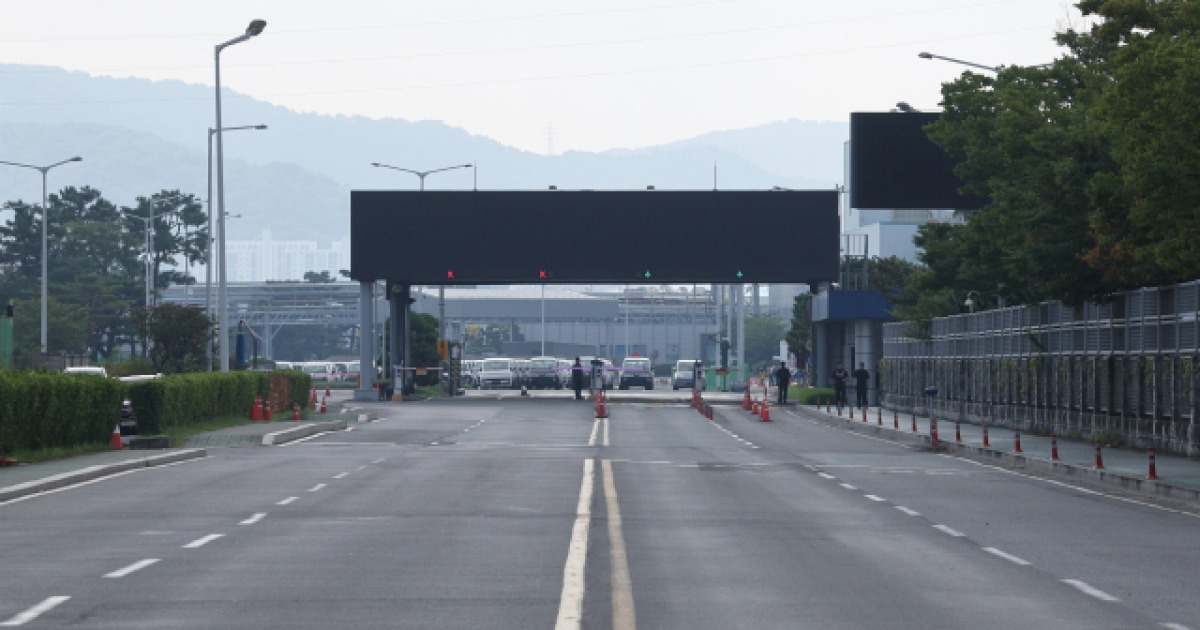
Hyundai Motor Company’s union has parked the conversation. On August 21, the company’s first full-scale strike in a decade rolled out across its Ulsan plant, and within hours the dominoes began falling beyond factory gates.
The core dispute is stubbornly familiar: wage increases, a 50% bonus hike, rehiring dismissed workers, and extending the retirement age. Negotiations are set to resume August 24 at the Ulsan facility — the 17th round — and the union has already suspended its planned partial strike over that date as a goodwill gesture. Whether further walkouts unfold on August 25 and beyond will hinge entirely on what happens in that room.
But the numbers already tell a story bigger than wages.
Cumulative strike time has reached 60 hours since the union first mobilized after a May 6 meeting collapsed. Because Hyundai runs shift-based production, that 60-hour figure translates into roughly 120 hours of total production-line downtime — and industry estimates put the output gap at around 55,200 vehicles. That is not a rounding error. For a company that shipped roughly 2.9 million units globally last year, losing that many vehicles in a single dispute window is a material hit.
Here is what most English-language coverage of this strike misses: it is not just Hyundai Motor at risk. The labor action is already creating secondary disruptions across the very supply chain that makes Asian electric vehicles competitive.
Samsung SDI and Samsung Electro-Mechanics — both critical battery and component suppliers to Hyundai’s EV line — have reported staffing and scheduling pressures tied to the disruption. POSCO, the world’s third-largest steelmaker and Hyundai’s dominant domestic supplier, has felt the squeeze on steel-allocation timelines. HD Hyundai Heavy Industries, Hyundai Motor’s parent-affiliated heavy-equipment arm, is itself heading to the Central Labor Relations Commission on August 24 for a mediation hearing. If the commission grants authorization and a majority of workers vote yes in a August 25–27 ballot, that subsidiary will walk out legally too.
Two major Hyundai-group entities in labor strife at once changes the calculus entirely.
Who Wins, Who Loses
Hyundai’s union wins if the company concedes on the bonus structure and retirement-age extension. Both are symbolic but politically charged — they signal that workers share in Hyundai’s profitability and that age discrimination is no longer tolerable inside the chaebol system. A deal that includes these items would set a precedent for other Korean manufacturers, not just Hyundai Motor but Kia, Hyundai Mobis, and the wider group.
Hyundai Management wins only if it can contain the dispute to wages and refuse structural concessions. The company has strong leverage: it has been rebuilding supplier relationships outside Korea, diversifying into Chinese and Southeast Asian battery sources, and pressuring POSCO to absorb cost increases. But leverage works only while the factories keep running.
POSCO loses in the short term. A Hyundai line slowdown means fewer off-take orders for Hyundai-grade automotive steel. POSCO has been investing heavily in electric-vehicle-specific grades — high-strength, lightweight sheets that command premium margins — and any demand shock from a stalled Hyundai plant directly undercuts those plans. The longer the strike drags, the more POSCO feels the pain.
Samsung Semiconductor players lose through indirect channels. Samsung SDI’s battery production schedule is partially tied to Hyundai’s delivery cadence. When the assembly line halts, battery shipment schedules shift, and Samsung’s own capacity-planning models get messy. Samsung Electronics’ semiconductor division — a supplier of automotive-grade chips used in Hyundai’s growing ADAS and EV powertrain electronics — does not feel this directly, but downstream inventory corrections will eventually echo there.
Chinese EV makers gain — quietly. While Hyundai grapples domestically, BYD, NIO, Xpeng, and SAIC are shipping record volumes to Europe, Southeast Asia, and Latin America. Every day Hyundai cannot meet delivery commitments in key export markets gives Chinese competitors an opening to capture dealership floor space and consumer attention.
Global consumers win only if the strike forces Hyundai to restructure its Korean cost base permanently. That outcome would lower long-term vehicle prices. But in the near term, supply disruptions raise costs across the board.
The Ripple Is Already Spreading
The most underreported dimension of this dispute is how tightly coupled Hyundai’s Korean supply chain remains to its own production rhythm. Even though Hyundai has been reshoring some component sourcing and building out a Southeast Asian supplier ecosystem, the Ulsan plant still draws the bulk of its specialty steel from POSCO and its battery cells from Samsung SDI — both headquartered in South Korea, both deeply integrated into Hyundai’s just-in-time delivery system.
When Ulsan sneezes, Seoul’s industrial corridor catches a cold. That is the structural reality English-language readers often overlook: Hyundai is not just one automaker. It is the anchor of an entire Korean industrial cluster stretching from raw steel to finished vehicles. Disrupting one node disrupts them all.
The HD Hyundai Heavy Industries angle adds another layer. If that union gains legal strike authorization next week, Hyundai Group will simultaneously face labor action at two of its largest affiliates. The parent company has historically managed disputes sequentially — settling one before the next begins — but parallel walkouts change the pressure dynamic dramatically.
What Happens Next
Three scenarios are plausible.
The quick deal path. Negotiations on August 24 produce a framework agreement on wages and bonuses, with retirement-age and rehiring issues deferred to a subcommittee. Production resumes within a week, and the supply-chain disruption remains contained to a two-to-three-week delay. POSCO absorbs a minor allocation shortfall; Samsung SDI recalibrates shipments. BYD gains a few percentage points of European market share in the interim. This is the most likely outcome if both sides recognize the cost of escalation.
The prolonged standoff path. Talks stall. Partial strikes resume on August 25 and expand. HD Hyundai Heavy Industries receives strike authorization. Production losses climb toward 100,000+ vehicles over a month. POSCO pivots steel allocations to other Korean automakers and Japanese rivals, but at lower margins. Samsung SDI faces inventory glut risk. Chinese EV exports accelerate into the gap. This is the scenario that triggers supply-chain anxiety in Tokyo, Shanghai, and Detroit.
The structural-break path. The dispute forces Hyundai to re-engineer its Korean cost structure fundamentally — larger automation investments, offshoring of certain production steps, renegotiated supplier contracts. This would be the most consequential outcome for global EV economics. If Hyundai successfully reduces its Korean labor dependency without sacrificing quality, it sets a template other Western and Korean automakers could follow. If it fails, the cost of producing EVs in Korea rises permanently, weakening the country’s competitiveness against China’s integrated supply chains.
Why This Matters Beyond Korea
East Asia produces roughly 60% of the world’s electric vehicles. Hyundai is one of three dominant Korean automakers in that calculation. A sustained labor disruption at the largest of the three does not stay local — it reshapes shipping schedules, component allocation, and competitive positioning across the region.
The strike began as a workplace dispute over wages and working conditions. It has become a stress test for the entire Korean auto-industrial model.
What happens in that Ulsan negotiation room on August 24 will determine not just whether cars roll off the line next month, but how the rest of Asia recalibrates its EV supply chain around a suddenly less predictable Korean anchor.