Hyundai's Strike Truce Is a Moment of Truth for Korea's Auto Industry
Hyundai Motor's union has paused its partial strike as wage negotiations resume—yet the company faces mounting losses and intensifying Chinese EV competition. Whether this truce holds could determine if Korea's auto industry can pivot fast enough or slow down entirely.
The Strike Suspended—But Not Resolved
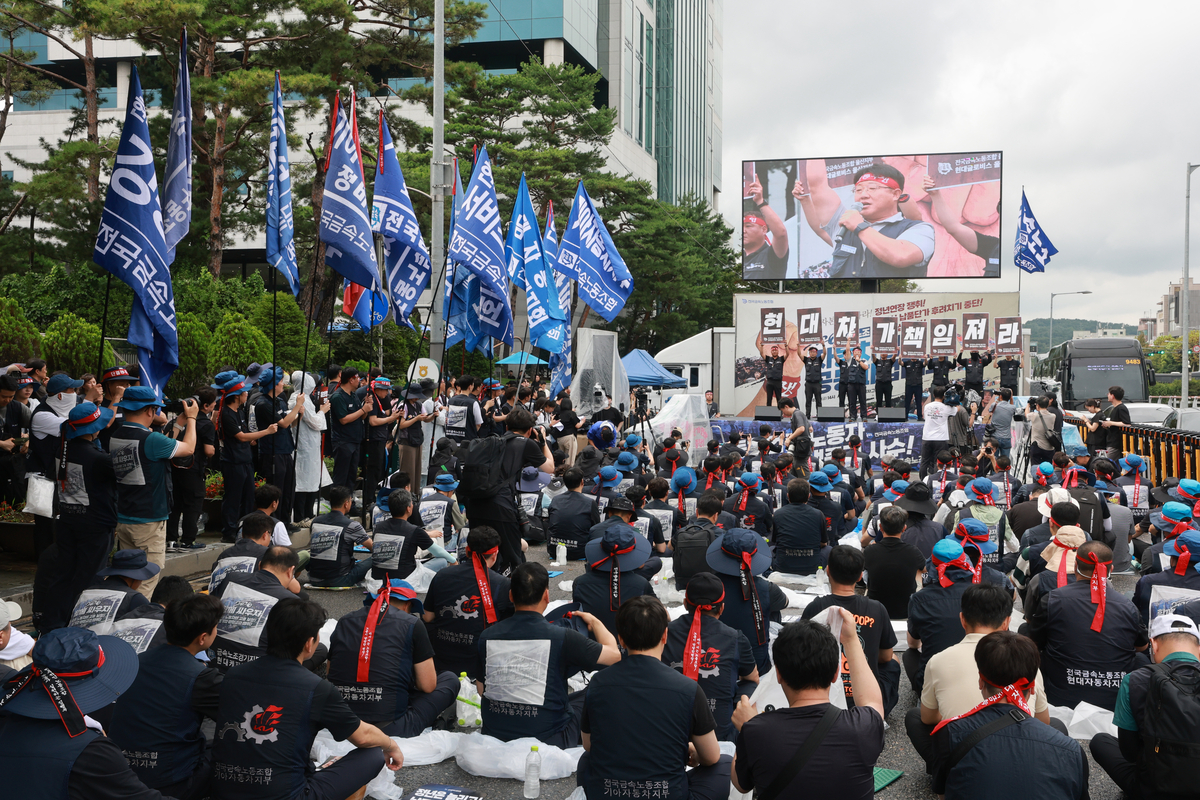
Hyundai Motor Company’s labor union has called off its partial strike scheduled for the 24th, but not because the underlying dispute has been settled. The union of the Korean Metal Workers’ Union Hyundai chapter said it would suspend the action only after both sides agreed to resume the 17th round of wage negotiations at the Ulsan plant that same day. The 25th strike remains on the table, and union leaders made clear they will decide whether to proceed based on how the talks go.
The standoff has been dragging since an initial meeting in May. Since then, the union has conducted intermittent walkouts ranging from two to six hours at a time. On the 21st, it staged an eight-hour full strike—the first in a decade. By suspending the 24th action, the union is signaling it still believes negotiation is preferable to confrontation, but it has not conceded a single demand.
What makes this pause notable is the sequencing. Management had pressed for the union to cancel both the 24th and 25th actions before any talks would proceed. The union countered by agreeing to resume negotiations but refusing to precommit to withdrawing the strike threat. The compromise—talks on the 24th with the 25th still hanging—represents a fragile middle ground that neither side is fully satisfied with. That is precisely why it could unravel quickly.
The Stakes Are Measured in Hours and Won
The cost of this dispute is already severe and climbing. Cumulative strike time has reached 60 hours. Because Hyundai operates separate morning and afternoon shifts for technical and production workers, the effective production downtime doubles to 120 hours. Industry estimates put the output shortfall at roughly 55,200 vehicles. The financial damage is projected at between 2.2 trillion and 2.3 trillion won—close to 1.6 billion US dollars in lost sales.
These numbers matter not because Hyundai cannot absorb them, but because they reveal the structural vulnerability at the heart of Korea’s automotive model. The union has been striking for a substantial wage increase this year, a 50 percent rise in bonuses, reinstatement of members fired during past union activities deemed illegal, and extension of the mandatory retirement age. Each of these demands touches a fault line in Korean industrial relations: the tension between lifetime employment norms and the pressure to cut costs, between worker seniority and the need for workforce flexibility.
There are secondary costs that do not appear on quarterly P&L statements but may matter more in the long run. Supplier relationships are strained—partners who rely on steady throughput from Ulsan face their own inventory and scheduling disruptions. Dealer networks, already feeling the heat from Chinese EV entries in export markets, worry that missed delivery targets will erode confidence in Hyundai’s ability to supply consistently. And internally, the strike has sharpened a generational divide among workers: senior employees who joined under the old growth-era compact view the demands as defending hard-won gains, while younger technicians and software-focused roles see the plant’s future depending on agility, not entrenchment.
Why Chinese Competition Changes Everything
The timing of this strike pause is impossible to read without looking past the factory gates in Ulsan. Chinese automakers are currently flooding global markets with electric vehicles at prices that European and Korean manufacturers struggle to match. BYD, Geely, and other Chinese brands are expanding aggressively into Southeast Asia, the Middle East, Latin America, and increasingly Europe. Hyundai’s own market share in key segments is under pressure—not from Toyota or Honda this time, but from manufacturers whose state-backed supply chains and domestic scale allow them to subsidize export pricing in ways Korean firms simply cannot replicate.
Every hour of stopped production at Hyundai’s Ulsan complex is an hour in which a competitor is shipping vehicles that Hyundai is not. The gap is not just about unit volume. It is about market momentum. Electric vehicle sales are a numbers game: each model launch, each new factory ramp-up, each delivery milestone compounds. When Hyundai loses ground in one quarter, it is not merely missing sales—it is ceding the trajectory of a market transition that will define the next decade of auto manufacturing.
The competitive dynamics have shifted in subtle but consequential ways. Chinese brands are no longer competing on price alone. BYD’s Blade Battery technology, Geely’s partnership with Volvo on advanced EV platforms, and NIO’s battery-swap infrastructure are creating product narratives that Korean engineers are now racing to match. Hyundai’s Ioniq line has drawn attention, but the window to establish a commanding position is narrowing. Analysts at Seoul-based investment firms have noted that if China’s EV export growth maintains its current trajectory, Korean manufacturers could lose an additional two to three percentage points of global market share by 2027—numbers that make production delays like the current strike look less like an isolated labor dispute and more like a symptom of a broader competitive squeeze.
The Irony of a Labor Truce During an Industrial Pivot
Here is the paradox: Hyundai needs its workforce more than ever to execute its EV transition, yet the very demands fueling this strike are rooted in a model of employment that Korean manufacturers built around mass production of internal combustion engines. The union’s push for higher wages, stronger bonus protections, and extended retirement ages reflects the expectations of a workforce that delivered decades of growth under that old model. But the new model—electric vehicles, software-defined platforms, faster product cycles—requires a different kind of operational rhythm, one that Korean labor structures have not yet adapted to.
This mismatch is not unique to Hyundai. It is the defining tension across Korean heavy industry. The chaebol system was built on a social contract: workers accept long hours and flexible assignments in exchange for job security and seniority-based rewards. Electric vehicle manufacturing disrupts that contract. Fewer moving parts mean less assembly-line labor. Software integration means new skill sets that the existing workforce does not uniformly possess. State subsidies in China and Europe mean Korean manufacturers must cut costs elsewhere or find new revenue streams—neither of which comes easily when wage negotiations stall.
If the 24th negotiations produce a breakthrough, Hyundai can return to production and reclaim some of the market position it has surrendered. If they stall, the 25th strike will add another layer of disruption just as Chinese competitors are accelerating their own output. There is no neutral outcome. A resolved dispute strengthens Hyundai’s hand against BYD and its rivals. An unresolved one weakens it further.
What to Watch Next
The critical variable is whether the union and management can bridge the gap between the 50 percent bonus demand and what Hyundai’s board considers sustainable given current margin pressure. The reinstatement of fired members is a principle issue for the union—it cannot appear to back down without political cost. The retirement age extension is a structural question that goes beyond Hyundai itself; it touches the broader Korean labor framework.
Secondary signals will be telling. Watch whether supplier conferences in the coming weeks reference delivery reliability as a concern. Watch whether Hyundai’s executive team publicly reframes the company’s EV strategy to emphasize cost discipline alongside innovation. Watch whether the union’s rank and file, already showing signs of fatigue from repeated walkouts, pressures leadership toward compromise. And watch Chinese export data—if BYD and its peers continue posting record overseas deliveries during Hyundai’s downtime, the contrast will underscore exactly what is at stake.
Whatever emerges from the Ulsan talks, one thing is certain: the era of predictable labor-management relations in Korean manufacturing is over, and it will not return until the industry finds a new equilibrium between worker protections and competitive survival. Hyundai’s strike pause is a respite, not a resolution. The real test comes when the negotiations restart and the union decides whether the 25th walkout proceeds—or whether both sides have finally found a path forward in a market that no longer rewards the old ways. If they cannot, the truce will fracture, and the consequences will extend far beyond the Ulsan plant gates—into every export market where Chinese EVs are already writing the next chapter of automotive competition.