Hyundai's Decade-First Strike Is Rewiring Asia's Auto Supply Chain
Hyundai Motor's first full-scale strike in ten years has pulled parts suppliers and subcontractors into uncommon solidarity — a breach that is already echoing through steel and semiconductor timelines across Asia.
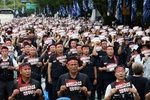
The Strike That Broke the Tier Wall
Hyundai Motor Group’s 38,000 assembly-line workers walked off the line on August 21, 2026, marking the company’s first full-scale strike in a decade. But the headline number conceals what actually makes this moment structurally significant: for the first time in modern Korean automotive history, prime-contractor workers and their subcontracted parts suppliers struck in coordinated action.
The ripple began two days earlier, on August 20, when 12,000 workers at Dae’s, Hyundai IHL, Eco Plastics, Hyundai Sung Woo Solarite, Valeo Mandu, Hyundai Mobis, and Ulsan Glovis halted operations. These were not just downstream vendors — they supplied everything from wiring harnesses to solar components to logistics, each layer sitting one or two tiers below the assembly plant. Their demands were blunt: scrap Hyundai’s requirement to cut parts prices by as much as 20 percent, and accept direct negotiations between subcontracted workers and the prime contractor.
Hyundai’s joining of that wave turned a supplier dispute into a systemic confrontation. The union’s leadership framed it explicitly as such. Park Sang-man, president of the Metal Workers’ Union, called the planned August 26 general strike an effort to “break the unequal supply chain” and transform what he described as a “reckless prime-contractor structure.”
Why This Isn’t Just a Wage Dispute
On its face, the assembly-line demands are standard Korean bargainingfare: raise the annual bonus from 750 percent to 800 percent of monthly pay, restore four dismissed workers, and extend the retirement age to 65. The union cites Hyundai’s domestic retained earnings of 101 trillion won (roughly US$70 billion) as evidence that the company can afford both without squeezing its supply base.
But the structural demand — forcing prime contractors to negotiate directly with subcontracted and non-regular workers — targets the architectural logic of Korean manufacturing itself. For decades, Hyundai and its peer conglomerates have insulated their balance sheets by pushing cost-cutting down the tier chain while retaining unilateral pricing power. Subcontractors absorb margin compression, cut labor costs through temporary arrangements, and pass nothing up the line. When the prime contractor demands a 20 percent price reduction, the pressure lands on the backs of workers who lack a direct bargaining table.
That arrangement has worked until now because each tier operated in isolation. The August 20–21 sequence represents a break: parts workers initiated the strike, and assembly workers followed, rather than the reverse. Union leaders from both Hyundai and Kia — the latter joining with an expanded-leadership strike under union chief Kang Sung-ho — publicly committed to mutual defense of each other’s demands. That cross-tier solidarity is the novelty, and it is what makes this strike consequential beyond the factory gates.
The Contagion Path: Steel, Chips, and Timelines
The most immediate downstream exposure is POSCO, Korea’s largest steelmaker and a critical supplier of high-grade automotive sheet to Hyundai. POSCO operates under the same prime-contractor model within its own subcontracting network. If Hyundai’s precedent forces structural concessions on pricing and labor negotiation, POSCO faces parallel pressure from its automotive customers and its own tiered workforce simultaneously. Any production disruption at POSCO’s Gwangyang or Pohang mills would reverberate through the steel-intensive segments of the EV battery and semiconductor equipment supply chains, where Korean steel alloys are difficult to substitute on short notice.
The semiconductor connection is less direct but no less real. Samsung Electronics and SK Hynix draw heavily on contracted labor for facility maintenance, cleanroom support, and materials handling — the same non-regular employment category at the center of Hyundai’s demands. A successful push to force prime-contractor negotiation with subcontracted workers at Hyundai creates a legal and rhetorical precedent that contracted semiconductor workers can cite. Industry analysts tracking labor risk in Korean tech have already begun flagging the possibility of coordinated action on the August 26 general strike date.
For global EV timelines, the risk is operational rather than speculative. Hyundai and Kia together represent roughly 15 percent of global EV production outside China. A partial strike — the four-hour work stoppages planned for August 24 and 25 across shifts — disrupts just-in-time sequencing more severely than a full shutdown would in a buffered inventory model. Japanese and European OEMs sourcing components from the same Korean subcontractors face compounding delays: Hyundai Mobis supplies EV motors and battery management systems, and Eco Plastics provides interior and underbody components. Even if Hyundai’s plants reopen, the inventory gap created by three days of staggered stoppages will require weeks of overtime to recover.
Who Wins, Who Loses, and What Changes
If the union secures direct prime-contractor negotiation rights for subcontracted workers, the winner is the tiered labor model’s implicit assumption: that cost pressure should flow downward without accountability upward. The loser is the pricing architecture that has allowed Korean automakers to report record margins while their suppliers operate on thinner and thinner edges. The 101 trillion won in retained earnings becomes not just a bargaining chip for bonuses but a shield against the kind of margin erosion that triggered the 20 percent price-cut demand in the first place.
For Hyundai’s competitors in Japan and China, the immediate benefit is marginal — their own labor regimes differ enough that a Korean precedent does not automatically transfer. But the strategic signal is unmistakable: the era of unaccountable subcontractor extraction in Korean manufacturing is under active legal and industrial challenge. Any OEM relying on Korean tier suppliers should treat the August 26 general strike as a inflection point, not a disruption.
The next fourteen days will determine whether the cross-tier alliance holds. Hyundai and Kia union leaders have publicly bound themselves to each other’s demands. If the prime contractors fracture that linkage — offering assembly workers a concession while leaving subcontractors exposed — the strike loses its structural power. If they concede on the negotiation point, the entire Korean automotive supply chain faces renegotiation.
Either outcome rewrites the terms of manufacturing labor in one of the world’s most concentrated auto ecosystems.