Hyundai's Strike Is a Warning Shot for Global EV Supply Chains
Hyundai Motor's first full strike in a decade has already racked up over 2.3 trillion won in lost sales. The standoff over bonuses, retirements, and layoffs reveals the fault lines in Korea's export engine—and its implications stretch far beyond Ulsan.
A Decade of Quiet Ends in Ulsan
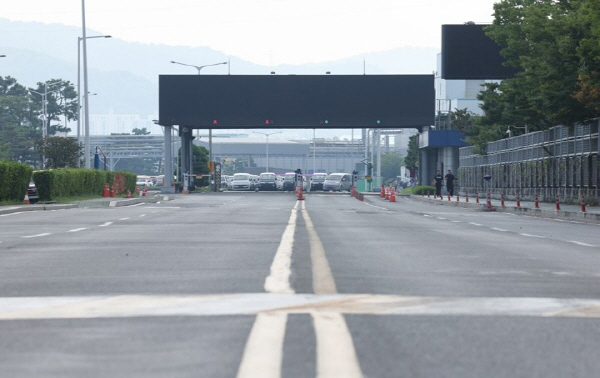
On August 21, nearly 39,000 Hyundai Motor workers walked out of the company’s Ulsan, Jeonju, and Asan plants for a full eight-hour strike. It was the first time since 2016 that the union called a complete work stoppage. By the end of the day, Hyundai’s cumulative strike hours had already surpassed half of what the union logged in its entire 2016 campaign—a year remembered as the worst in a decade.
The numbers climbing each hour are stark. Hyundai produces roughly 460 vehicles per hour. With both shifts halted, the production line loss compounds to 120 hit hours across the two rotating teams. Industry estimates place cumulative production shortfalls at over 55,200 units and sales disruption exceeding 2.3 trillion won—roughly $1.7 billion at current rates. The union has already scheduled another four-hour partial strike for August 24-25. If negotiations stay frozen, those figures multiply fast.
Three Demands, No Middle Ground
The dispute rests on three specific demands, each a flashpoint in its own right.
First, the union wants a 50 percent increase in discretionary bonuses. Their argument is structural: fixed wages make up only 54.8 percent of a worker’s take-home pay, leaving employees dependent on overtime and extra shifts to sustain a living wage. Bonuses, they say, must fill the gap.
Second, the union demands reinstatement of members fired during past union organizing activities that the company characterized as illegal. Hyundai maintains these dismissals were lawful and that there is no legal or rational basis for reversing them. The union calls it a matter of trust and relationship repair.
Third, the union seeks retirement age extensions—an issue with precedent in earlier labor agreements but one Hyundai argues belongs in political deliberation, not company-labor negotiations.
Management’s position is equally firm. A company spokesperson stated plainly that it cannot accept union demands without legal grounding or rational standards. The three issues, management contends, fall outside the scope of this year’s wage negotiations entirely.
Hyundai’s retained earnings stand at 101.3 trillion won. The union cites this figure to argue the company can easily absorb the cost of bonus increases and retirement extensions. That balance sheet reality is precisely what makes the impasse so stubborn—neither side sees reason to blink when the financial capacity exists on paper.
The Negotiations Are Frozen
Formal talks collapsed on August 18, 40 days after the first meeting of the 15th round broke down. Union leader Lee Jong-cheol said the company must present a progressed negotiation proposal before talks resume, leaving the next meeting date uncertain. Working-level staff maintain occasional contact, but no substantive movement has been reported.
The automotive industry and labor community both see a pre-Chuseok resolution as unlikely. That means at least two more weeks of rolling strikes and production losses before any seasonal breathing room arrives.
Who Wins, Who Loses
The immediate loser is Hyundai’s competitiveness in its most critical market. The company is accelerating its EV push to compete with Chinese manufacturers who have captured global market share through aggressive pricing. Every day of stalled production is a day Beijing gets further ahead.
The ripple effects extend through Korea’s broader supply chain. POSCO, the steelmaker that supplies Hyundai, feels demand pressure from idle stamping lines. Samsung SDI and LG Energy Solution, both key battery suppliers to Hyundai’s EV divisions, face downstream scheduling disruptions. The Ulsan industrial complex—where steel, autos, and batteries converge geographically—acts as a single organism, and one organ shutting down weakens the rest.
Workers face uncertainty. Extended strikes erode morale and risk hardening management’s stance. The fired members whose reinstatement is demanded remain outside the plants regardless. Families dependent on bonus income feel the strain immediately.
Management loses legitimacy if the standoff drags into Q3 earnings season. Hyundai’s profit guidance for the year will increasingly depend on how many production days slip through. Investors watching quarterly reports in October will see the damage quantified.
What This Means Beyond Korea
Hyundai’s strike is not an isolated labor dispute. It is a stress test for Korea’s entire export manufacturing model.
Korea’s economy depends heavily on global industrial competitiveness. When the largest automaker in Asia pauses production for weeks, the signal reaches commodity traders, component suppliers in China and Southeast Asia, and EV buyers waiting for deliveries. The 2.3 trillion won figure is Hyundai-specific, but the supply chain disruptions affect dozens of tier-one and tier-two partners across the region.
China’s rise in EVs adds urgency. Chinese manufacturers have built vertical integration that Korean companies are still trying to replicate. Any production delay at Hyundai compounds the competitive gap. The union’s demands—higher fixed pay, job security, extended careers—reflect a workforce anxious about whether traditional manufacturing jobs will survive the transition to electric vehicles. That anxiety is not unique to Korea. It echoes across Japan, Germany, and increasingly across the United States.
The structural question underneath the bonus dispute is whether Hyundai can absorb higher labor costs without losing pricing competitiveness against Chinese rivals who operate with thinner margins and state support. If the answer is no, the strike becomes a symptom of a deeper industrial transition—one that will reshape employment, trade flows, and corporate strategy in East Asia for years.
What Happens Next
The union will likely escalate. The Central Dispute Countermeasure Committee meets August 25 to discuss further action. Another round of strikes is probable unless management offers a concession on at least one of the three demands—a reset of fired members’ status, a bonus framework, or a pension discussion.
A prolonged conflict risks setting a precedent. If Hyundai yields under strike pressure, other Korean unions will calculate that disruption pays. If management holds firm and the union fractures, labor’s influence across Korean manufacturing weakens significantly.
The numbers already on the board—55,200 missed vehicles, 2.3 trillion won in lost sales, 120 cumulative production hit hours—tell a story that will affect Hyundai’s strategy long after the next negotiation table is set. The question is whether this strike becomes a turning point in Korean industrial labor relations or another episode in a decades-long stalemate.
For now, the assembly lines in Ulsan are silent, and the rest of the supply chain is holding its breath.