IAEA's Iran Referral Is the Hardest Escalation in Two Decades
The IAEA board's vote to refer Iran to the UN Security Council marks the sharpest diplomatic escalation against Tehran in twenty years. With Russia and China already opposing, the real fight now moves to the UNSC — and the consequences will reverberate through energy markets and alliance politics across the Middle East.
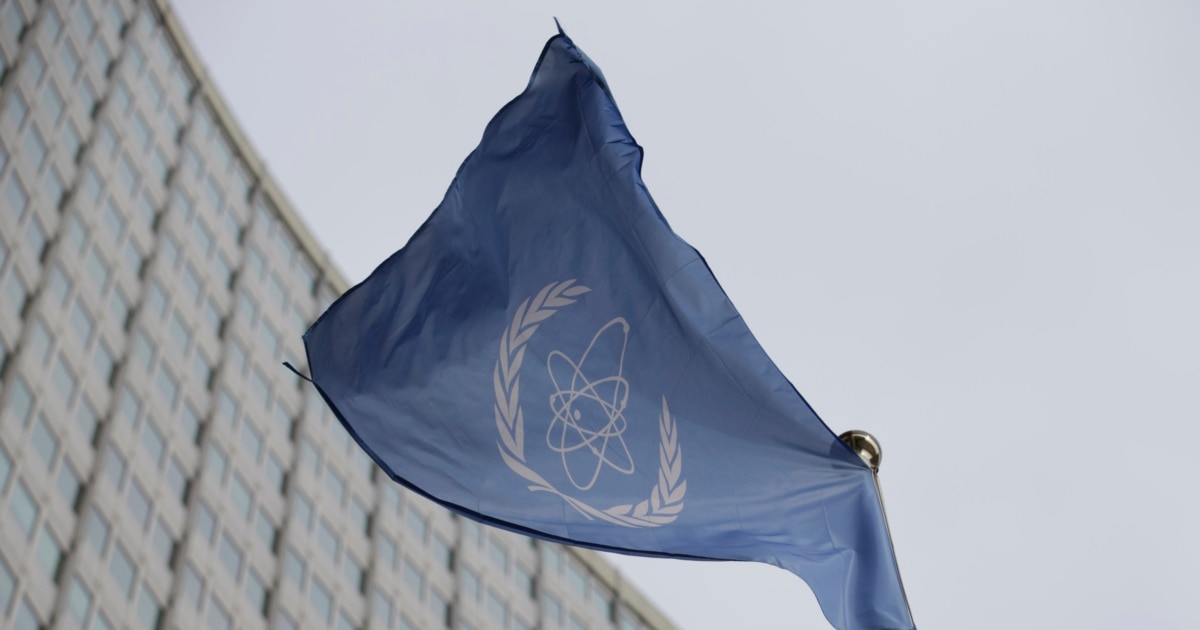
The referral is here — and it changes everything
Twenty years ago, the IAEA board last referred Iran to the UN Security Council. The image that followed — then-Secretary-General Mohamed ElBaradei testifying before Congress, the world watching a stalled diplomacy process — is now resurfacing in sharper form. On the 9th, the board voted 23 in favor, 3 against, with 8 abstentions to refer Tehran for violations of the Nuclear Non-Proliferation Treaty. Russia, China, and Niger voted no. The resolution was submitted by the United States, Britain, France, and Germany.
The immediate trigger is technical but consequential. On the 7th, the IAEA announced it could no longer verify Iran’s nuclear material and facilities because Tehran had stopped providing information and blocked access to sites. Two days later, the board acted. The timeline matters: the verification breakdown came first, the political referral followed. That sequence suggests the IAEA’s technical assessment carried weight with member states that had been hesitant.
Who wins, who loses
The EU delegation in Vienna, led by Ambassador Karl Hellerwald, framed the decision as a return to compliance, not a punishment. But the mechanics of a UNSC referral change the incentive structure for Tehran overnight. If the Security Council acts, automatic snapback sanctions under the 2015 Joint Comprehensive Plan of Action (JCPOA) can be restored — sanctions that were suspended when the deal was implemented and that targeted precisely the sectors Iran depends on for revenue.
That is the win for the E3 and the United States. For Iran, the loss is immediate and material. Sanctions on its oil exports, banking sector, and shipping insurance would tighten again. The Iranian delegation in Vienna condemned the vote as political, saying it was adopted without consensus. That is the standard line — but the vote tally itself tells a different story. Twenty-three boards members sided with the referral. Even some countries that have historically balanced between Tehran and the West did not block it.
The Russia-China factor — and what it means for the next round
Russia and China’s opposition is predictable. Both have veto power in the Security Council and both have invested diplomatically in keeping Iran within a sphere of influence that limits American leverage in the region. Their votes against the IAEA referral signal that they will likely use that veto if a binding resolution reaches the council. But the IAEA referral is not itself a sanction. It is a procedural step — one that obligates the Security Council to consider the matter, not one that imposes penalties.
This is where the nuance lies. A vetoed resolution means no new sanctions. But the referral itself is a signal that the diplomatic envelope has contracted. Iran can no longer claim that the international community is divided enough to let it continue its current trajectory. The fact that the IAEA board — a technical body, not a political one — reached this threshold changes the narrative, even if the Security Council stalls.
Trump’s posture adds another variable
President Donald Trump commented on Iran’s nuclear program on the 8th, during a September 11 memorial event, stating that Iran has “zero chance” of acquiring nuclear weapons. He has made similar declarations before. What is different this time is the alignment between his public stance and the IAEA’s technical finding. When the world’s chief nuclear inspectorate says it cannot verify Iran’s program, and the American president says Iran cannot get the bomb, the diplomatic isolation tightens from two directions. Tehran faces pressure from above (the UNSC) and from below (the technical reality that its own ambiguity is no longer shielding it).
Energy markets and the Gulf calculus
Iran’s neighbors are watching this closely. Saudi Arabia and the United Arab Emirates have long feared that a nuclear-armed Iran would trigger a regional arms race or embolden Tehran’s proxy networks. A UNSC referral raises the cost of that scenario for Iran, but it also raises the risk of miscalculation. If Tehran feels cornered, the most dangerous moves are not the ones that make headlines — they are the ones that destabilize the Strait of Hormuz, through which roughly 20 percent of global oil passes.
Energy markets are not reacting dramatically yet, but that is partly because the referral is still procedural. The real price impact comes only if the Security Council acts and snapback sanctions bite. Until then, the market is pricing in uncertainty, not outcome.
What happens next
The Security Council will now consider the file. Russia and China will almost certainly block any binding resolution that imposes new sanctions — that is their established position. But the IAEA referral ensures the issue stays on the council’s agenda. It prevents the kind of quiet drift that has characterized Iran diplomacy since the JCPOA began unraveling.
Iran’s likely responses fall into three categories: diplomatic (seeking to fracture the coalition that backed the referral), operational (further restricting IAEA access or advancing enrichment at deeper levels), and-proxy (testing whether its network in the region can create leverage without crossing into direct confrontation). Each path carries risk. The first invites further isolation. The second raises the threshold for future diplomacy. The third risks escalation.
The most important number to watch now is not the 23-3 vote tally. It is the time it takes for the Security Council to convene and the language of whatever resolution it produces — or fails to produce. The referral is the hard part. What comes after determines whether the pressure translates into a negotiation or into a crisis.
Why this matters beyond the Middle East
n
The NPT has always depended on a bargain: non-nuclear states forgo weapons in exchange for access to peaceful nuclear technology and a security guarantee from the nuclear club. When the IAEA says that bargain is broken, the question is whether the international system responds with credible consequences or with resignation. A referral that leads nowhere weakens the non-proliferation regime for every other case — North Korea, Saudi speculation, Turkish ambitions. A referral that leads to action sets a precedent that changes how states calculate the cost of ambiguity.
The board voted. The council must now decide.