Britain Rebrands Jerusalem Consulate After Israel Forces Closure
The UK's decision to rebrand its east Jerusalem consulate as the 'UK Mission' marks the sharpest diplomatic break between London and Jerusalem in decades — and a signal that Britain is charting a distinctly non-American course on Israeli settlements.
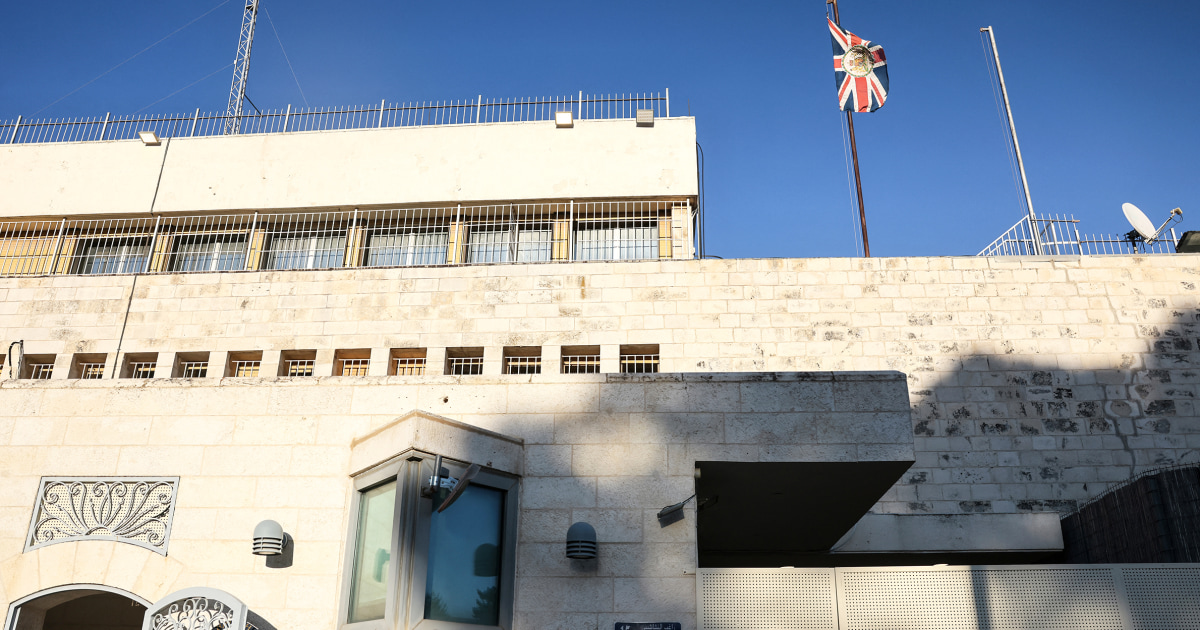
Britain’s quiet act of defiance in east Jerusalem
The plaque came down on a Thursday morning in Sheikh Jarrah. Workers swapped the brass sign reading “British Consulate General” for something plainer. The building stayed open. The flag still flies above the same neo-classical facade that has watched over this neighborhood since the mid-nineteenth century. But the name — after nearly two centuries — no longer calls it a consulate.
Britain has renamed its east Jerusalem outpost the “UK Mission,” a compromise carved out after Israel served a 30-day closure order in retaliation for London’s settlement sanctions. The move looks small on paper. In practice, it is one of the most consequential diplomatic fractures between the UK and Israel since the creation of the modern state.
How we got here
The chain of events started with Britain announcing sanctions targeting goods made at Israeli settlements in the occupied West Bank — a trade measure aimed at economic pressure rather than mere rhetoric. This was not a symbolic gesture. The sanctions regime, enacted under the UK’s own post-Brexit trade powers, imposed duties and licensing requirements on specific categories of settlement output, including agricultural products, minerals, and industrial goods. The policy was designed to raise the cost of occupation economics, not to sever ties.
Israel responded by invoking a procedure it had not used before against a Western ally: ordering the consulate shut. The closure directive came through diplomatic channels on a Wednesday evening, giving the British mission a thirty-day window before formal enforcement. It was the first time Israel had threatened to close a Western diplomatic mission on its soil in the modern era.
Gideon Saar, Israel’s foreign minister, framed the closure as a legal necessity — a response to what he called Britain’s “hostile actions” against the state. Ed Miliband, his British counterpart, rejected that premise entirely. “Our Consulate General building will not be closing,” Miliband said in a statement released from London. “It will be known as the UK Mission, Jerusalem from today.” Saar’s office confirmed later that some diplomats could remain under a bilateral arrangement, though the consulate would formally cease to exist under that title.
The consulate was founded in 1839 — long before the State of Israel existed. It operated through Ottoman rule, the British Mandate, Jordan’s annexation of east Jerusalem, and Israel’s 1967 capture of the city. It predates the very state that now claims the authority to close it. British consular officers in Jerusalem have documented human rights conditions, facilitated emergency visits, and served as a lifeline for Palestinians caught between Israeli military authority and the absence of their own state apparatus.
Why the name change matters more than it sounds
The rebrand is not primarily about semantics. It is about jurisdiction and symbolism — two forces that matter enormously in a city where every street corner carries competing claims to legitimacy.
The east Jerusalem consulate is Britain’s institutional foothold in the occupied territories — the physical address from which it engages with Palestinians in Jerusalem, the West Bank, and Gaza. It is also a statement, however quiet, that Britain does not accept Israel’s annexation of east Jerusalem as legitimate. Most countries do not. By keeping a presence there, albeit under a different name, Britain preserves a channel that the US has largely abandoned since moving its embassy to Tel Aviv and recognizing Israeli sovereignty over the city in 2018.
The British embassy to Israel remains in Tel Aviv, handling relations with the Israeli government. The west Jerusalem-to-east-Jerusalem divide is intentional: Tel Aviv for diplomacy with Israel, east Jerusalem for engagement with Palestinians. Closing the consulate would have erased that second pillar and collapsed Britain’s entire diplomatic architecture in the region into a single-channel relationship with the Israeli state.
A policy divergence Washington does not share
The United States has not imposed settlement sanctions. It has not challenged Israel’s legal authority over east Jerusalem in this way. The UK’s move places it in a narrow band of Western countries willing to take economic and diplomatic steps that contradict US posture — and that divergence is widening, not narrowing.
Britain has repeatedly criticized Israel’s conduct in Gaza and its settler violence in the West Bank. The current sanctions regime targets specific settlement goods — a narrow but symbolically heavy measure. Israel’s response, demanding closure of a diplomatic mission, was proportionally aggressive and sent a clear signal: the cost of defying Jerusalem on settlement policy is rising, and London has learned it firsthand.
For English-language readers accustomed to seeing the UK as a reliable American ally on Middle East policy, this is the non-obvious story. The UK is doing something Washington will not do, and Israel is treating it as an act of hostility equivalent to an act of war. That conflation — between sanctions policy and diplomatic aggression — reveals how deeply the settlement question has become entangled with Israel’s broader anxiety over international legitimacy.
Who wins, who loses
Britain wins on principle. It keeps a foothold in east Jerusalem without escalating to a full rupture. The UK Mission designation is legally modest but diplomatically significant — it signals that London still recognizes a distinct Palestinian presence in the city, one that deserves institutional representation. It also preserves Britain’s ability to document conditions on the ground, something that becomes harder when your diplomatic map is redrawn by the very state you are observing.
Israel wins on leverage. It forced a name change and reduced the consulate’s operational profile. Saar’s statement that the consulate would “formally end operations” suggests Israel is preserving the option to tighten restrictions further — limiting access, restricting staff, or revisiting the compromise that allowed diplomats to stay at all. The message was unambiguous: Britain’s next move on settlements could cost more than a plaque.
The Palestinians lose on access. Every reduction in consular capacity in east Jerusalem narrows their diplomatic runway. The Tubassi family property damaged by settlers in Jalud, mentioned in earlier reporting, illustrates why a British presence matters beyond symbolism — it is a channel for accountability that no other Western mission in the city currently offers at this scale. When settlers burn homes and Israeli courts provide limited recourse, a consular officer who can file a report, make a phone call, and apply quiet pressure is not nothing. It is a thin thread, but it is the only one many Palestinians have left.
Second-order effects
The fallout extends well beyond Sheikh Jarrah. European capitals are watching closely. France has a consulate in east Jerusalem. Germany does not. Spain recently opened a diplomatic liaison office. The UK’s confrontation sets a template — one that other European governments may either follow or flee from, depending on how they assess their own vulnerability to Israeli retaliation.
Within Britain, the episode has reignited a debate that has simmered since Brexit: what is the UK’s independent foreign policy identity when it is not backed by Washington? The settlement sanctions were always going to provoke Israel. The question was whether London would stand firm when the backlash came. The name compromise suggests a government willing to absorb tactical pain rather than surrender strategic direction — a posture that will be tested repeatedly in the months ahead.
In Israel, the episode is being absorbed into a broader narrative of external hostility. Hardline ministers have welcomed the consulate closure as a vindication of their confrontational stance. Moderate voices within the coalition remain quieter, aware that alienating Britain carries costs beyond a single building in east Jerusalem — costs that multiply when those same costs are shared with Germany, France, and the EU institutions where Britain still seeks influence.
What comes next
Netanyahu’s government faces an election later this month. Hardliners have accused the Labour government of hostility toward Israel. The consulate dispute gives them a concrete grievance — a tangible story they can tell voters about British betrayal. If the election returns a more nationalist coalition, the UK Mission could face further restrictions: staff reductions, access limitations, or a full expulsion. Israel could revisit the compromise that allowed diplomats to stay, turning a name change into an eviction.
Britain’s government has signaled it will not back down on the substance of its sanctions policy. The name change was a tactical concession, not a strategic retreat. But the durability of that position depends on whether London views the consulate as worth the diplomatic cost — and whether the current Israeli government stays in power long enough to enforce any further moves.
The building in Sheikh Jarrah will keep flying the Union Jack. Just under a different sign. For two centuries, that sign has announced who is watching, who is present, and on which side of the occupation line they choose to stand. The new sign says less. But it still says enough.