Indias Largest Voter Purge Has Global Warning Signs
Over 130 million Indians have been struck off electoral rolls in what critics call the largest disenfranchisement in history. The move threatens not just votes but access to food, subsidies, and basic dignity for the country's most vulnerable citizens.
The Architecture of Exclusion
India has undertaken the most aggressive voter purge the world has ever seen. Estimates place the number of deleted names at roughly 130 million — an figure so vast it dwarfs every previous exercise in electoral housekeeping. The government says the cleanup was legitimate: dead people, duplicates, and long-term absentees removed. Critics say something else is happening entirely.
What makes this episode notable is not just the scale but the mechanism. It begins with a shift in burden of proof. In ordinary Indian elections, an election officer visits a polling area, records who lives there, and adds them to the roll. Now the state requires voters to prove lineage and continuity by producing records — parent or grandparent voting history going back more than two decades, proof of residence, matching spellings across documents that never before needed to align.
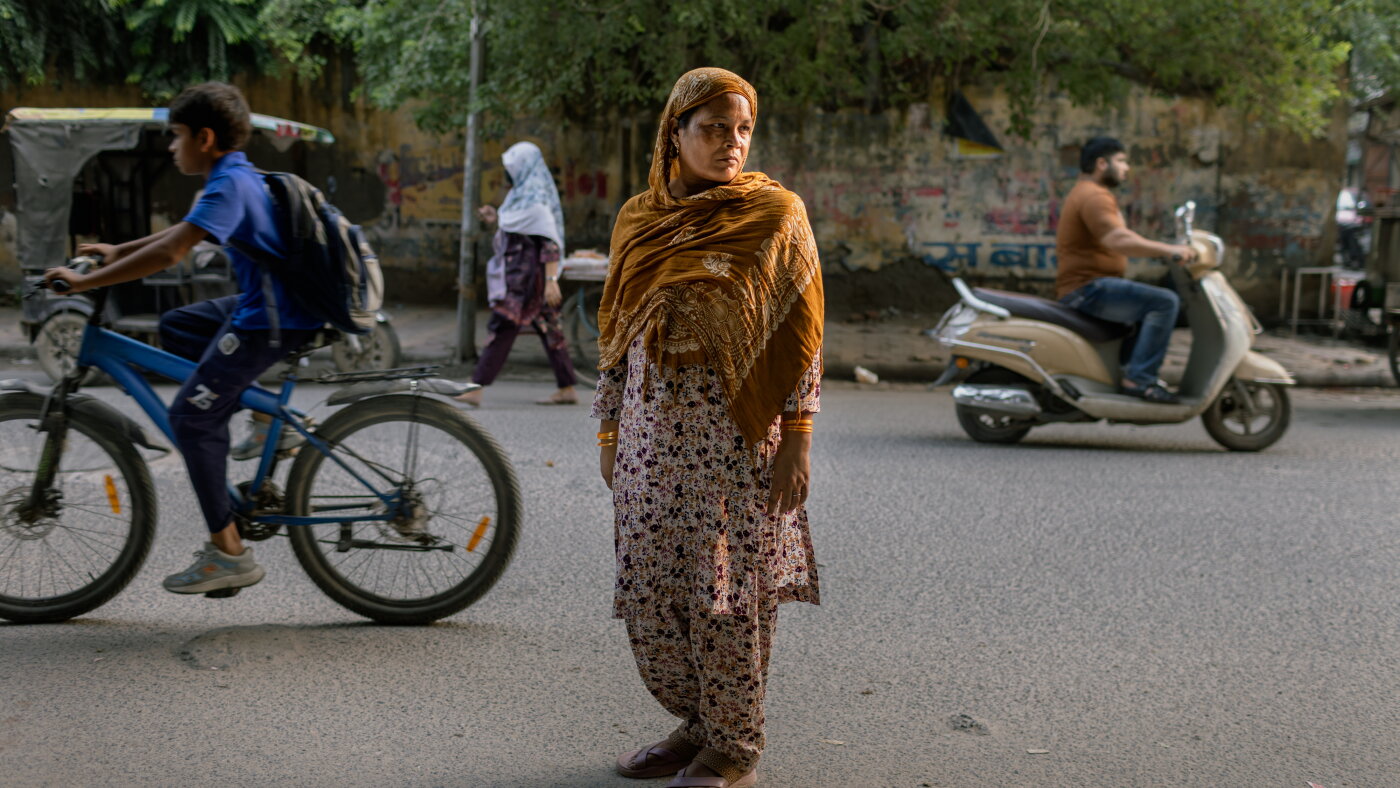
Kanchan, a teacher and mother of one living in a tin-roofed slum under a Delhi flyover, described the change bluntly. Officials came to her neighborhood, asked her to sign forms, and then her name vanished from the roll. She had done everything asked of her. Others were told to produce documents they never were expected to keep. Name discrepancies became grounds for deletion even though mismatched spellings were historically treated as an administrative nuisance rather than a disqualifier.
Who Wins and Who Loses
The winners are easy to identify. The Bharatiya Janata Party (BJP) and its leader, Narendra Modi, gain a cleaner electoral map. Yogendra Yadav, an elections specialist and prominent critic, provided the rough estimate of deletions and the BJP itself has cited that same figure when defending the process. That overlap between criticism and official justification is itself telling: the government appears comfortable using the scale of the purge as evidence of its thoroughness.
For voters who belong to communities that have historically opposed the BJP, the math is stark. Malika, a Muslim cleaner in Mustafabad, lost her voting right after a move she made to escape communal violence six years earlier. More than 40 people were killed in that attack, mostly Muslims. She now travels two hours each way to work, earning about $80 a month — enough to feed three children if everything goes right. No election officer visited her at her new home. When she went to the office herself, she lost a day of wages and got nowhere.
The connection between voter roll status and access to public goods is where the stakes escalate beyond the ballot box. Several BJP-ruled states have suggested that people removed from voter rolls could be stripped of subsidy programs — food rations, cash transfers, other welfare benefits. Kanchan receives a monthly stipend and staple grains. She fears those will be the next targets once her citizenship is questioned through the absence of a voter ID.
That link matters because it turns an electoral question into a material one. A deleted name can mean fewer meals on the table. It can also mean a label that carries political weight: infiltrator. Amit Shah, the interior minister, framed the revision as a hunt for people who should not be voting. Critics read that language as a dog whistle aimed at Indian Muslims — especially those whose families may have crossed borders during earlier partitions and who lack formal documentation.
The Process as Political Strategy
What distinguishes this moment from earlier rounds of roll revision is the reversal of presumption. Previously the state was expected to enroll eligible voters. Now voters must prove eligibility to authorities who hold all the cards. The Election Commission, formally independent, is overseen by Chief Commissioner Gyanesh Kumar, whom critics accuse of partisan sympathy for the BJP. Former chief election commissioner S.Y. Quraishi summed up the dynamic in a phrase that will endure: normally voters choose the government; here the government is choosing the voters.
The commission has responded to protests by asserting integrity and promising reinstatement. Sunil Kumar, a senior official in Kanchan’s constituency, confirmed that her community would be helped. But for people like Malika, help arrives too late — or does not arrive at all.
Lawyer Kaustubh Chaturvedi described the rollout as the largest disenfranchisement exercise in human history by numbers, though historian Carole Anderson noted that Jim Crow-era suppression produced higher ratios of exclusion in the United States. The comparison is instructive. India’s purge is massive in absolute terms and potentially more durable because it is embedded in a bureaucratic system that touches food, cash transfers, and identity verification simultaneously.
Global Implications
Democracy watchers outside India have reasons to pay attention. Electoral roll management is the plumbing of representative government. When that plumbing is deliberately redesigned to reduce the flow of certain voices, the consequences extend far beyond one election cycle.
India’s example matters for several reasons. First, it demonstrates how a large democracy can use administrative processes — not laws, not edicts, but routine revisions — to achieve outcomes that would be politically toxic if announced explicitly. Second, it shows how welfare and electoral lists can be fused to multiply pressure on vulnerable citizens. Third, it illustrates the speed with which a system built around universal adult suffrage can be inverted without technically violating any statute.
The BJP has defended the deletions as cleaning up fraud. If the stated aim is purely administrative, the process should produce transparent data: how many deletions per district, by what criteria, with what avenues for appeal. Instead, the available evidence is fragmented — estimates,个案 stories, and official claims that do not always align. That opacity is itself a feature of the strategy.
What Happens Next
Several scenarios are plausible. The most optimistic is a judicial or commission-led correction that restores thousands of names and imposes stricter audit rules on future revisions. The more likely outcome is partial reinstatement — enough to defuse immediate protests, insufficient to reverse the overall decline in roll size. The worst case is a slow normalization: deleted names remain deleted, welfare linkages are formalized, and the next electoral cycle proceeds with a leaner, less oppositional electorate.
For people like Kanchan and Malika, the immediate question is whether their names return to the roll and whether their benefits remain intact. For Indian democracy, the question is broader. A system that requires the poorest citizens to produce genealogical evidence to vote has changed its character. The right to vote is no longer presumed; it must be earned through documentation that many never had the opportunity to create.
Malika’s response to her situation captures the emotional core of the dispute. She wears bangles in the colors of the Indian flag and calls them her proof of belonging. “This is my India too,” she said. The state, through the mechanics of the roll revision, is effectively answering otherwise.