Sony May Be Shipping Two New PlayStation Handhelds
Two new PlayStation devices surfaced in Wi-Fi certification, fueling speculation about a refreshed Portal and a possible PS6 handheld. What the dual listing reveals about Sony's strategy.
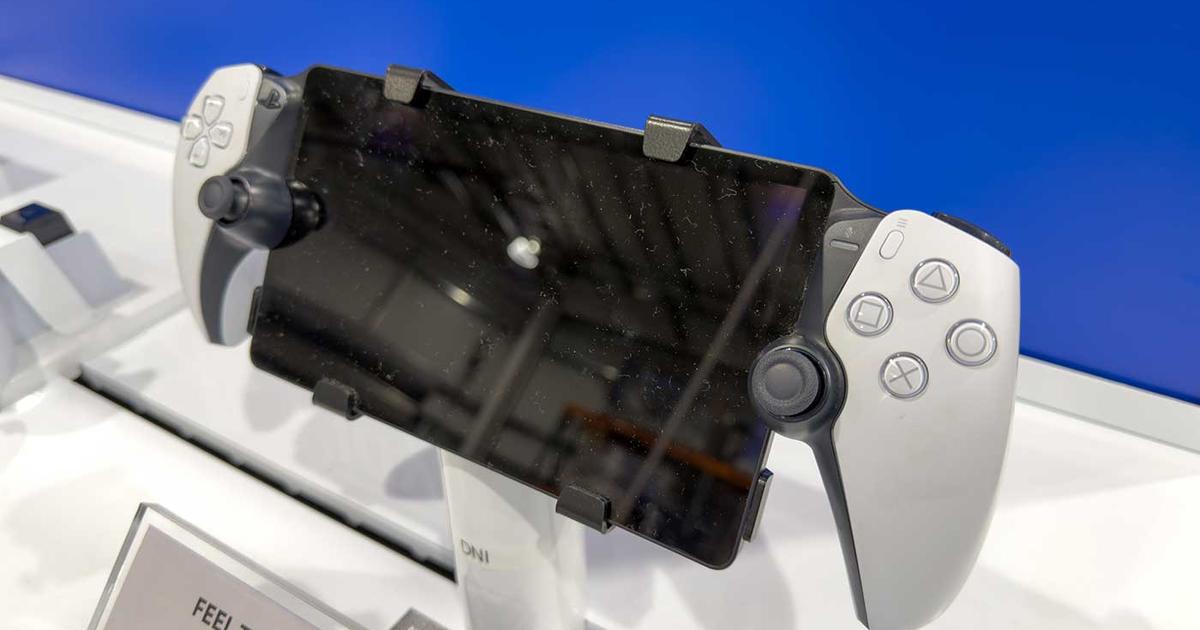
Two Screens, One Strategy
Two unannounced PlayStation devices have appeared in Wi-Fi Alliance certification documents, and the implications stretch far beyond another refresh cycle for the PS Portal.
The listing, confirmed by The Verge, identifies two models — CFI-Y2000 and CFI-Y2105 — both classified under “Gaming Console/Peripheral” and both running Android 15. The first-generation PS Portal carries model number CFI-Y1001. By the numbering alone, at least one of these new entries is almost certainly a successor to the Portal. But the second device raises a harder question: is Sony quietly preparing a standalone handheld for the PS6 generation, or are both listings simply different SKUs of an upgraded streaming-only rig?
The answer matters because it signals where Sony believes the next console generation’s growth will come from — and right now, the portable market is the industry’s most contested frontier.
Why Two Devices At All
If these were merely a color variant and a storage tier, they would not warrant two separate certification entries. Wi-Fi Alliance filings demand distinct model numbers for hardware that differs in meaningful ways — radio chips, antenna configurations, display drivers, even firmware architectures. Two entries mean two distinct products, or at minimum two distinct internal revisions that Sony considers separate enough to register independently.
The more provocative interpretation is that one is an upgraded PS Portal while the other is something fundamentally different: a PS6-era handheld console built around native game execution rather than remote play and cloud streaming. That distinction would mirror the divide between the Steam Deck and a Steam Link, or between the Switch and the Switch Lite — devices that share a brand but serve different use cases.
Rumors circulating among leak accounts like KeplerL2 have already pointed toward an OLED-equipped, 120Hz-refresh Portal variant. Those claims, if accurate, would account for one of the two certification entries. The second device, however, aligns with a separate thread of speculation about a PS6 handheld powered by AMD’s upcoming Zen 6 CPU and RDNA GPU architecture, possibly designed to dock and function as both a portable and home console hybrid.
What makes this dual listing notable is not just the existence of two devices but the timing. Sony announced the original PS Portal in October 2023 to a mixed reception. Critics called it a gimmick; defenders called it a proof of concept for a broader mobile strategy. The original Portal’s launch was hamstrung by a requirement for a stable Wi-Fi connection and the absence of an offline mode — limitations that kept its audience comparatively narrow. Releasing two new devices in quick succession suggests Sony has taken those lessons to heart and is now casting a wider net.
Supply Chain Signals and Component Sourcing
The certification window itself carries weight. Sony does not enter devices into the Wi-Fi Alliance process without a production timeline in mind. Radio frequency testing requires hardware that is close to final — firmware, antenna placement, and power management circuits all need to be locked down enough to demonstrate compliance with regional electromagnetic standards. This is not a prototype exercise. These units are likely already in low-volume manufacturing or on the cusp of ramping up.
The AMD connection is worth tracking closely. If Sony’s second device indeed runs on next-generation APU silicon co-developed with AMD, component lead times become a critical factor. TSMC’s advanced node allocation, AMD’s chip packaging capacity, and Sony’s own final assembly operations in Malaysia and Vietnam all feed into whether these devices can reach consumers before the holiday season. Any delay in the APU supply chain would disproportionately affect the native handheld, since the streaming Portal variant can rely on less demanding ARM-based silicon.
There is also a licensing dimension. Sony’s first-party game catalog is its defining asset, but the PS6 handheld would need to support backward compatibility with PS5 titles and likely PS4 classics as well. That creates a software layering challenge — emulating or natively running older architectures on entirely new silicon requires significant engineering effort. If Sony’s second device is truly a native console, the backward-compatibility stack alone could eat into its launch window.
Who Wins if Sony Doubles Down on Portable
The player wins if Sony moves quickly and prices competitively. The handheld gaming market has expanded rapidly since the Switch launched in 2017, and Nintendo’s dominance has invited serious competitors. Valve proved that PC handhelds can carve meaningful space. Even Microsoft entered the conversation with the Ally range and its own portable ambitions. Sony entering with two distinct devices — one affordable streaming companion, one premium native console — could position it to capture both segments simultaneously.
Consumers also win in the short term. Competition drives features. OLED panels at 120Hz, faster Wi-Fi radios, and refined Android customizations are all incremental improvements that become table stakes quickly. If Sony is certifying two devices rather than refining one, it is signaling confidence that the market can sustain a portfolio approach rather than a single-product gamble.
The loser, in this scenario, is Nintendo. The Switch’s success created a category that Sony has largely ignored until now. Filling two seats at the table — even with a streaming-first device alongside a native handheld — forces Nintendo to defend territory it has held largely unchallenged since 2017. That pressure, even indirect, benefits everyone except the incumbent.
But there are second-order effects worth considering. If Sony’s native PS6 handheld launches at a price point above $400, it risks entering a market where Valve’s Steam Deck and ASUS’s ROG Ally already command attention at similar or lower price points. The competitive dynamic shifts dramatically if Sony can offer exclusive first-party titles as part of the package — God of War, Spider-Man, Horizon — rather than relying solely on third-party support. Exclusive IP is Sony’s lever, and it is one the competition cannot easily replicate.
There is also the subscription angle. PlayStation Plus integration into a native handheld could create a compelling value proposition: hardware plus cloud streaming plus a game library, all bundled. That approach would turn the Portal’s weakness — its dependence on a strong network connection — into a feature rather than a liability. Sony could position the cheaper device as a streaming-forward companion and the premium device as the performance flagship, letting each serve a different customer profile without direct cannibalization.
Why Japan Usually Sees It First
The Gizmodo Japan report preceding Western coverage is not an accident. Sony’s hardware supply chain, component sourcing, and regulatory filing processes are anchored in Japan. Certification documents typically surface through regional electronics forums and Japanese tech media before English-language outlets catch wind. Japanese leak communities also operate with tighter connections to industry insiders, particularly around Sony’s hardware divisions in Tokyo and Hamamatsu.
This pattern repeats. The Switch Lite, the Steam Deck early builds, and even Microsoft’s xCloud beta leaks all broke through Asian media channels first. Western gaming press tends to follow within days, but the initial disclosure belongs to Japan-based outlets with access to localized certification data. The PS Portal itself was announced through a Japanese-facing stream before reaching global audiences.
The Japanese disclosure also carries a subtler implication. Sony’s domestic market is smaller than North America or Europe, but it remains a high-value territory where premium hardware sells reliably. A Japanese先行 announcement style suggests Sony is treating this as a globally significant launch, not a regional experiment. The company has every incentive to maximize pre-launch visibility across all markets simultaneously.
Pricing Dynamics and Market Positioning
The most consequential variable remains price, and the dual certification gives us a framework for thinking about it. A Portal successor at $150 to $200 would be an accessible entry point, reinforcing Sony’s push toward ecosystem lock-in. A native PS6 handheld at $400 to $500 would compete directly with the Switch family and the Steam Deck. The math only works if the device delivers meaningful performance gains over the PS5’s architecture while maintaining acceptable thermal and battery constraints.
If Sony prices the streaming device aggressively and the native device at a premium, it creates a ladder that rewards loyalty. Owners of the cheaper Portal who later upgrade to the native handheld experience a seamless transition — their PlayStation Network identity, trophies, and subscriptions carry over. That frictionless migration is a strategic advantage no competitor can easily match, since Nintendo and Valve both operate within their own walled gardens.
Another pricing consideration is the bundled game strategy. Sony has increasingly leaned on day-one first-party releases as hardware drivers. If the PS6 handheld launches with a marquee title included — or if it is offered as a bundle with a subscription trial — the effective consumer cost drops without requiring Sony to cut the hardware margin. This is the model Microsoft has been using with Xbox Series consoles, and it is one Sony is well-positioned to adopt given its depth of first-party studios.
The Ecosystem Lock-In Question
The broader strategic picture is one of ecosystem consolidation. Sony has spent the last decade building toward a unified PlayStation identity that spans consoles, handhelds, streaming, and subscription services. Each new device that enters the portfolio strengthens that architecture. A PS6 handheld is not just a piece of hardware — it is a node in a network that includes PS Plus, the PlayStation Store, Remote Play, and cloud streaming infrastructure. Every additional device increases the switching cost for consumers who already own a PS5 and a catalog of digital titles.
This is why the distinction between a streaming-only device and a native handheld matters less than the common operating system and shared account infrastructure. Whether players stream games or run them locally, they are still inside the PlayStation ecosystem. Sony’s real bet is that once consumers are in, they are unlikely to leave — and that the PS Portal’s early failures teach the company to deliver a more polished experience this time around.
The competitive landscape rewards ecosystems that reduce friction. Apple proved it with the iPhone-to-Mac-to-Watch pipeline. Google is chasing it with Pixel-to-Android-to-Cloud. Sony’s opportunity is to build a comparable pipeline for gamers, where ownership of one device naturally pulls you toward the next. Two certified handhelds in the same generation suggest that pipeline is coming online sooner rather than later.
What Comes Next
The certification does not confirm release dates or pricing. But it does confirm hardware exists in final enough form to undergo radio testing. That typically precedes a public announcement by weeks, not months. Expect Sony to reveal at least one of these devices publicly later this year, possibly alongside PS6 generation details.
The more important open question is whether Sony treats the handheld as a companion product or a primary one. A streaming-only device at a lower price point makes financial sense — it requires no custom silicon beyond an ARM SoC and a Wi-Fi chip. A native PS6 handheld, however, would demand significant R&D investment and likely carry a premium price tag that competes directly with the Switch and Steam Deck on performance per dollar.
Either way, the dual certification confirms Sony is serious about portable PlayStation in a way it has not been since the PSP era. The question now is whether the company can price and position two devices without cannibalizing each other — or whether it can afford to miss the window entirely. The hardware is real. The strategy is finally coming into focus. What happens next depends on whether Sony can translate certification documents into a launch that convinces consumers the portable future of PlayStation is worth buying into.