Apple's iPhone Duo Changes What Foldable Phones Are For
Apple's first foldable phone isn't trying to beat Samsung at its own game. The iPhone Duo's seamless closed-to-open experience and premium hinge design signal a different philosophy for the foldable market—one that could reshape expectations across the category.
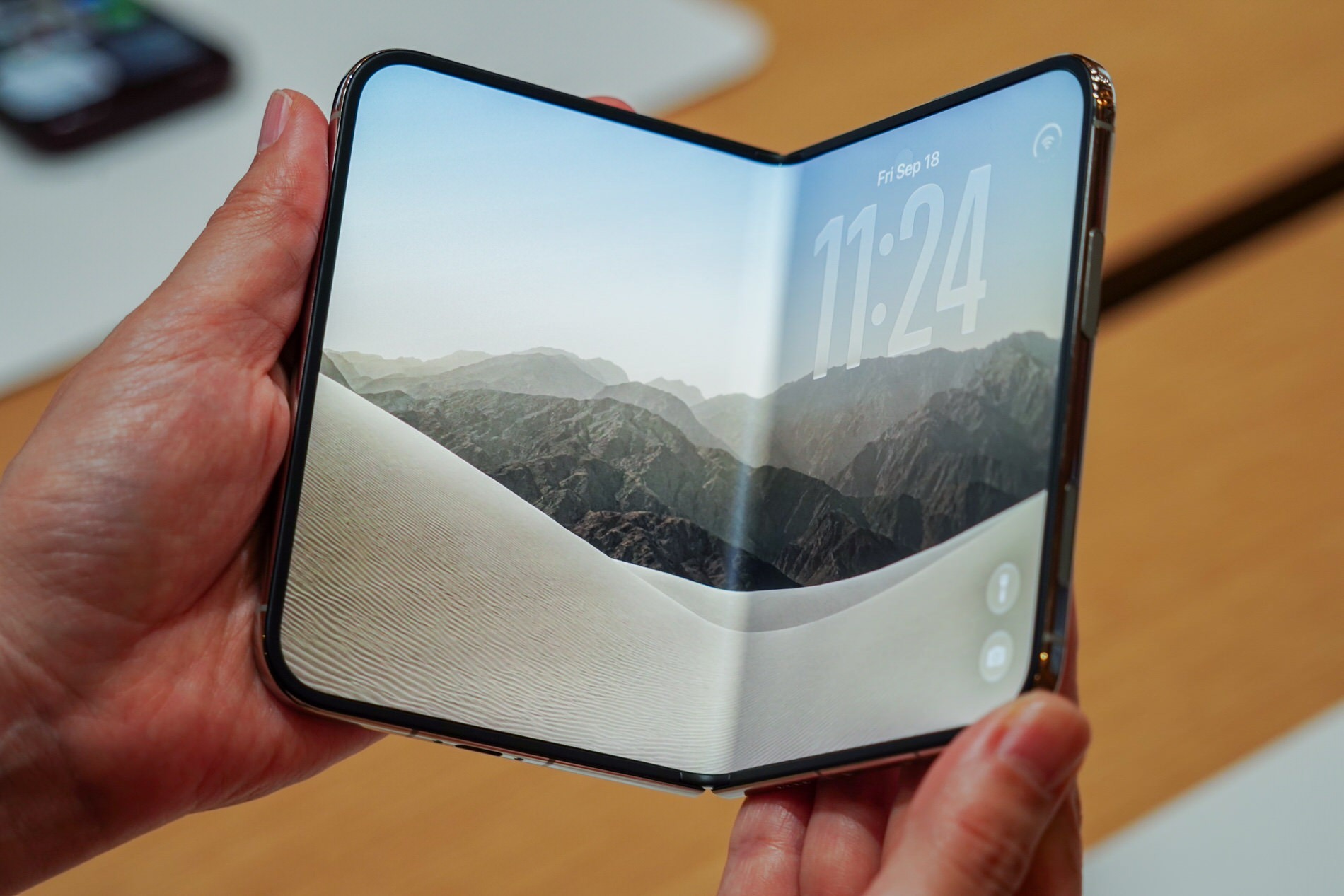
The iPhone Duo Is Not a Galaxy Clone — And That’s the Point
Apple’s first foldable phone has arrived, and the early hands-on reports from Japan are revealing something the spec sheets alone don’t show. The iPhone Duo isn’t trying to out-Samsung Samsung. Its entire design philosophy hinges on making the transition between closed and open states feel like a single continuous experience rather than two devices glued together.
The Japanese tech press, particularly Real Sound, has spent real time with the device and noticed details that Western wire desks are still catching up to. The hinge engineering, the screen-ratio continuity, and a pricing structure that tells a different story in yen than in dollars all point to an Apple product designed from a fundamentally different set of assumptions about what a foldable phone should do.
The Hinge Changes Everything
The most striking difference between the iPhone Duo and competitors like the Galaxy Z Fold8 isn’t obvious until you actually open and close the device. The iPhone Duo uses over 100 hinge components with magnets that adjust resistance throughout the motion. The result is a two-phase feel: an initial spring-loaded snap, then a buttery glide that increases in resistance as you approach full opening.
This matters more than it sounds. Most foldable phones either open with uniform resistance the entire way or snap fully open with a spring. The iPhone Duo stops at any angle you choose — a feature that enables genuinely useful postures. Place it in a figure-three shape and the standby screen activates without charging, showing clock or calendar information. Lean it into an L-shape and the vertical portion becomes a viewfinder while the horizontal portion becomes a controller, letting you watch videos or edit photos with intuitive physical orientation.
Samsung’s Fold8 can’t hold angles past 90 degrees — it just snaps open. Apple’s approach treats the hinge as an interface element, not just a mechanical necessity.
Screen Continuity Over Screen Size
Both the outer and inner displays use aspect ratios calculated against the silver ratio — 1 : √2, or approximately 1 : 1.414. The outer screen is 1 : 1.455 and the inner is 1.422 : 1. The numbers are close enough that content doesn’t reflow dramatically when you unfold the phone. What you’re reading or watching on the 5.4-inch cover display expands naturally onto the 7.6-inch inner screen without the jarring layout jumps that plague many foldable transitions.
Apple reinforces this with software. When you open the iPhone Duo, the outer screen gradually blurs and flows into the inner display, creating the illusion that you’re expanding a single surface rather than switching between two disconnected screens. Wallpaper can’t be set separately on each half — a deliberate choice to reinforce the continuity narrative.
This is where Apple’s vertically integrated model shows its teeth. Samsung can build good foldable hardware, but the software animation that bridges the two displays is custom-built for this specific hinge geometry and screen ratio. That level of coordination is harder to replicate when you’re working with third-party display suppliers and a more fragmented software ecosystem.
The Crease Question, Answered (Mostly)
Japanese reviewers note that the crease on the iPhone Duo is remarkably subdued from a frontal viewing angle. The inner display uses a nano-texture finish — nanometer-scale etching that reduces light reflection and makes the crease nearly invisible against white backgrounds. Run your finger across it and there’s no significant depression to speak of.
Look at it against a black background from an angle and the crease becomes visible as a line. It’s not ghost-level invisible, but it’s closer than most foldables have managed. This is the kind of detail that takes years of iteration and explains why Apple entered the category late.
The under-display camera is another quiet胜利. It conceals itself as a dark circle that only becomes visible when the camera app launches. Smaller footprint than a punch-hole, less disruptive to the inner display’s continuity.
Camera: Deliberately Middling
The iPhone Duo’s camera specs read like a conscious decision to position it between the standard iPhone and the Pro models. A 48MP Dual Fusion main sensor with fixed F1.6 aperture and sensor-shift stabilization. The 2x telephoto is a crop from the center of the main sensor, not a dedicated lens. A 13mm equivalent ultrawide at F2.2 handles macro work. No variable aperture, no LiDAR.
In practice this means the Duo’s camera is good but not class-leading — a product of price positioning rather than engineering compromise. Users upgrading from an iPhone 18 Pro will notice the gap. Users coming from older iPhones likely won’t.
The Pricing Paradox
Here’s where the Japanese market reveals something the American market obscures. The iPhone Duo starts at $1,999 in the US and 364,800 yen in Japan. The Galaxy Z Fold8 costs $1,899 in the US — a $100 difference. But in Japan, the Duo costs roughly 95,000 yen more than the Fold8, a gap nine times wider than the dollar difference.
The yen’s weakness amplifies Apple’s premium positioning in one of the world’s most important markets for premium smartphones. Japanese consumers face a steeper choice: pay significantly more for the Apple experience or save nearly 100,000 yen for the Samsung alternative. How they respond will be a real-time test of Apple’s brand pull in a market where Samsung already has established foldable credibility.
What This Means for the Market
Samsung watches. Every iPhone Duo detail that Japanese hands-on reviewers highlight — the hinge quality, the screen ratio math, the animation fluidity — is data Samsung will analyze before its next foldable cycle. Apple may be late to the foldable market, but its first entry is calibrated to raise the bar on experience rather than compete on specs.
Huawei faces a similar calculus. The Chinese manufacturer has been pushing foldable innovation independently, but Apple’s entry into the premium segment with this level of hardware-software integration could compress the premium foldable window for everyone except the two companies building their own chips, displays, and operating systems.
The real question isn’t whether the iPhone Duo beats the Galaxy Z Fold8 on paper. It’s whether Apple’s focus on seamless closed-to-open continuity — making the fold feel invisible rather than spectacular — changes what consumers expect from the category. If it does, the entire foldable market shifts from competing on open-screen size to competing on how well the two states connect.
That’s a competition Apple is uniquely positioned to win.