AI Deepfake of Murder Victim Tosses Sentence in Arizona Court
An Arizona appeals court has invalidated a manslaughter sentence after an AI-generated video of the deceased victim forgave his killer swayed the judge at sentencing. The ruling raises urgent questions about forensic standards and courtroom admissibility.
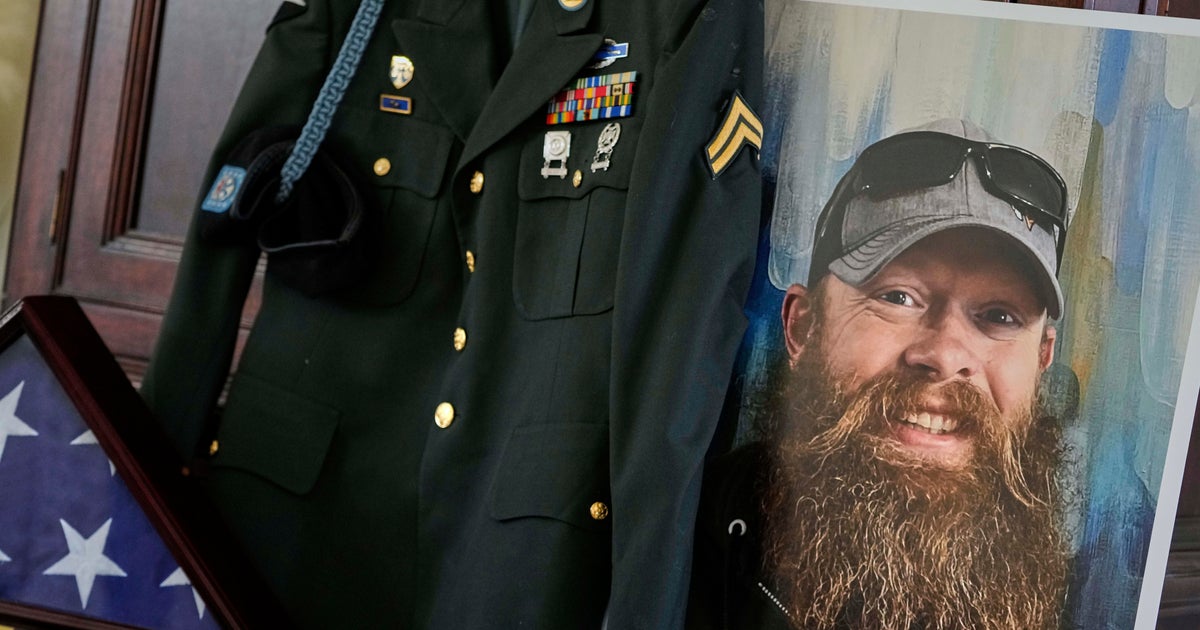
When a Dead Man Speaks Through a Machine
An Arizona appeals court has sent a manslaughter sentence back to the trial level after uncovering that the judge was swayed by an AI-generated video of the murder victim telling the court he forgave his killer. The ruling, released Wednesday, doesn’t just reverse one man’s punishment. It marks the first time a U.S. appellate court has formally scrutinized a deepfake of a deceased person as courtroom evidence — and found it wanting.
Gabriel Paul Horcasitas, 55, was sentenced to 10 years in prison in 2025 for the 2021 shooting death of Christopher Pelkey, 37, during a road rage incident at a Chandler intersection. Pelkey was unarmed. He had exited his truck and walked toward Horcasitas’ vehicle when the shots were fired. Nine family members and friends gave emotional victim impact statements before the AI video played. Then came the virtual Pelkey — rendered in Army dress uniform, speaking in a measured tone about forgiveness and a higher power — telling the judge he wished he and Horcasitas could have been friends in another life.
Judge Todd Lang told the court afterward that he loved the AI video and said Pelkey’s forgiveness reflected the character of the man everyone had described. Horcasitas’ lawyer, Kristen Reller, argued that reliance on the footage violated due process. The appeals court agreed.
The Core Problem: No One Can Cross-Examine the Dead
The three-judge panel’s decision turned on a simple but devastating point. The AI video did not record an event. It recorded someone’s imagination of what a dead man might have said. The court wrote that the depiction came not from Pelkey but from the imaginings of his sister, Stacey Wales, who used voice recordings, photos, and videos to build the synthetic rendering.
That distinction matters enormously in a legal system built on evidentiary reliability. Unlike a live witness, a deceased person cannot be cross-examined. Unlike a written victim impact statement, an AI rendering cannot be authenticated through chain-of-custody protocols or subjected to expert challenge on its methodology. The words in the video were not Pelkey’s. They were Wales’s, filtered through an algorithm trained on fragments of his recorded voice.
Reller pressed this point squarely. The video disclosed nothing about who wrote the script, what source material was used, or whether the emotional content accurately reflected Pelkey’s actual views. It carried the weight of authenticity without any of the safeguards that make testimony admissible. A family member reading the same words aloud would not have carried the same persuasive force, Reller argued, because the jury and the judge would know they were hearing someone else’s interpretation.
A Precedent That Cuts Both Ways
The ruling’s implications extend far beyond this single case. What happens when the defense can generate its own synthetic victim? When a defendant’s lawyer produces an AI rendering of an alleged victim expressing remorse, regret, or self-awareness that complicates the prosecution’s narrative? The technology is trivially easy to deploy. As Arizona State University law professor Gary Marchant noted, anyone can create this on a phone. Judges and juries, like everyone else, are conditioned to believe what they see.
This is already happening in other contexts. In New York, an unrepresented litigant appeared in his own lawsuit via an AI-generated avatar. The judges noticed almost immediately. But that case involved a living person asserting a legal position. The Arizona case involves a dead man whose perceived moral authority — forgiveness, religious faith, grace under tragedy — may have carried disproportionate weight with the sentencing judge.
Marchant warned that the judiciary is increasingly anxious about deepfake evidence precisely because the barrier to creation is so low and the persuasive power so high. There is no forensic standard for evaluating AI-generated victim impact statements. There is no established protocol for authentication. There is, at this point, no clear legal framework at all.
The Family’s Dilemma
Wales told the BBC she wanted her brother to speak for himself because she struggled to articulate what he would have said. She expected the sentence to face appeal on other grounds and expressed disappointment that the AI video became the basis for overturning it. Her goal, she said, was simply to humanize Pelkey. She now faces a choice: try again with a different medium, or accept that the court has drawn a line.
Victim advocates have pushed back hard. Jessica Gattuso, who represented victims in the case, argued with prosecutors that the footage was an accurate representation of Pelkey’s character and that the judge committed no error. Wales quoted the imbalance she sees in the system: convicted murderers sit behind walls of procedural protection while victims are left with fewer avenues to be heard. That tension is real and persistent. But the appeals court’s decision does not close the door on victim impact statements. It closes the door on unsourced, unauthenticated, algorithmically manufactured ones.
What Happens Next
Horcasitas must be resentenced. The Maricopa County Attorney’s Office confirmed that prosecutors knew the family would address the court but were not aware of the AI video’s nature until after it played. Neither side objected at the trial level, which means the legal questions were never fully litigated before the judge who imposed the sentence. That procedural gap will matter on remand.
Defense attorneys will study this ruling the way they study any opening in the evidentiary rules. The due process argument — that a defendant must have a meaningful opportunity to rebut material evidence — is strong and portable. Prosecutors will push back hard, arguing that victim impact statements have historically enjoyed broad latitude and that the court should not impose new authentication requirements on a grieving family’s creative expression.
The broader question is whether courts are ready for generative AI as evidence. Right now, AI in American courtrooms is largely confined to administrative tasks, legal research, and public communications about rulings. The Arizona case pushes the technology into the substantive center of criminal proceedings, where the stakes are liberty and life. The appeals court’s decision suggests the judiciary is not yet equipped to handle that shift without clear standards. Until those standards exist, every deepfake that speaks from beyond the grave will carry the same unresolved tension: it sounds like a person. It is not. And the law has no clean answer for what to do with that fact.