Iran's 7-Day Hormuz Gamble Is Built for American Politics
Iran's latest proposal to reopen the Strait of Hormuz within seven days is timed to pressure Washington ahead of the midterm elections — and it may already be working on both sides of the Persian Gulf.
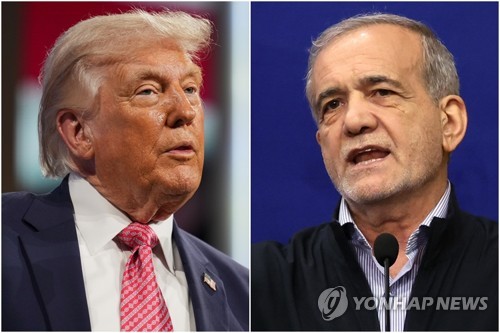
Iran is betting the Strait of Hormuz on a seven-day clock.
Iranian Foreign Minister Abbas Araghchi dropped a proposal at the United Nations General Assembly in New York on September 24 that should keep energy traders and naval planners in Washington awake this week. He offered a pathway to reopen the Strait of Hormuz within seven days — a deadline that is not accidental and not soft.
The exact conditions remain deliberately vague, but the architecture is familiar. According to reports from the New York Times and CNN, the framework mirrors the joint ceasefire memorandum of understanding that Washington and Tehran signed in June. That earlier agreement laid out a staggered sequence: Hormuz opens first, and nuclear negotiations follow during a defined truce period. In exchange, the US would ease sanctions, unfreeze Iranian assets, and halt military operations across every active front — including Lebanon.
Qatar has been shuttling between the two capitals as mediator. A White House official told CNN that the discussions were “positive and constructive.” That single phrase, offered so casually, is doing a surprising amount of work.
The timing is the story.
The proposal landed at the UN General Assembly, a stage built for optics, and it carries a hard deadline that converges uncomfortably close to the US midterm elections. That convergence is not background noise. It is the event.
Seven days is long enough to generate headlines and short enough to force a response before the political calculus in Washington settles. If the deal holds, the president can point to a crisis averted on his watch. If it fractures, the opposition has a fresh ammunition about American weakness in the Persian Gulf. Either outcome, the Iranian leadership seems to have calculated, moves the board in Tehran’s favor.
This is not a new game. Regimes in the Middle East have been leveraging American electoral calendars for decades. What makes this cycle different is the weapon being brandished. The Strait of Hormuz is not a rhetorical lever. It is a chokepoint through which approximately 20 to 30 percent of the world’s total oil consumption passes daily. Disrupt it, and global prices react in hours, not weeks. Reopen it conditionally, and you have changed the terms of the conversation permanently.
Who wins if this holds.
For ordinary consumers in Europe and Asia, a restored flow through Hormuz means a near-term reprieve on fuel costs that have been grinding upward. For regional states like Saudi Arabia and the United Arab Emirates, stability along the strait reduces the risk of supply shocks that could spook their own economic transition projects. Even Iraq benefits from calmer waters, given its dependence on port traffic through the broader region.
For the United States, a managed de-escalation is the best available outcome if no broader deal emerges. The alternative — continued harassment of shipping, sporadic closures, and the constant deployment of naval task forces to clear mines and intercept drones — is far more expensive in blood and treasure.
Tehran’s win is more complicated. A phased agreement that opens Hormuz first gives Iran a legitimate diplomatic victory without requiring the regime to publicly concede on its nuclear program. It allows President Masoud Pezeshkian to show domestic audiences that pressure, not paralysis, produced results. And it buys time. Time to consolidate assets, to rebuild shipping insurance arrangements, and to test whether Washington’s political appetite for escalation actually holds.
Who loses.
Israel is the most obvious loser from a regional posture standpoint. The ceasefire MOU referenced in the proposal calls for halting military operations across all fronts, including Lebanon. That language directly encompasses the Israeli-Lebanese border, where troops and missile units have been maneuvering since October 2023. A frozen conflict is not a peace, but it removes the immediate trigger for a wider war — and that absence will sting hard in Tel Aviv, where the security establishment has long treated a contained confrontation with Iran as preferable to an uncontrolled one.
American hardliners also lose ground. The seven-day deadline frames the narrative around Iranian initiative rather than American coercion. Every day the White House spends debating whether to accept, reject, or renegotiate the terms is a day the administration looks reactive. That perception matters enormously when midterms are a month or two away.
Oil producers who benefited from the scarcity premium also lose. Prices rose on uncertainty. They will fall — perhaps sharply — on resolution. Hedge funds that shorted the Strait in recent months face a squeeze from the other direction.
What happens next.
The immediate test is whether the seven-day window produces a verifiable opening of shipping lanes, not just press releases. Compliance monitoring will likely fall to Qatar and, possibly, European partners with naval assets in the Gulf. If Iranian vessels resume normal transit within the week, the next question is whether the phased approach actually unfolds as described in the June MOU, with sanctions relief and asset unfreezing following in defined stages.
If the deadline passes without action, the market reaction will be immediate and violent. Spot prices for Middle Eastern crude will spike. Insurance rates for vessels transiting the strait will adjust upward overnight. The US Navy will almost certainly increase patrols, and congressional pressure on the administration to escalate rather than negotiate will intensify.
The longer trajectory matters more. If this roadmap succeeds, even partially, it establishes a new template for crisis management between Washington and Tehran — one that treats the Strait of Hormuz not as a permanent leverage point but as a negotiable commodity. That normalization would be the single most significant shift in Gulf security architecture in years, and it would reverberate through NATO ally calculations, Chinese energy procurement strategies, and the internal politics of every Gulf state that has been hedging its bets between Washington and Tehran.
If it fails, the precedent is equally consequential. It proves that Iran can weaponize a seven-day deadline against an American electoral calendar and force the White House into a defensive posture. That lesson travels fast through capitals from Riyadh to Beijing to Moscow.
The human temperature.
Behind the geopolitics, there are crews on tankers who have been steering alternative routes around the Cape of Good Hope for months because the strait was unsafe. There are insurance underwriters in London and Singapore who have been pricing conflict premiums into every contract that touches the Gulf. There are families in Tehran who watched their savings vanish when assets were frozen, and families in Washington who worry their children might be sent to fight a war that no one wanted.
Araghchi’s proposal is not a peace treaty. It is not even a final agreement. It is a seven-day experiment in whether two adversarial powers can de-escalate a live crisis without either side looking weak. The clock started when he walked off that podium in New York. The world will know by next week whether the experiment works — or whether the Strait of Hormuz remains, once again, a trigger point for something much larger.