Iran's Bahrain Strike Signals New Deterrence Posture
Iran’s drone attack on a US base in Bahrain marks a decisive shift from proxy warfare to direct confrontation, testing American security commitments and reshaping Gulf deterrence calculus.
The Bahrain Strike
Iran fired six drones at a US air-defense radar site atop the Al-Rifaa helicopter base in Bahrain on Sunday, marking the second strike against an American installation in three days. Bahraini air defenses intercepted all six before they reached their targets, according to local authorities. No injuries or structural damage were reported. Yet the incident carries weight far beyond its technical outcome. It represents a deliberate escalation in Tehran’s campaign to test American red lines—and to recalibrate its deterrence posture in the face of stalled diplomacy.
The drone launch came hours after a similar attack earlier in the week, when two drones targeted a radar facility near the capital. Those were shot down by US Central Command with no damage. Sunday’s salvo suggests a pattern: Iran is probing the speed and reliability of US-Bahraini air defenses, while sending a political signal that tit-for-tat retaliation will continue regardless of negotiation deadlocks.
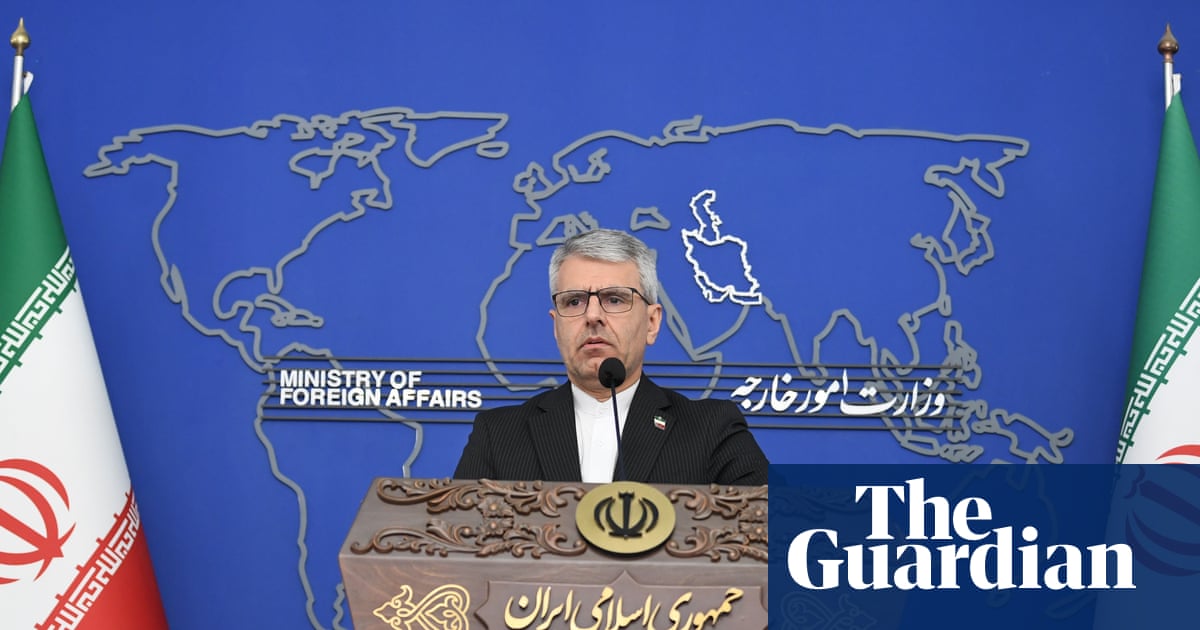
Esmaeil Baghaei, spokesperson for Iran’s foreign ministry, framed the strikes as a necessary response to ongoing US military aggression. He made clear that Tehran is “not waiting for anyone” for diplomatic breakthroughs—a sharp contrast to the behind-the-scenes channels Vice President JD Vance had recently explored. Vance, who publicly blamed the Republican loss of Congress on the Iran war, had sought a meeting with Iranian negotiators. That effort appears abandoned now that the White House has stated it is no longer pursuing a deal.
A Shift in Iranian Strategy
For months, Iran’s primary instrument of deterrence has been its network of proxies: Hezbollah in Lebanon, Houthi rebels in Yemen, and various militias in Iraq and Syria. Direct strikes on US forces stationed in allied Gulf states have been rare. The last such attacks occurred sporadically between January and September, when a relative lull gave way to quiet diplomacy. The current round marks a return to direct confrontation—and a conscious choice to hit harder, closer, and with more frequency.
By targeting a base in Bahrain, Tehran is exploiting a vulnerability that Western planners have long assumed was insulated by geography and alliance loyalty. Bahrain hosts the US Fifth Fleet headquarters and serves as a logistical hub for operations across the Middle East. An Iranian strike here does more than threaten personnel; it undermines the perceived invulnerability of America’s forward-deployed footprint. If Iran can reach US installations in Manama, it can reach others—in Kuwait, Qatar, or even Saudi Arabia.
This shift likely stems from two calculations. First, military pressure from the United States has intensified. In recent weeks, US forces struck targets on Qeshm Island in the Strait of Hormuz and elsewhere inside Iran. Tehran needs to demonstrate that it can punish such attacks without relying solely on proxy retaliation, which can be ambiguous and deniable. Second, diplomacy has broken down. With the US declaring it no longer seeks a deal, Iran faces diminishing returns from restraint. Launching drones at a US base may be intended to raise the cost of further American action—and to signal to regional partners that Washington’s protection is neither free nor foolproof.
Gulf Security Architecture Under Stress
Bahrain’s government immediately condemned the attack as “heinous aggression” and a violation of international law. Neighbors Jordan, Egypt, Saudi Arabia, and Qatar echoed the rhetoric, offering solidarity. But condemnation does little to alter the strategic reality: Gulf states are caught between Iranian provocation and American commitment.
The United States has maintained a naval blockade around Iran while Iran maintains its chokehold on the Strait of Hormuz, through which roughly 20% of global oil passes. This stalemate has held for months, but each new strike erodes trust in the American security umbrella. Bahrainis living through sirens and shelter alerts are feeling that erosion firsthand. Resident Hayat Ibrahim, 65, told Agence France-Presse she had hoped the attacks would not resume. Her fear is shared by business owners and expatriates who see the kingdom as a stable oasis suddenly exposed to regional volatility.
Saudi Arabia faces its own headache. Its campaign against Houthi rebels in Yemen has stumbled. Pro-government forces retreated from the Bab el-Mandeb strait to defend Aden, ceding ground after a six-week counteroffensive failed to dislodge the insurgents. A Houthi missile strike near Aden killed people and wounded twelve, according to military sources. The retreat opens a potential route to the city, threatening another critical oil-export corridor. Iran’s strategic depth is visible on multiple fronts: drone strikes in Bahrain, mining operations in the Strait of Hormuz, and battlefield gains in Yemen. Each move tightens the noose around western-aligned supply routes.
Meanwhile, the claim that Iran’s Revolutionary Guards sank an oil supertanker carrying two million barrels after it hit a mine remains unverified. The US military recently stated it had cleared all mines from main shipping lanes. Whether true or not, the allegation reinforces the perception that Iran retains the capability to disrupt global energy flows at will—a powerful deterrent in itself.
Regional Implications and Global Echoes
The ripple effects extend beyond the Persian Gulf. Europe and Asia depend heavily on energy imports transiting the Strait of Hormuz and the Red Sea. Any sustained disruption could spike prices and trigger economic strain. China and India, major buyers of Iranian oil, watch closely but have so far avoided condemning Tehran’s actions. Japan and South Korea, reliant on Gulf shipments, are likely to urge caution.
For the United States, the strikes pose a dilemma. Retaliating decisively could provoke a wider war, drawing in Iranian proxies across the region. Doing nothing risks appearing weak, encouraging further attacks. President Trump has dismissed previous strikes as “minor,” yet he also warned that large-scale combat operations would be cautioned against by Gulf allies. That advice may reflect a desire to avoid entanglement, but it also reveals a fundamental tension: the US wants to project strength without committing to open-ended conflict.
The breakdown of talks has left a vacuum. Vice President Vance’s pivot to domestic corruption investigations signals that the administration sees no off-ramp. Without diplomatic engagement, each military encounter becomes a standalone event—one drone wave, one mine alert, one missile warning. Over time, these accumulate into a crisis of confidence. Allies begin to doubt whether American security guarantees are credible. Adversaries learn to exploit gaps between rhetoric and action.
What Comes Next
The immediate aftermath will likely involve more statements, more sanctions, and perhaps limited retaliatory strikes. The US may target additional Iranian missile sites or drone facilities, but a full-scale campaign seems unlikely given regional reservations. Instead, expect a return to asymmetric warfare: cyberattacks, covert operations, and continued strikes on proxy networks.
For Bahrain, the message is clear. It cannot rely solely on American defenses to shield it from Iranian precision. The kingdom will need to invest more in its own air and missile systems, deepen intelligence-sharing with neighbors, and possibly reconsider the permanent basing of US assets. Other Gulf states will follow suit, accelerating a regional arms race that already favors nations with deeper pockets and more sophisticated technology.
On the diplomatic front, the door is closed—but doors reopen unexpectedly. A single miscalculation could reignite negotiations, or a secret channel could emerge if both sides find themselves at an impasse they cannot afford. For now, though, Iran has drawn a line: attacks on US forces will be met with direct strikes on US bases. The question is whether Washington will accept that line or redraw it.
In the meantime, oil markets tense, ships reroute, and diplomats scurry. The Middle East is not entering a new Cold War; it is drifting into a hot peace, where every day brings a fresh test of nerve. The drone strike on Bahrain was not an isolated act. It was a statement of intent—one that redefines the rules of engagement and challenges the very architecture of regional security.