Iran Is No Longer Just Threatening Hormuz — It Wants to Blackout the Whole Gulf
Iran's top security official signaled that any US economic pressure could trigger a full blackout of Persian Gulf oil exports — not just the Strait of Hormuz. The warning reframes a regional crisis into a global energy emergency.
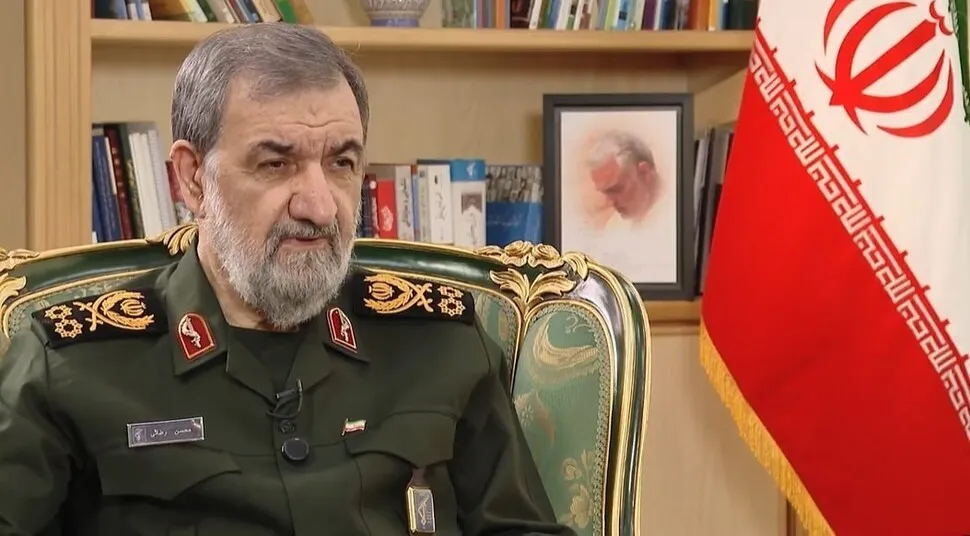
The real target isn’t the Strait of Hormuz. It’s everything else.
Iran’s chief national security official, Mosse Rezaei, made a calibrated escalation on Sunday that most English-language outlets will read as rhetorical bravado. It is not.
Speaking to Iran’s state broadcaster, Rezaei said the United States should expect a “earthquake-level” response if it moves toward economic warfare against Tehran. Then he made the line most analysts are quietly bracing for: Iran would not merely re-close the Strait of Hormuz — the chokepoint through which roughly 21 million barrels of oil per day already transit — it would target every alternative export route out of the Persian Gulf.
“If they start this,” Rezaei said, “we will ensure not a single drop of oil leaves the Persian Gulf.”
Who Rezaei is matters more than his title
Rezaei is no career diplomat. He is a former commander in the Islamic Revolutionary Guard Corps, a close adviser to Supreme Leader Ayatollah Ali Khamenei, and was appointed secretary-general of the Supreme National Security Council only nine days ago. That he is the one delivering this warning — rather than the foreign ministry or the president — signals that the Guards have seized narrative control over Iran’s deterrence posture. The Guards’ rhetoric is less concerned with signaling to Washington’s diplomats than with drawing red lines in a language that commanders understand.
The appointment itself is consequential. Until now, Iran’s strategic messaging on escalation had been somewhat compartmentalized — the Foreign Ministry handled diplomacy, the IRGC handled threats. Merging both functions under one voice with direct access to the Supreme Leader means future escalatory language will be sharper, less deniable, and harder for Washington to parse as posturing.
The alternative routes most people forget
The Strait of Hormuz gets all the attention because it carries the volume. But Iran’s military planners long ago recognized that relying solely on one chokepoint is dangerous — for both sides.
Saudi Arabia moved its eastern oil exports westward decades ago with the Eastern Province Pipeline, running from the Ghawar fields to the Red Sea port of Yanbu. The UAE built an offshore terminal at Fujairah on the Gulf of Oman, deliberately bypassing Hormuz entirely. Kuwait, Qatar, and Bahrain all maintain pipelines or marine terminals that can, under stress, shift exports away from the strait.
These are smaller in aggregate than Hormuz’s throughput, but they are not marginal. Combined, the Yanbu and Fujairah corridors move millions of barrels daily — enough to sustain Europe and Asia during a Hormuz disruption, but nowhere near enough if both channels are targeted.
Rezaei did not name Yanbu or Fujairah. That omission is deliberate. Naming them would make the threat specific; leaving them unnamed keeps every facility in the Gulf vulnerable and forces adversaries to spread their defenses thin.
The economic-stranglehold thesis
Rezaei’s language about an “economic blockade” is worth parsing carefully. Iran is framing the scenario as defensive retaliation — that the United States would initiate an economic war, and Iran’s closure of Gulf oil is the proportional response. This framing matters because it invites other regional actors to weigh in.
Iraq, Kuwait, Qatar, and the UAE are all US partners but also Iran’s neighbors with deeply intertwined economies. Iraq imports most of its gasoline and food through Iranian-connected supply chains. Qatar’s massive LNG exports run through the Strait of Hormuz. The UAE’s economy is structurally dependent on Gulf shipping lanes.
Rezaei’s warning to “all countries in the region and around the world not to join the economic war on our side” is an attempt to fracture the pro-US coalition before it forms. He is betting that economic pain in Tokyo, Seoul, and Mumbai will give those capitals incentive to pressure Washington to stand down — exactly the cascade Iran has cultivated through proxy networks and maritime harassment campaigns in the past.
The nuclear card Rezaei just played
Perhaps the most strategically significant line in Rezaei’s interview was not about oil at all.
“Now the whole world says: Iran, which obeyed so much, was attacked anyway. What reason do we have not to build nuclear weapons?”
Rezaei has been explicit in the past about Iran’s nuclear threshold. This is different. He is not just justifying a weapons program; he is narrating it as a direct consequence of US policy failure. The 2015 JCPOA, Iran’s signature diplomatic achievement, collapsed under the Trump administration. The June ceasefire memorandum with the United States — in which Iran reaffirmed it would not seek nuclear weapons — now carries the weight of a broken promise in Tehran’s telling.
This argument resonates beyond Iran’s borders in a way that pure anti-Americanism does not. For countries like Saudi Arabia, Turkey, Egypt, and even South Korea and Japan, the implied logic is hard to ignore: compliance bought no security. Non-proliferation was not rewarded.
The International Atomic Energy Agency has previously reported that Iran enriched uranium to near-weapons grade. What Rezaei is now saying is that the political will to cross the final threshold — the decision that intelligence cannot predict — has just been validated by US action.
What happens next — and who loses first
The most immediate casualty of this escalation will be insurance and shipping rates. The Strait of Hormuz already handles well over 150 commercial vessels daily, according to Rezaei’s own figures. If that figure drops — even temporarily — the ripple through global energy futures will be instantaneous.
Europe, which has spent years rebuilding LNG import capacity after reducing Russian gas dependence, faces a second shock. Iranian disruption of Gulf oil would tighten the same market Europe just stabilized. China and India, the largest buyers of Iranian-sanctioned oil, would likely face secondary crises as prices force them to choose between cheaper sanctioned crude and expensive spot-market purchases.
The United States is the only major consumer theoretically insulated by its own production, but it exports refined products and liquefied natural gas into the same global market. A Gulf-wide shutdown raises prices everywhere, including Houston.
The open question
Iran has threatened to close the Strait before. In 2019, after the Abqaiq attack, the world held its breath. In 2020, following the killing of Qasem Soleimani, Iranian warships reportedly targeted commercial tankers. Each time, the closure was partial, temporary, and deniable.
Rezaei’s language this time is different because it is comprehensive. He is not threatening a tactic; he is threatening a doctrine — that economic warfare against Iran will be met with economic warfare against the world.
Whether Iran follows through depends on whether the United States actually initiates the economic blockade Rezaei describes. The signal from Tehran is clear: the onus is on Washington to de-escalate first. That framing, more than the threat itself, is the weapon.
The question for markets and governments is not whether Iran can physically close the Strait — it clearly can — but whether it can close the entire Gulf simultaneously, and whether the political cost of doing so is acceptable to a regime that has spent decades avoiding a full-scale war it cannot win.