Iran Hit the US Where It Actually Bleeds — And China Is Taking Notes
Iran didn't chase US aircraft carriers. It struck forward bases instead — and exposed a structural vulnerability that makes China's calculus in East Asia far more dangerous for Washington.
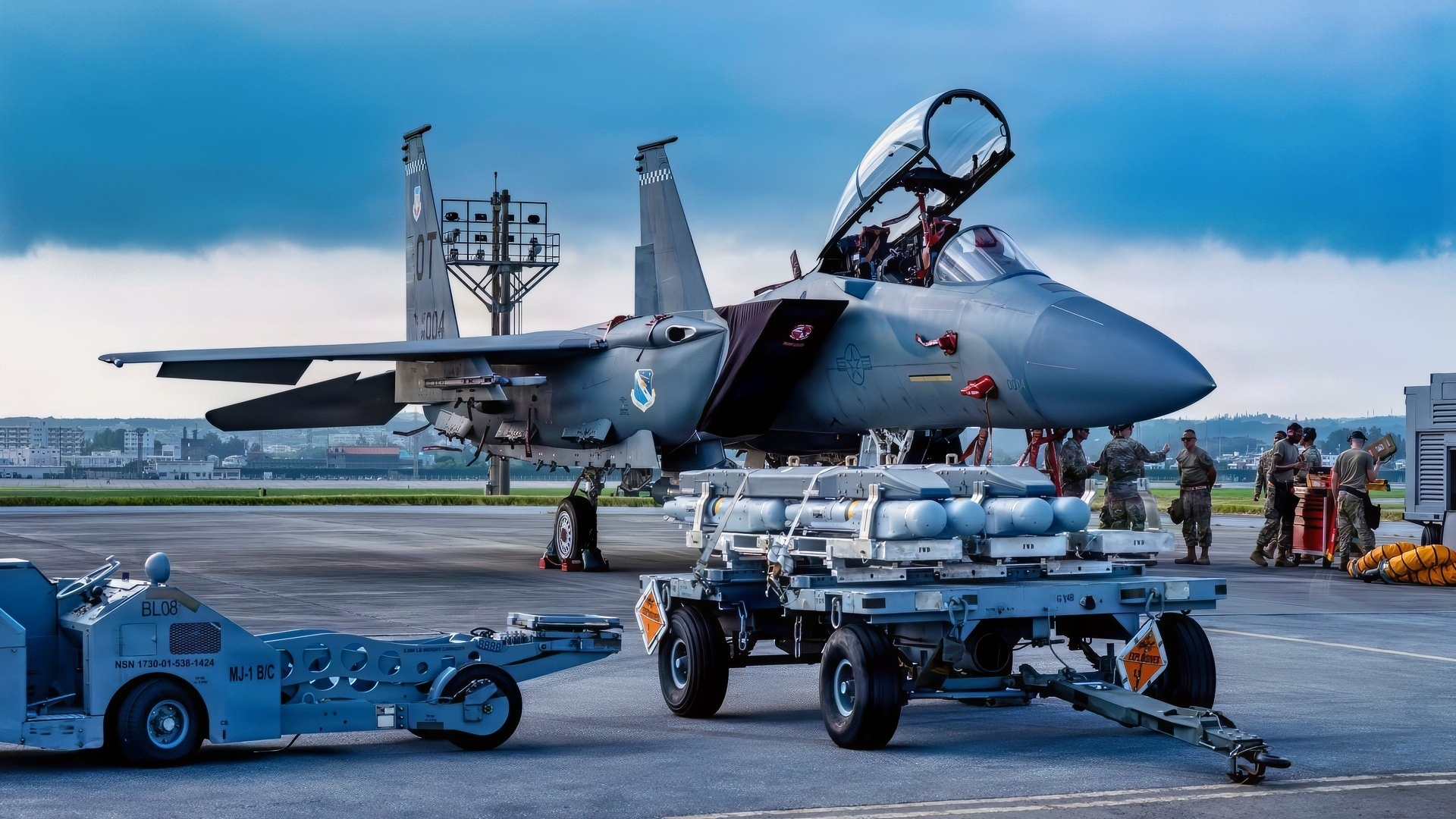
The Strike Nobody Saw Coming
Iran did not try to sink a US aircraft carrier. It did not scramble drones to shoot down F-35s. It made the opposite calculation entirely — and it was the smarter one.
Over the past year, Iranian missile and drone strikes hammered US forward bases across the Persian Gulf, striking fifteen facilities in a campaign that left the American logistical backbone in tatters. The damage, sources now concede, was worse than what Washington chose to release publicly. The strategically significant takeaway is less visible but far more consequential: the United States has spent two decades building a force posture optimized for naval and air supremacy, and Iran just proved that optimization is a liability.
The most consequential example came at the US naval base in Bahrain. Once the headquarters of the US Navy’s Fifth Fleet, the base was rendered largely non-operational by the Iranian barrage. Without it, US ships in the region lost their primary support node — maintenance, logistics, replenishment, medical. The consequences reached the deck plates aboard the USS Abraham Lincoln, whose conditions during its subsequent deployment became the subject of uncomfortable public reporting. Sailors were operating at reduced capacity without the infrastructure that was supposed to keep them going.
The Math No One Wanted to Do
The real story here is economic. Iranian missiles and drones cost a fraction of what US interceptor systems cost. The US expended large portions of its missile defense stocks attempting to intercept waves of cheap aerial platforms — and still failed to prevent substantial damage. The interceptors worked when they worked. The problem was the volume. Iran fired more than the US could afford to shoot back, and more than its defenses could process.
This is not unique to the Persian Gulf. The same dynamic played out in Ukraine, where neither Russia nor Ukraine could reliably defend against saturated drone and missile attacks. The offensive side of the air power equation is winning. Missile defense remains expensive, imperfect, and unsustainable against sustained saturation.
In the language of strategic studies, military airpower technology is currently in a state of offensive balance. It is cheaper, easier, and more reliable to attack from the air than it is to defend fixed positions on the ground. The United States inherited this advantage from decades of air dominance. That advantage has evaporated.
The Immediate Implications for the Gulf
For the United States, the loss of forward bases in the Gulf is an inconvenience but not an existential threat. Oil will continue to flow regardless of which regional actor controls the logistics onshore. Israel’s security does not depend on America holding Bahrain. Renewable energy adoption is slowly reducing the strategic premium on Middle Eastern oil, and the US could accelerate that transition if it chose to.
But the psychological and institutional cost is real. The assumption that US forward bases are defensible has shaped force deployment, alliance commitments, and defense spending for thirty years. That assumption is now cracked.
The China Problem Multiplies Everything
The real warning sign is not Iran. It is China.
If a mid-sized power with a constrained economy and a modest military industrial base can degrade fifteen US bases across the Gulf, what happens when China targets the equivalent infrastructure in East Asia?
The US presence in the Western Pacific depends on a handful of mega-facilities: Camp Zama and Yokosuka in Japan, the USFK complex in South Korea, Andersen Air Force Base on Guam. These are the American equivalents of the Bahrain naval base — massive, concentrated, and extraordinarily vulnerable to the same kind of saturation strikes Iran perfected.
China has been building precisely the kind of capabilities needed for this scenario. It has invested heavily in missile forces, drone swarms, and anti-access/area-denial infrastructure. Its economy dwarfs Iran’s. Its military modernization is decades ahead. And unlike Iran, China has every strategic incentive to test exactly how far it can push before the US backs down.
The base-strike playbook Iran demonstrated is exactly what Chinese planners are studying. The only question is timing.
Why Retrenchment Makes Sense — And Why It Hasn’t Happened
There is a strange symmetry to the Trump administration’s foreign policy right now. While Washington has been bleeding resources and political capital on campaigns in the Gulf and Latin America — ventures that produce minimal strategic return — China has been quietly consolidating its position across the Indo-Pacific.
Europe, for its part, has been pushed toward greater military self-reliance, at least in rhetoric if not yet in capacity. Russia is a declining power relative to China. The natural prioritization of US strategy should be eastward.
Yet the institutional momentum of Middle East deployments — carrier groups, base infrastructure, alliance obligations — continues to draw resources away from the Pacific. The Pentagon’s own force structure is built around forward basing. Shifting away from it requires admitting that the old model no longer works. That is a politically difficult concession.
What Needs to Change
The lesson from Iran should be decisive: the era of defending a single line of mega-bases is over. The US needs defense-in-depth across the Pacific — dispersed airfields, mobile logistics, redundant supply chains, and hardened command nodes that cannot be neutralized by a single missile salvo.
This means investing in facilities that do not exist yet. It means accepting that some bases may need to be abandoned or operated at lower intensity. It means rebuilding stockpiles of interceptor missiles that have been drawn down for years. And it means confronting the uncomfortable reality that US conventional superiority over peer adversaries is eroding faster than most defense planners acknowledge.
The same logic applies in the Gulf. Even if the US chooses to maintain a reduced presence there, it cannot assume its remaining bases are secure. The Iranian example proves otherwise.
The Bigger Picture
What Iran demonstrated is not a tactical surprise. It is a structural shift in how power projects in the twenty-first century. The era in which the United States could position massive, stationary installations behind the promise of naval and air supremacy is ending. Cheap air power has caught up.
Washington has a narrow window to adapt. China is not waiting. Every month spent on smaller conflicts in the Middle East is a month that Beijing gets further ahead in the infrastructure race. The slow-motion defeat in the Gulf is painful, but it is also an education. The question is whether the United States learns it in time for the fight that actually matters.