Iran's Kuwait Strike Signals a New Middle East Doctrine
Iran's attack on a US base in Kuwait and emerging dirty-bomb threats mark a dangerous inflection point in a nine-month war. But crude markets are sending a confusing signal—supply surpluses are dampening the price spike you'd expect.
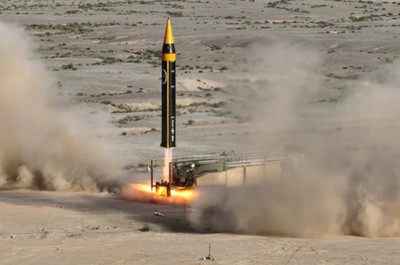
Iran Just Proved Its Gulf Strategy Works
Iran struck Ali al-Salem Air Base in Kuwait on November 18, claiming targeted US drone and missile facilities. Kuwait confirmed its air-defense system engaged hostile drones the evening before. The US has not yet disclosed any damage.
That ambiguity is the point. This was never primarily about destroying hardware. It was about demonstrating that Tehran can reach a major US installation inside a Gulf ally’s territory—and get away with it.
Kuwait is only the latest stop. Bahrain also reported repelling multiple aerial threats, following earlier Iranian claims that it had hit US radar installations on the island. Taken together, the pattern is unmistakable: Iran is systematically mapping the defensive gaps along the US military footprint across the Gulf, one incursion at a time.
The message to Riyadh, Doha, Abu Dhabi, and Manama is blunt. None of these hosts can guarantee the safety of US forces on their soil. That changes the calculus every Washington pact rests on.
The Dirty-Bomb Signal Goes Beyond Threats
What makes this escalation qualitatively different from prior rounds is not just the target set—it is the geographic scope Iran is now implying. CNN reported that US intelligence agencies are reviewing the possibility that Iran planned a radioactive dispersal device, commonly called a dirty bomb, targeting Washington DC. The Iranian foreign ministry denied any such plot. Pentagon officials say no imminent threat to the capital has been confirmed, but the mere fact that US intelligence is running the scenario out loud matters.
This is psychological warfare by spreadsheet. By raising the possibility of a radiological attack on American soil, Tehran forces the US to defend everywhere at once—bases abroad, allies at home, critical infrastructure along the Atlantic seaboard. Every additional layer of domestic defense stretches resources thin.
President Trump did not mince words at the ASEAN summit in Manila. If the dirty-bomb plan is real, he warned Iran would pay a price unlike anything any country has ever suffered. Secretary of State Marco Rubio said he assessed no immediate threat to Washington but stressed monitoring continues. Both men are signaling readiness while leaving room to de-escalate—a familiar pattern in a conflict that has now run nine months without end.
The War Has Become a Grind, Not a Campaign
The Kuwait and Bahrain strikes followed recent US bombing of Iranian missile-launch facilities on Kishm Island. Washington and Tel Aviv have been conducting sustained operations against Iranian ordnance infrastructure. Tehran’s response has been to widen the battlefield rather than concentrate it.
Since March, Iran has treated its growing stockpile of Shahab and Ghaznavi short-range ballistic missiles, Dezful-class cruise missiles, and Shahed-style loitering munitions as its central instrument of statecraft. Rather than contest airspace directly—an initiative Iran conceded long ago—it has built what analysts have begun calling a missile-and-drone republic capable of simultaneous saturation attacks against Israel, Gulf oil producers, and US bases in a single salvo.
Diplomatic channels are stalled. There is no credible path to ceasefire on the horizon. The result is a grinding war of attrition where each side tests the other’s tolerance for escalation in measured increments.
Oil Is Not Spiking—and That Should Concern You
Here is where the story gets counterintuitive. Despite attacks on two US-aligned Gulf states, broad sanctions pressure on Iranian output, and ongoing disruptions through the Strait of Hormuz, crude is not breaking out.
West Texas Intermediate settled at $86.01 a barrel on the New York Mercantile Exchange, up just 0.3 percent. Brent climbed 0.8 percent to $93.14. These are modest moves for a conflict this prolonged.
The International Energy Agency provided the explanation last week. In its October report, released on November 13, the IEA noted for the first time since the war began that global oil supply is exceeding demand. It projected a fourth-quarter surplus of roughly 1.7 million barrels per day.
That surplus is absorbing the Hormuz risk premium. Shippers are rerouting, yes—but spare capacity elsewhere, particularly from Saudi Arabia and the broader OPEC+ group, is enough to keep volumes moving. For now.
But surplus conditions are fragile. A sustained disruption to UAE or Qatari export routes, a strike on Saudi refining assets, or a deliberate Iranian closure of the strait would erase that buffer within days. Until then, markets are pricing in the possibility of chaos without pricing in the event.
What Changes Next
Three things to watch.
First, whether the US responds proportionally to the Kuwait strike or escalates to something that crosses Tehran’s current threshold. So far Washington has stayed calibrated—bombing missile sites, not command centers. That restraint may not hold forever.
Second, how Gulf partners recalibrate their security arrangements. If the US cannot secure its own bases, bilateral defense pacts with Japan, South Korea, or even European capitals could gain sudden relevance. The security architecture of the Persian Gulf is already fracturing along lines that predate this war.
Third, whether the IEA’s surplus thesis survives another round of Iranian provocation. Supply gluts do not persist indefinitely when chokepoint risk remains this elevated. When it turns, it turns fast.
The nine-month war is entering a phase where both sides are probing for the line neither wants to cross. The Kuwait strike was a probe. The dirty-bomb narrative is another. What comes next determines whether this conflict stays a war of position—or becomes a war of miscalculation.