Iran's New Missile and Hormuz Gamble Redefine Energy Risk
Iran unveiled a new ballistic missile and tightened control of the Strait of Hormuz in a calibrated escalation designed to raise the cost of US pressure. The dual move — military theater meets economic chokepoint warfare — raises the specter of a spill-over that could reprice global energy overnight.
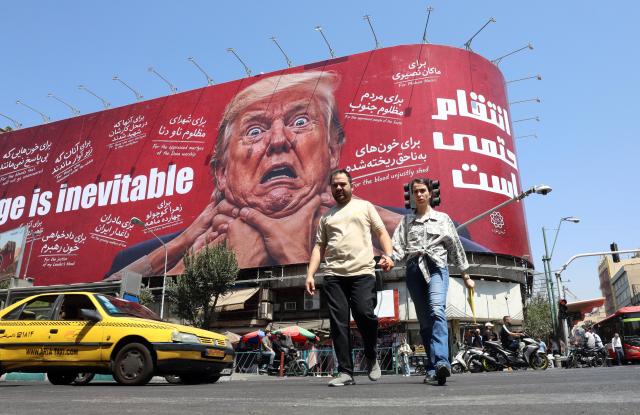
Iran Is Writing a New Playbook for Coercion
Iran has stopped playing by the old scripts of deterrence. On September 7, it publicly unveiled the Qasem Bashir — a solid-fuel ballistic missile with reportedly extended range and improved accuracy — and simultaneously declared that it would enforce new control zones across the Strait of Hormuz and parts of the Persian Gulf. The message, delivered by Mohsen Rezaei, secretary-general of Iran’s Supreme National Security Council, was unambiguous: the US has been testing Iranian resolve, and Iran is done waiting to be tested.
Rezaei claimed the missile had been tested against US warships. Whether that claim can be independently verified is beside the point. The symbolism matters more than the telemetry — Iran is positioning itself not merely as a regional power but as a state capable of holding American naval assets at risk inside what Washington has treated as its own operational domain.
Who Gets Pressured When Hormuz Becomes a Weapon
The Strait of Hormuz is not just another shipping lane. Roughly 20 to 21 million barrels of oil pass through it each day — around one-fifth of global petroleum consumption. Any sustained disruption there does not simply inconvenience regional traders. It rewrites energy risk premiums across every major market from Tokyo to Rotterdam to Houston.
Iran’s IRGC Navy has already warned that vessels using the southern Oman route — the channel the US says it is protecting — could be treated as legitimate targets. That is a direct challenge to the international assumption that a segment of the strait remains safely usable even during a crisis. If Iran enforces a new control zone that effectively nullifies the Oman route, commercial shippers face a binary choice: comply with Iranian routing mandates or risk interception.
The economic exposure is concrete. Japan and South Korea — the two largest energy-importing economies in the region — source the overwhelming majority of their crude through Hormuz. A blockade scenario would not be a gradual squeeze. It would be a shock event, and shock events do not wait for diplomacy to catch up.
The Calculated Logic Behind the Show of Force
CNN’s analysis — echoed by Hamidreza Azizi, a senior Iran analyst at the International Crisis Group — suggests Tehran is not chasing all-out war. It is chasing leverage. The strategy appears to be escalation by degrees: raise the operational cost for the US enough that maintaining the current posture feels unsustainable, then force a return to negotiations from a position of relative strength.
Azizi’s framing of a “limited escalation” is the key conceptual move here. Iran would attack commercial vessels, US military bases, and regional energy infrastructure — but only to a calibrated degree, stopping short of actions that would trigger a full American military response. The theory is that Washington, already facing domestic political friction over Middle East commitments, would eventually negotiate rather than risk a wider conflict it did not start.
But calibrated escalation is a high-wire act. Azizi himself warns that once both sides begin testing each other’s red lines, misinterpretation risk rises sharply. A single incident causing significant US military casualties, or a US strike that crosses an Iranian red line, could collapse the calibration entirely. That is the scenario no one in Washington or Tehran wants — but neither has built a reliable circuit breaker into the current dynamic.
The Diplomatic Shadow Play With Oman
While the missile showcase and maritime threats dominated headlines, a quieter parallel track is unfolding. Iran’s Foreign Minister Abbas Araghchi said on September 5 that Iran is “very close” to a temporary navigation arrangement with Oman for vessels entering and exiting the Persian Gulf. Iran’s foreign ministry indicated the so-called temporary safe route could soon be registered with the International Maritime Organization. Oman described the talks as positive and constructive.
This is not a contradiction with the military posturing. It is the flip side of the same strategy. Iran is creating facts on the water while also keeping a diplomatic off-ramp available — one that it can close at will if its demands go unmet.
And the demands are substantial. Iran has made clear that any reopening of Hormuz depends on US concessions: reparations for alleged violations of the June ceasefire memorandum of understanding, lifting of the maritime blockade, withdrawal of US forces from around Iran, relief from sanctions, and the return of frozen Iranian assets. None of these are minor items. Each one would represent a significant policy reversal by the US, and none is currently on the table in Washington.
Trump’s Dismissive Stance Raises the Stakes Further
Donald Trump’s treatment of the June MOU — calling it worth less than a piece of paper — removed any remaining diplomatic floor beneath the current confrontation. His continued public insistence that Iran must never acquire nuclear weapons, combined with calls for allied troop deployments to the strait, signals an administration that is choosing escalation over de-escalation.
US Energy Secretary Chris Wright’s remarks that other countries should join American naval operations in Hormuz were notable not for what they revealed but for what they implied: Washington recognizes it cannot unilaterally guarantee passage through the strait anymore. The question is whether allies will actually follow through, or whether the request will expose a gap between American strategic anxiety and allied political will.
South Korea and Japan, both heavy importers of Iranian-origin and Gulf-bound energy, face a particularly painful positioning problem. They depend on the Strait of Hormuz but have limited ability to influence events there. Their alignment with US security guarantees will be tested by whether Washington is willing to risk their trade routes for objectives that may not include protecting their energy flows.
What Happens Next — and Why Markets Should Care Now
The immediate outlook is a volatile equilibrium. Iran is demonstrating that it can disrupt Hormuz without fully closing it — a posture that extracts economic cost from the US and its allies while stopping short of the threshold that would trigger a broad military response. The US is responding by trying to multinationalize the护航 effort and maintain pressure through blockade and sanctions. Both sides are signaling firmness. Neither is backing down.
For energy markets, the risk is not a binary outcome — Hormuz open or Hormuz closed. The real exposure is the probability distribution shifting. Every missile test, every IRGC warning, every American call for allied troop contributions nudges that distribution toward disruption. Insurance rates for Gulf shipping are already pricing in elevated risk. A single incident could compress that pricing into something far more severe.
The Oman channel talks offer a narrow window for de-escalation, but only if both sides interpret the current tension as reversible rather than irreversible. Given Trump’s dismissive stance on the MOU and Iran’s insistence on preconditions that amount to policy surrenders, that window looks increasingly fragile.
Iran has shown it can combine military demonstration with economic coercion in a single move. The question now is whether Washington and its allies have a response that does not require accepting Tehran’s terms — or whether the next escalation will force them to choose between concession and confrontation.