Iran Builds Sanction-Proof Oil Empire in China
Leaked documents reveal Tehran seized control of Chinese port terminals and storage tanks to shield sanctioned crude flows from US pressure — but Beijing is pulling back even as the deal deepens.
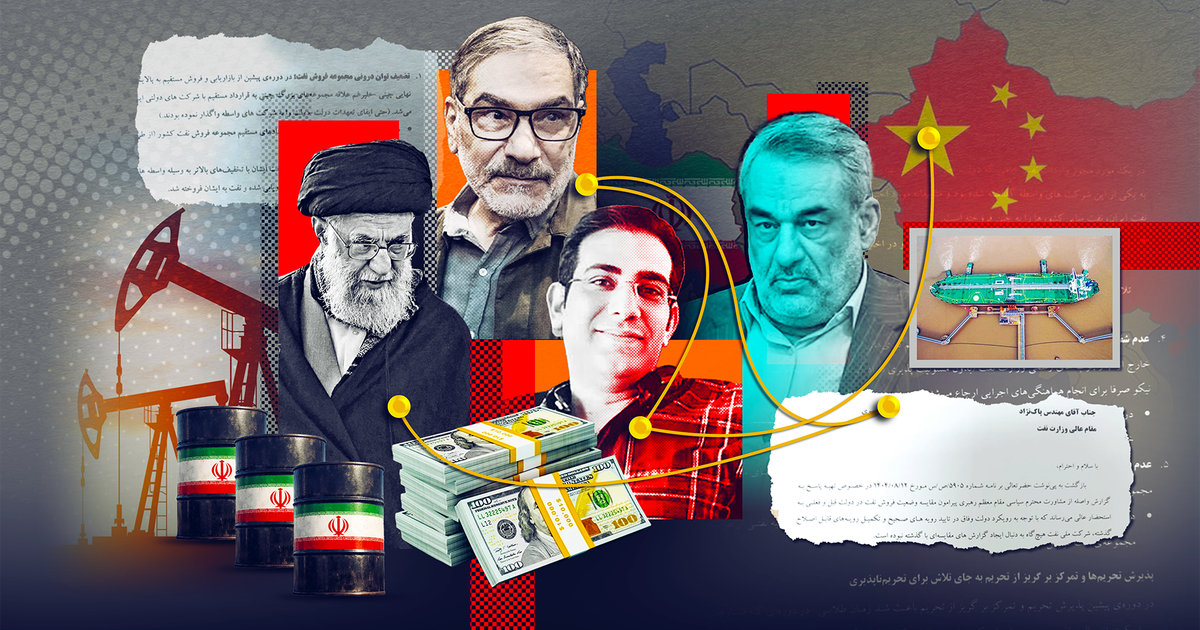
A Terminal of One’s Own
Iran no longer needs to knock on Chinese doors for every barrel it sells. According to a confidential letter obtained by Iran International, Tehran has acquired direct control of port terminals and large-scale storage tanks at multiple locations across China, creating physical infrastructure that can absorb and move sanctioned crude without relying on third-party handlers. That shifts something fundamental about how Washington’s sanction regime operates against Iranian oil.
The letter comes from Hamid Bovard, who served as head of the National Iranian Oil Company before becoming acting oil minister. He wrote it to the office of former Supreme Leader Ali Khamenei — who was killed in US-Israeli strikes on February 28, 2026 — alongside his former mentor Ali Shamkhani, also killed in those same strikes. In it, Bovard described a system built under President Masoud Pezeshkian that gave Iran what its intermediaries had long wanted: their own docks.
Where the Tanks Sit
Iran controls facilities in three broad areas. In the Ningbo-Zhoushan free trade zone, the largest node of Chinese refining capacity, Iran gained access by helping construct several smaller transit facilities. It reportedly holds stakes in smaller docks at Qingdao and Pant in Shandong province, both positioned near pipelines that feed directly into refineries without requiring costly transshipment.
Beyond the docks, Iran purchased seven oil storage tanks spread across four provinces. Four large tanks sit at the ports of Dalian and Huizhou and in the coastal cities of Dongying and Weifang. Three more, controlled by the Oil Ministry, occupy the Zhoushan area — the Kamergi tank on Aoshan Island, a facility at Shulanghu Island terminals, and another in the Zengyamuo oil zone. Together they represent roughly the equivalent of tens of millions of barrels of standing inventory, enough to buffer shipments between cargoes and buyers.
The economic logic is straightforward. For years, Iranian tankers have arrived in China and waited — sometimes weeks — to offload into private storage operated by Chinese trading companies subject to US scrutiny. Iran paid storage fees ($450 million for stranded crude was reported by Reuters nearly two years ago) while bearing the risk of inspection, diversion, or contract collapse. Now it owns the real estate. Those waiting costs disappear. So does the exposure to Chinese handlers who answer to someone other than Tehran.
The Shamkhani Connection
The arrangement ties directly to the shadow fleet of Hossein Shamkhani, son of the late Ali Shamkhani. US Treasury has sanctioned 51 vessels linked to him. Under the new setup, his tankers deliver Iranian crude to docks and terminals effectively run by the Islamic Republic. That shields his operations from at least one layer of enforcement pressure — the point of entry is now Iranian-controlled rather than exposed to local authorities who might flag the cargo.
Bovard’s letter is blunt about the patronage network behind the deal. He accused Ali Shamkhani of using his influence to protect his son’s shipping interests ahead of broader Iranian sales objectives. Bovard alleged that Hossein Shamkhani received government loans to buy vessels but redirected them to carry Russian oil instead of Iranian crude. He claimed the boy was given consignment oil without collateral and sold it on open market terms, turning what should have been state revenue into personal margin. “The Oil Ministry had effectively become his agent rather than the other way around,” Bovard wrote, according to the sources.
The accusations matter beyond drama. They reveal how tightly a single family’s commercial interests were woven into the architecture of Iran’s underground export system — and why the deal could unravel quickly if political balances shift inside the regime.
China Pulls Back Even as Tehran Invests
Here is where the picture darkens for Tehran. Bovard’s letter contains a telling admission: China began distancing itself from Iranian crude well before the 40-day war that followed the strikes on Khamenei. Beijing rejected Tehran’s request to raise import quotas for Chinese refineries. It increased purchases from Venezuela instead. And it demanded deeper discounts on Iranian cargoes — pushing margins thin just as Iran needed them most.
That dynamic creates a structural problem for the new Chinese-terminal model. Owning tanks and docks does not create demand. If China continues to squeeze price concessions and limit intake volumes, the infrastructure sits half-empty and earns less than its carrying cost. Iran has already absorbed $450 million in storage fees for stranded barrels; adding capital expenditure to owned facilities without corresponding throughput will deepen that loss.
US policy appears to be accelerating the squeeze. Treasury Secretary Scott Bessent recently told an audience in Washington that China and the United States had more in common on Middle East energy than critics assume — pointing to China’s reliance on Persian Gulf supplies and its interest in keeping the Strait of Hormuz open. That framing suggests Washington is willing to tolerate limited Iranian flows through China only on Washington’s terms, while pushing Beijing toward harder choices.
What Happens Next
Two outcomes seem plausible, neither favorable to Tehran.
First, the infrastructure proves useful but politically brittle. The owned terminals let Iran move cargo faster and more cheaply, buying time and improving cash flow from discounted sales. But if Beijing decides to honor US pressure more aggressively — freezing Iranian tanks, inspecting cargoes more rigorously, or refusing new quota expansions — Iran will hold expensive assets with little recourse. That is a classic hostage situation in commodity infrastructure: you build it assuming the host country will look away, then find out too late whether it actually will.
Second, the internal politics of the deal collapse before the deal itself does. Bovard’s letter triggered a shake-up: Oil Minister Mohsen Paknejad was dismissed, apparently over his handling of the intermediaries tied to the Shamkhani network. Former lawmaker Ahmad Amirabadi Farahani reported that four major intermediaries met at Charlie restaurant in Dubai hours after Khamenei’s death and declared the Islamic Republic collapsing — at least rhetorically. Whether that reflects genuine defection or panic among traders whose supply chains depend on political continuity is unclear. But the dismissal of Paknejad, the exposure of intra-regime rivalries, and the death of the two men at the center of the scheme all suggest the architecture is fragile.
Washington gains leverage either way. The first scenario exposes Iranian overreach; the second exposes its internal fractures. Neither helps the theory that owning Chinese docks changes the calculus on sanctions.