Iran's Stalled Peace MOU Is Rewriting Middle East Energy
Six months after a Pakistan-brokered armistice collapsed, Iran's president is publicly demanding the US honor what no longer exists. The gap between signature and reality is reshaping how the world prices risk.
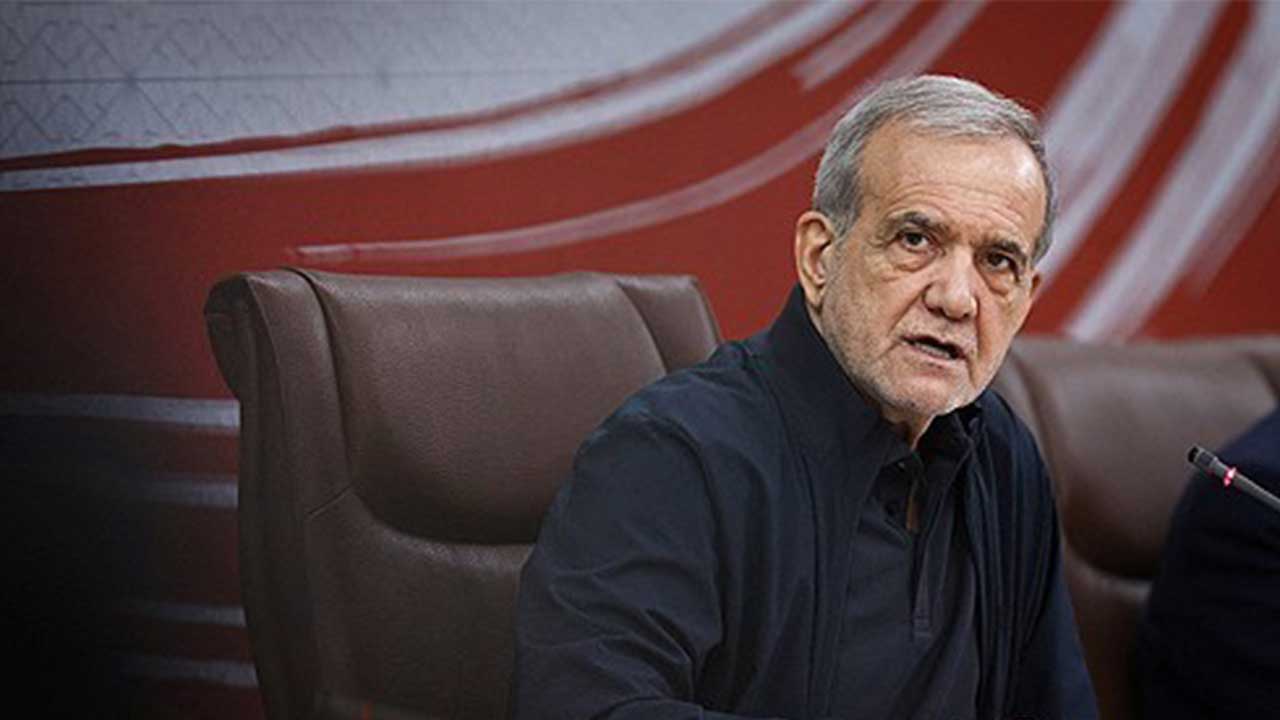
The Signature That Never Landed
Six months after Iran and the United States signed a fragile armistice in June, brokered by Pakistan, President Masoud Pezeshkian took to state television on August 29 and demanded Washington honor it. The request arrived to an audience of one: a deal that stopped functioning the moment American and Israeli forces resumed strikes.
The sequence matters. In June, Pakistan stepped into the breach with a memorandum of understanding that set a 60-day window for negotiations on denuclearization and broader grievances. By early August, that window had closed and reopened. Armed clashes flared again. The MOU did not die with a formal cancellation — it simply became irrelevant on the ground while diplomats kept pretending otherwise.
Pezeshkian’s language was precise. He called the agreement a vehicle for regional unity and development and framed it as a restraint on what he described as American and Israeli efforts to sow chaos in West Asia. He also drew the familiar line: Iran does not seek war, but no force can compel surrender. The speech was designed for domestic consumption and for audiences beyond the Gulf — particularly Beijing and New Delhi, both of which have been quietly watching whether Washington can close a conflict without appearing triumphant.
Who Gains, Who Loses, Who Is Left Holding the Bag
The immediate loser is credibility. Neither side benefits from pretending a stalled document still governs behavior. The US enters this moment with a credibility problem among its Gulf partners, who expected American pressure to produce a de-escalation trajectory after June. Iran enters it with a credibility problem among its own regional allies, who expected the resumption of fighting to be matched by diplomatic leverage — not a public appeal to honor an agreement that both sides had already moved past in practice.
Pakistan occupies the awkward middle seat. Islamabad positioned itself as the honest broker, a role that requires both parties to still believe in the process. Once fighting resumed, the broker’s utility dropped sharply. That does not mean Pakistan disappears from the architecture — it means it retires to the background until the next opening, which may be months away.
The Gulf states are the silent recalculators. Saudi Arabia, the UAE, and Jordan have spent months balancing American security guarantees against their own economic imperatives. A stalled MOU means they cannot fully unwind their risk premiums. It also means they cannot fully commit to normalization narratives that depend on a contained region. Every week the armistice drags without resolution, Gulf capital stays cautious rather than committing to the kind of regional investments that would shift the economic clock forward.
The Oil Market Price of Indecision
The most concrete casualty is the risk premium layered onto crude. The Strait of Hormuz handles roughly 21 million barrels per day — about a fifth of global seaborne oil. Even在没有 active blockade threats, the mere possibility of renewed escalation keeps a floor under prices that reflects fear rather than fundamentals.
When the MOU was signed in June, markets priced in a partial de-escalation. The premium contracted somewhat. Now that the agreement is functionally dead, that contraction is reversing. Traders are not pricing in a full-scale war scenario — they are pricing in prolonged uncertainty, which is often more expensive because it prevents hedging strategies from settling into place.
What English-language markets often miss is how deeply Iran’s posturing shapes the Hormuz calculus. Pezeshkian’s rhetoric about not submitting to any force carries a specific signal: Tehran retains the option to disrupt chokepoint traffic if it feels cornered. The US and its allies know this. Iran knows they know. That shared awareness keeps insurance rates on tankers elevated and charter rates sensitive to every headline from the Gulf.
The Deterrence Question Nobody Is Answering
The deeper structural problem is deterrence. Before June, the region operated on a shaky but recognizable set of red lines. The MOU was supposed to replace tit-for-tat retaliation with a negotiation track. Instead, fighting resumed inside the 60-day window, and neither side established a new pattern.
That creates a vacuum. When the rules of engagement are unclear, actors fall back on their oldest instincts. Israel may calculate that continued pressure will force Iranian concessions. Iran may calculate that demonstrated resilience will extract diplomatic space. The US is caught between supporting a ally and managing a conflict that never formally ended. The result is a region where every incident is interpreted through the lens of unresolved escalation rather than managed competition.
What Happens Next
Three scenarios dominate the near term.
First, a quiet reanimation of the MOU framework. Diplomatic channels could reconstitute the Pakistan-brokered talks around a revised timeline, perhaps extending the negotiation window beyond the original 60 days. This is plausible but requires both Washington and Tehran to publicly downgrade their expectations while privately accepting a slower process. Neither leadership has shown appetite for that face-saving choreography yet.
Second, controlled further escalation. Either side could authorize limited strikes calibrated to send signals without crossing into open war. This is the most likely path in the absence of a diplomatic off-ramp. It keeps the risk premium alive and ensures that oil markets remain jittery through the autumn shipping season.
Third, a sudden diplomatic pivot triggered by an external shock — a terrorist attack, a naval incident, or economic pressure from China or Europe on Iran. External shocks have opened doors before in this region. None are visible on the horizon today, which makes this the least likely of the three paths.
The Takeaway
Pezeshkian’s demand for MOU compliance is not an invitation to negotiate. It is a statement of position in a conflict that has no formal end date. The agreement signed in June was supposed to change the tempo. It failed to do so. The question now is whether the next diplomatic opening arrives on Iran’s terms, America’s terms, or some third-party terms — and how much energy market turbulence the world absorbs while the answer emerges.