California's wildfire season shows why evacuation plans fail
The Norte fire in Orange County has consumed expensive homes and sent thousands fleeing. But the real story isn't the flames — it's how repeated disasters keep exposing the gap between evacuation logistics and the accelerating pace of wildfire season.
The Norte Fire Is Just the Latest Chapter
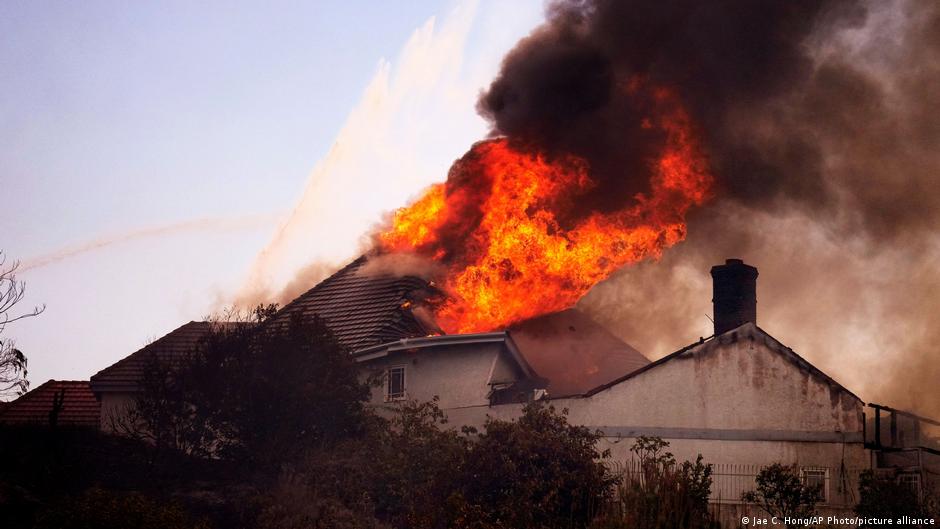
At least six expensive properties have burned to the ground in Orange County as the Norte fire ripped through the southern California coast this week. Four homes were impacted in the affluent municipality of San Juan Capistrano alone, where mature eucalyptus trees line canyons that funnel wind and ember storms into residential backyards with little warning. The blaze has scorched roughly 465 acres and has been moving fast enough to force thousands of residents to flee their homes in the middle of the night, many with only the clothes on their backs and no clear sense of where they would end up.
What makes this story worth attention isn’t just the destruction itself — it’s what happens when the dust settles and nobody has a better plan. The Norte fire didn’t arrive without precedent. It arrived on the heels of a season that has already seen over 1.2 million acres burn statewide, well ahead of the ten-year average for this point in the calendar. Emergency management officials in Orange County confirmed Thursday that evacuation orders remained in effect for multiple neighborhoods as containment held below 15 percent, a figure that underscores how marginally any response can track fires now fueled by winds exceeding 60 miles per hour and relative humidity hovering single digits.
The Gap Between Paper and Reality
California’s evacuation infrastructure hasn’t kept pace with the pace of its fires. Every season brings the same lessons written in ash. Santa Ana winds gusting at 50 to 70 miles per hour fan flames faster than responders can contain them, and thousands are left without power because the grid gets shut down proactively. That’s exactly what happened this week, with Southern California Edison turning off electricity across parts of Orange and adjacent counties to prevent transformer failures and line snaps from igniting additional blazes. The utility reported over 280,000 customers in the alert zone, many of them in communities where alternative power sources for medical devices or cooling remain nonexistent.
The National Weather Service issued warnings about high risk for large fires and rapid fire growth across Los Angeles, Ventura, San Luis Obispo, and Santa Barbara counties. This isn’t unusual for this time of year. What is unusual is that no one seems to have figured out how to make evacuation timelines match the speed of modern wildfires. In 2018, the Camp Fire in Butte County moved at an average speed of nearly one football field per second during its most devastating hours. By 2024, researchers at the University of California found that the proportion of large fires exhibiting this kind of erratic, wind-driven behavior had doubled compared to the early 2000s. Evacuation orders that once allowed hours now demand minutes, and the road networks designed for a slower, more manageable threat can’t absorb the surge.
Second-order effects compound the problem. When evacuation routes clog, emergency vehicles can’t reach trapped residents. When communications networks falter under grid failures, people don’t receive timely updates. When shelters fill past capacity, displaced families spread into hotels, stadiums, and each other’s homes across the state, straining local resources far beyond the fire zone. None of these cascading failures receive adequate funding in the annual budgets that determine readiness.
Who Pays When Plans Fall Short
The financial stakes are enormous. The properties destroyed in San Juan Capistrano weren’t just any homes — they were expensive ones in one of California’s wealthiest enclaves, where lot sizes and canyon-adjacent development create precisely the interface conditions fire models warn against but zoning laws continue to permit. Insurance markets already strained by decades of wildfire payouts are watching closely. State-regulated carriers have pulled back from writing new policies in wildfire-prone tracts, while reinsurance firms — the companies that insure the insurers — have raised rates by as much as 40 percent across California since 2022. When coverage becomes too risky, homeowners leave. When they can’t afford to leave, they stay in places that keep burning.
There’s a deeper problem lurking beneath the immediate chaos. Thousands losing power during an evacuation isn’t a temporary inconvenience — it’s a warning sign. Hospitals, communication networks, and emergency services all depend on reliable electricity. When that grid gets intentionally severed to reduce spark risk, you’re left with displaced families in the dark, and no guarantee that rescue operations won’t also be in the dark. The Orange County Sheriff’s Department reported that two traffic interchanges near the fire perimeter lost signal coordination, creating unintended congestion that delayed responding units by an estimated twelve minutes — time that matters when a fire is covering miles.
The Human Math Behind the Headlines
Evacuation planning relies on population counts, road capacity models, and assumptions about how quickly people will respond to alerts. None of those inputs account for the realities of an aging coastal population, where residents over seventy represent nearly a third of Orange County’s demographic profile. These residents are disproportionately likely to lack reliable transportation, to depend on electrically powered medical equipment, and to live in homes that sit at the tail end of evacuation corridors rather than near them.
Last season, social science researchers publishing in Risk Analysis documented that mandatory evacuation orders issued after 6 p.m. saw compliance rates drop by roughly 22 percent compared to daytime orders, because people were already committed to routines, sleeping, or simply reluctant to navigate roads they expected to be congested. The Norte fire’s initial order came just after midnight, when temperatures are lowest but wind patterns shift unpredictably — a timing that maximized confusion and minimized the window for safe departure.
Why This Keeps Happening
The fundamental issue is simple: climate change is making fire season longer, hotter, and more unpredictable. Low humidity and unseasonably high temperatures create the perfect conditions for rapid fire spread. The Santa Ana winds act as a bellows, pushing flames across canyons and ridges faster than any evacuation order can keep up with. Satellite data from NASA’s Fire Information for Resource Management System shows that the number of days per year above the threshold for extreme fire weather in Southern California has increased by nearly twelve days since 1980, compressing what was once a seasonal risk into a near-constant threat.
Firefighters are doing everything they can — “aggressively attacking the fire from ground and air,” according to the Orange County Fire Authority. But their resources are finite, and the fires keep getting bigger. Repeated requests for people to stay away from the area are met with varying degrees of compliance, and when evacuation orders come too late, the results are predictable. The California Conservation Corps, which deploys young crews for initial attack and structural hardening, reported a 31 percent increase in activations this cycle compared to the previous year, still falling short of what incident commanders requested.
What Should Change — And Why It Won’t
California needs to invest heavily in hardening its power grid against wind-driven sparks, expanding evacuation routes in vulnerable coastal communities, and creating early warning systems that give residents more than minutes to act. Some of this is already happening. Pacific Gas and Electric has buried thousands of miles of line in high-fire-threat districts, and Cal Fire has rolled out a next-generation alert platform designed to deliver geographically precise warnings through wireless emergency alerts. Much of it isn’t moving fast enough.
The hardest truth is that no amount of infrastructure investment will fully protect every at-risk community. Some areas simply need to be left alone, and the political and emotional barriers to that conversation remain enormous. Property owners in fire zones resist buyout programs not just for financial reasons — homes in canyon settings carry irreplaceable sentimental value, community ties, and a deep-seated belief that previous generations survived here, so they can survive again. Local governments resist relegating vulnerable tracts to open space because the tax base they generate funds schools, roads, and emergency services that would otherwise collapse.
Until then, each fire season will bring the same cycle: fast-spreading flames, desperate evacuations, and the same unanswered questions about what comes next. The Norte fire is only the beginning of what promises to be another brutal season. The question isn’t whether California will keep burning — it’s whether the state will finally close the gap between its evacuation plans and the reality it’s already living. The gap has grown wide enough to swallow entire neighborhoods. Closing it requires admitting that the old calculus no longer applies, and starting the conversation about what a smaller footprint looks like before the next wind event forces the answer onto someone else’s timeline.