Iran Attacks Tankers Even as Hormuz Reopens
Iran is intensifying tanker attacks at the exact moment the Strait of Hormuz is recovering — a paradox that reveals Tehran's desperation, not strength. As Gulf shipping approaches pre-war levels, the clock is ticking on US military options before midterm elections.
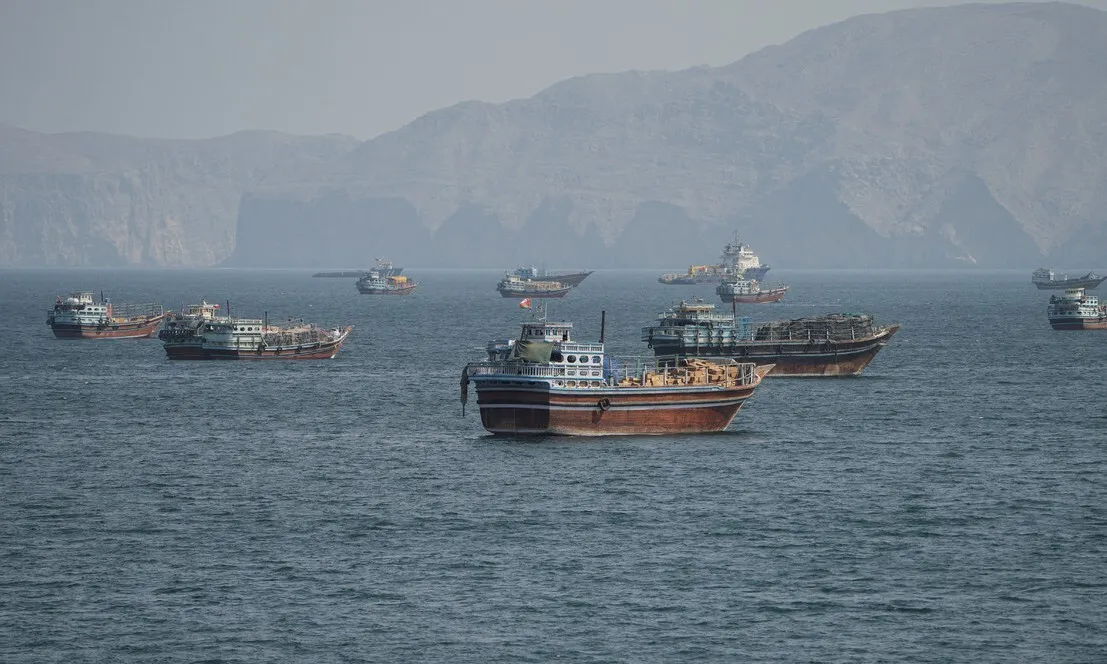
The Paradox of a Bleeding Blockade
Iran is hitting tankers harder just as the Strait of Hormuz is reopening. That contradiction is the story.
According to data from Kpler, Gulf oil movement excluding Iran recovered to more than 81 percent of its pre-war level by September, and total regional exports briefly surpassed pre-war volumes around mid-month. Shipping is returning. Cargo is flowing. And yet Iran’s Islamic Revolutionary Guard Corps (IRGC) did not ease up — it escalated.
Between September 28 and October 5, Iran attacked at least 12 tankers in the Hormuz area, the highest weekly toll since the US-Iran war began on February 28. On October 7, a vessel was struck by a projectile roughly 500 kilometers from the strait, near Qatar’s Madinat Ishamal. Casualties were reported. This was the first attack this deep into the Persian Gulf since early September — a clear signal that Tehran is willing to strike beyond the chokepoint itself.
Why Attack Now?
The most straightforward reading is desperation. Iran’s strategy from the outset was to use Hormuz as leverage: choke the strait, disrupt global supplies, and force the United States into a negotiated settlement on terms favorable to Tehran. But the blockade is failing. Gulf states are rerouting exports. Alternative shipping corridors are emerging. Trade is recovering. Every ton of oil that passes through Hormuz without Iranian interference undercuts Tehran’s primary bargaining chip.
So Iran is doing the only thing left: making the strait dangerous anyway. It is a losing strategy in pure material terms — but it is not without political logic. If Hormuz stays violent even as alternatives appear, the cost of bypassing Iran rises. The message to shippers is simple: no route is safe, and you cannot ignore Tehran.
The Oman Gambit
Iran is now taking its claims a step further. It has begun negotiating with Oman over a formal control regime for the strait — one that would designate specific shipping lanes, collect passage fees, and effectively institutionalize Iranian oversight of global energy transit. Iranian Foreign Ministry spokesperson Ismail Baghai confirmed on October 6 that both countries agreed on geographic coordinates for safe passages and plan to submit the proposal to international bodies.
This is significant. If Iran and Oman formalize a joint control arrangement, it would legitimize what is currently an informal blockade and create a legal framework for extracting tolls from commercial shipping. For Asian importers — Japan, South Korea, China, India — it would mean every barrel of Middle Eastern oil carries an additional political cost on top of market price.
But there is a problem: most Gulf exporters do not recognize Iranian claims to the strait, and Oman’s participation does not guarantee compliance from Kuwait, the UAE, or Saudi Arabia. The proposed lane system may exist on paper while actual traffic ignores it. That is the gap Iran is hoping to close by force.
Who Wins, Who Loses
The winners so far are the Gulf states that have already found alternative export routes. Kuwait and the UAE have been moving oil through the East-West Pipeline and the Oman corridor. Qatar is shipping LNG via the northern Persian Gulf. These alternatives are narrower and more expensive than Hormuz, but they prove the chokepoint is not existential — a fact that weakens Iran’s position over time.
The losers are global energy consumers. Brent crude is already trading above $105. Every attacked tanker, every disrupted shipment, adds a risk premium that flows straight through to refueling costs in Busan, Tokyo, Mumbai, and Shanghai. Asian importers, which depend on Hormuz for the majority of their crude supply, face the steepest bill.
Iran itself is also losing. US Secretary of State Marco Rubio stated on October 7 that Iran has “completely lost control” of Hormuz and described the Iranian economy as in “free fall.” American officials argue that Iranian oil exports have been entirely cut off by a US naval blockade. The paradox of escalating attacks while admitting shipping has recovered suggests a regime fighting a rear-guard action.
The Election Clock
There is another variable pressing on all of this: the US midterm election on November 3. Axios reported on October 7 that the Pentagon has directed CENTCOM to prepare for large-scale military operations, potentially launching strikes before the election. A senior Defense Department official told the outlet that the department is building military options for President Trump to consider.
This timing matters. If the US decides to degrade Iran’s naval and missile capabilities before the votes are counted, the immediate effect would be a dramatic reduction in tanker attacks — but also a sharp spike in oil prices as markets price in the risk of broader conflict. If the US holds back until after the election, Iran has a window to intensify its campaign while shipping recovers, trying to make Hormuz too dangerous to use at all.
What Comes Next
The most likely near-term scenario is a continuation of the current trajectory: Iranian attacks at a lower but persistent level, Gulf alternative routes expanding slowly, and the risk premium in crude prices holding well above pre-war norms. The formal Iran-Oman proposal, if it moves forward, adds a diplomatic layer to an already militarized dispute — but enforcement remains the question.
The dangerous scenario is a US preemptive strike that triggers a full Iranian response: mining the strait, targeting Saudi and Emirati infrastructure, and attacking shipping across the entire Gulf. In that case, Hormuz closures could stretch for weeks or months, and oil could push well above $120.
For Asian energy importers, the bottom line is stark. The window of restored shipping is real but fragile. Iran is attacking precisely because it knows the blockade is failing — and it has chosen to make the world pay for its decline rather than accept it. How long that calculus holds depends on whether Washington decides to intervene, and when.