Why Iran's Uranium Standoff Could Sink the US Deal
Tehran's refusal to transfer enriched uranium reveals a sequencing trap that could derail the US-Iran deal before it begins. Qatar's mediation faces its hardest test yet.
The First Move Problem
Any deal between the US and Iran now comes down to one question nobody wants to answer out loud: who blinks first.
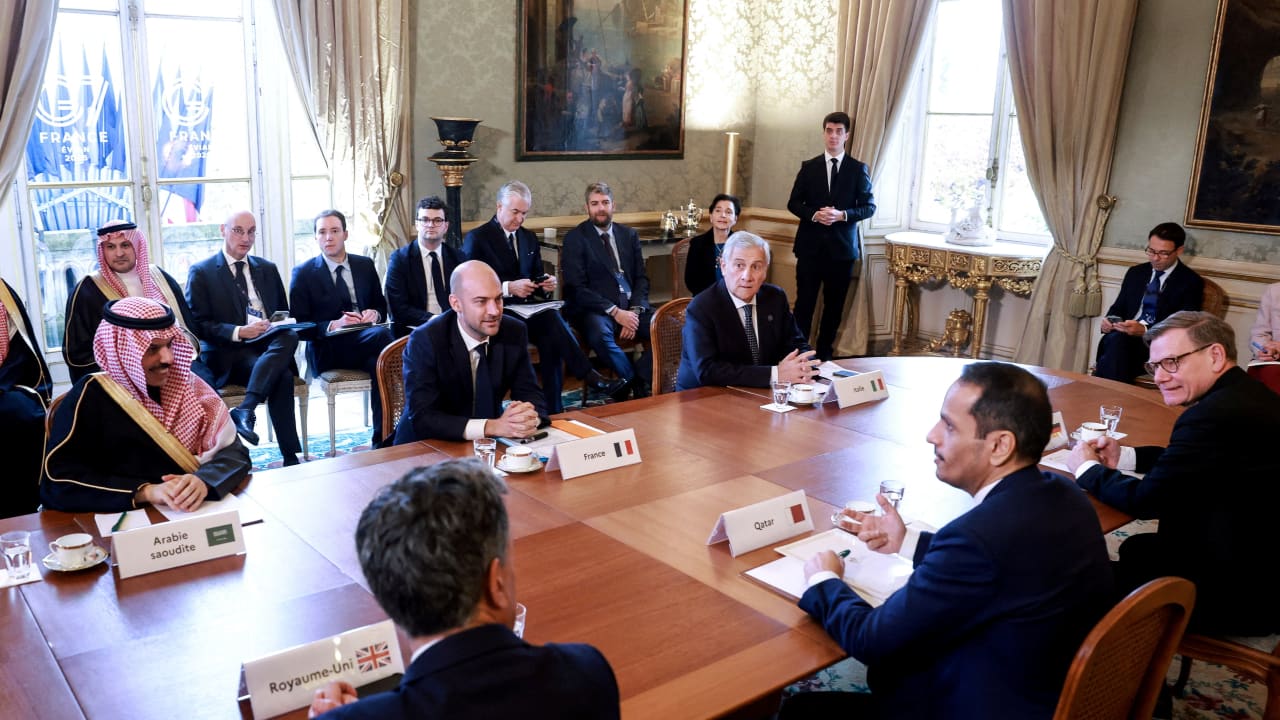
Qatari Prime Minister Mohammed bin Abdulrahman Al Thani told G7 foreign ministers in Paris on November 10 that the gaps between Washington and Tehran remain “significant” — language that diplomats use when they mean wider than anyone hopes. His subsequent meeting with Donald Trump at the White House was ostensibly about reassuring Iranians of US commitment. In practice, it was damage control for a process already struggling to find traction.
Trump’s own words left little ambiguity. “The United States has won,” he said. “It’s just a question of when we stop. We want to win 100%, not 90-something percent.” That framing doesn’t leave much room for a negotiated settlement that both sides can sell domestically. You don’t extract concessions from a winner-takes-all mindset, and neither side is signaling readiness to abandon it.
The Uranium Sticking Point
Here is what makes the current impasse particularly brittle. Iran’s security chief, Mohsen Rezaei, stated plainly that no enriched nuclear material will leave the country. He tied the reasoning directly to military capability — claiming the 60%-enriched uranium is needed to design nuclear-powered ships and submarines. That claim, by the way, stretches well beyond established civilian reactor technology and enters speculative territory that Western intelligence has long flagged as evidence of weapons programming.
Russia had floated the idea of removing Iranian-enriched uranium as part of a broader deal architecture. Moscow’s position was technically neutral — offering facilitation but leaving the decision to Tehran. Iran’s reply was categorical: the material stays.
The stakes of that refusal are harder to quantify than either side admits. The IAEA estimated Iran possessed roughly 441 kilograms of uranium enriched to 60% before the joint Israeli-American strikes on nuclear facilities in June 2025. How much survives remains unclear. What is clear is that 60% enrichment sits far below the ~90% threshold for weapons-grade material but far above the ~5% used in civilian reactors. It is a intermediate stage — technically convertible, politically explosive, and currently sitting inside Iranian territory.
Washington treats the physical removal of that material as a precondition. Tehran treats any discussion of it as premature unless seven unspecified demands are met first. Neither position is negotiable without losing face, and neither side can afford that right now.
The Sequencing Trap
This is where the real architecture problem lies. Both sides agree — apparently — that any agreement would be implemented incrementally rather than as a single simultaneous swap. That is standard diplomatic practice for deals this fragile. But it creates an immediate chicken game: which side takes the first irreversible step, and what guarantees exist that the other side follows?
Iran’s message, relayed through multiple channels, is that Washington must address its seven demands before Tehran engages substantively on the nuclear file. This is a deliberate inversion of the usual sequence — instead of verifiable nuclear concessions unlocking sanctions relief, it is political and economic concessions demanded before nuclear talks even begin. Whether Trump’s team accepts that framing or insists on the reverse order will determine whether Qatari mediation succeeds or stalls.
Rezaei’s warning that future US attacks would trigger strikes against American bases in European countries adds another layer. This is escalation rhetoric, but it is also a bargaining signal — an attempt to raise the domestic political cost of military action for Washington and its allies. If European hosts refuse to allow launch operations from their territory, the threat becomes hollow. If they acquiesce, the geopolitical fallout extends far beyond the Middle East.
Qatar’s Narrowing Corridor
Al Thani’s two-week window, as described to the G7 ministers, is tighter than it sounds. Trump’s midterm losses in early November removed one constraint on his flexibility but added another: the president now needs a tangible achievement before the next electoral cycle, and diplomacy offers a cleaner victory narrative than continued military engagement. Yet the gap between “we want to win” and “we know what winning looks like” remains unbridgeable without Qatari ingenuity that currently isn’t showing.
The paradox of Qatar’s role is that its usefulness depends entirely on proximity to both capitals. Its relationship with Washington grants access. Its relationship with Tehran grants trust. But when both sides interpret the facts of the case so differently — Iran viewing the June 2025 strikes as illegitimate aggression, the US viewing them as necessary military actions — mediators become mirrors reflecting each side’s own priorities back at them rather than genuine bridges.
There is also the matter of Rezaei’s claim that no negotiations are currently taking place between Tehran and Washington. That statement, delivered to Lebanon’s Al Mayadeen television, contradicts the very existence of Qatari shuttle diplomacy. It may simply reflect internal Iranian factionalism — hardliners denying what moderates are quietly doing — or it may indicate that Iran has already set exit conditions so strict that any process looking like failure is preferable to a visible collapse.
What Comes Next
The next few weeks will reveal whether the two-week diplomatic window produces anything concrete or merely confirms its own emptiness. Trump’s demand for 100% victory is incompatible with a deal neither side can fully control domestically. Iran’s insistence on preconditions before engaging on nuclear issues shifts the burden onto Washington to accommodate a framework that looks less like diplomacy and more like capitulation.
If the deal fragments along these lines, the alternative is not stability. It is either renewed military confrontation — with Iranian forces targeting US infrastructure far beyond the region — or a frozen status quo in which both sides continue their shadow competition through proxies while keeping their nuclear programs at arm’s length from outright weapons capability.
Neither outcome serves Qatar, the Gulf states, Europe, or the United States. But none of them seem avoidable with the current terms on the table.