Iraq Admits Pipeline Attack Came From Its Soil — Now What?
Baghdad's confirmation that a strike on a Saudi oil pipeline originated from Iraqi territory marks a dangerous shift. The question is no longer who fired — it's whether Riyadh will accept Iraq's excuses or force a reckoning with the militias nested inside its own security apparatus.
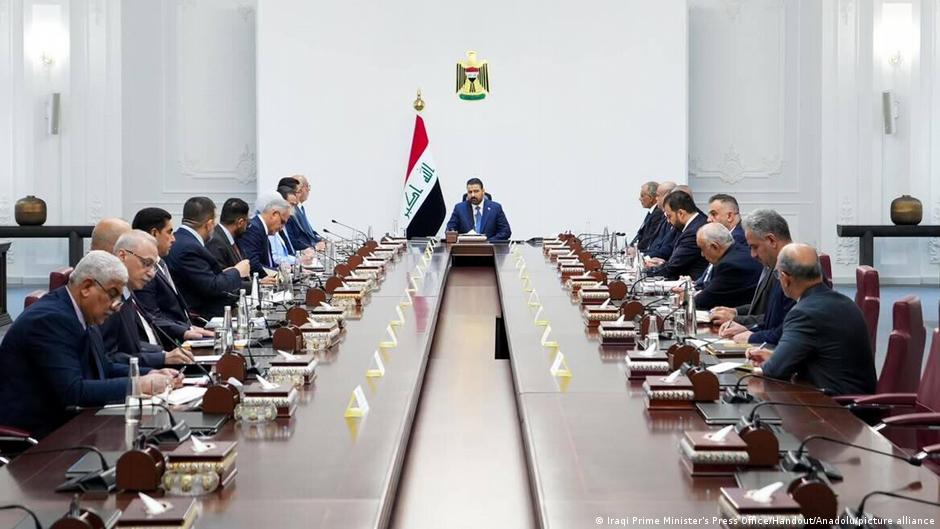
The admission changes everything
For months, Riyadh and Washington have spoken carefully around the fact that Iranian-backed militias operating from Iraqi soil have been striking Saudi targets. Neither side wanted to force Baghdad’s hand publicly — doing so would have meant choosing between confronting a sovereign ally or appearing to collude with US regional strategy.
On Saturday, that calculus collapsed. Baghdad confirmed that Friday night’s attack on a key Saudi oil pipeline was launched from Iraqi territory. The message from Iraq was unambiguous: this came from within its borders, and the Iraqi government is now on the record about it.
That matters more than the specifics of any single strike. An admission of this kind draws a line that cannot be uncrossed. Riyadh can no longer plausibly treat these attacks as ambiguous or deniable. It can no longer absorb them as background noise in a long-running shadow war.
Saudi restraint — for now, but fragile
Riyadh’s response has been calibrated for calm. Crown Prince Mohammed bin Salman’s government announced the pipeline shutdown as a “precautionary measure” and explicitly said it would not retaliate, stating it wanted to give Baghdad “an opportunity to take the necessary measures.” That is diplomatic language, and it is not weakness — it is a signal that Riyadh is still trying to keep this contained within bilateral channels rather than dragging in the United States or opening a second front.
But the constraints on that restraint are thinning. Iraq dismissed the military commander and police chief in Maysan province, closed the main border crossing there, and placed administrative pressure on the area where the militias operate. On paper, these are credible steps. In practice, Maysan has long functioned as a corridor for Iranian-backed fighters and weapons, and the provincial security apparatus is deeply penetrated by elements that answer to Tehran, not Baghdad.
A reshuffle of two commanders does not dismantle that architecture. Saudi Arabia knows this. That is why the “not retaliating” framing is so important to maintain — it buys time while signaling that the cost of inaction will accumulate.
The militias that refuse to dissolve
The Popular Mobilization Forces denied involvement, as is standard practice. What the denial obscures is the structural problem: the PMF is formally integrated into Iraq’s security forces. Several of its constituent groups, including Kataib Hezbollah, have openly declared they will not comply with Baghdad’s September 30 deadline to disarm. The deadline itself is a coincidence — it also marks the date set for the withdrawal of remaining US-led coalition forces from Iraq.
This is not accidental timing. The militias are constructing a narrative in which US departure and their own survival are mutually reinforcing. If Washington leaves and leaves them armed, Baghdad loses both its external security guarantor and its primary internal counterweight. If Washington stays, the militias frame themselves as the only thing preventing a US footprint from becoming permanent.
Kataib Hezbollah has gone further than most, demanding guarantees that US forces would never return and measures to rid Iraq of American influence in political and economic decision-making. That is not a militia negotiating from a position of weakness. That is a group that believes it has become the state.
Oil markets already pricing in risk
The pipeline disruption is a symbolic flashpoint, but the market is reading the broader picture. Any attack on Saudi energy infrastructure — whether from Yemen, Iraq, or elsewhere — carries disproportionate weight because Saudi Arabia accounts for roughly 12 percent of global oil supply and the vast majority of that capacity can be brought online quickly. A credible threat to that capacity is a threat to the price floor that has stabilized markets throughout the current volatility cycle.
Gas prices across regional markets already reflect the cumulative risk of simultaneous disruptions: the Houthi blockade of Saudi shipping lanes since July, the capture of the Red Sea port of Mokha and the island of Perim, ongoing militia activity along the Iraqi-Saudi border, and the unresolved question of what happens to US forces when they leave. Each incident adds a premium. Together, they create a floor under energy costs that is harder to predict than any single event.
The Trump variable
President Donald Trump’s comment that Iran was “probably” responsible for the pipeline attack is notable for what it also implied about his broader posture. He appeared to downplay the conflict with the Houthis, suggesting they “don’t want to fight” with the United States and are allowing most ships through. That reads as an effort to compartmentalize the Red Sea crisis while redirecting attention toward Iran as the primary adversary.
The distinction matters for escalation dynamics. If Washington treats the Iraqi strikes as an Iranian proxy problem and the Houthi actions as something separate and manageable, it risks underestimating how interconnected these campaigns actually are. Both are parts of Tehran’s “Axis of Resistance,” and both exploit the same gaps in US force posture. Treating them as isolated incidents rather than coordinated pressure across multiple theaters is a recipe for strategic surprise.
What happens next
Three scenarios dominate the near term.
The first — and most likely in the immediate term — is continued Saudi patience. Riyadh absorbs the embarrassment of the admission, applies quiet pressure through Baghdad, and waits for the September 30 deadline to play out. If the militias comply or are marginalized by the US withdrawal, the crisis burns down. If they don’t, Saudi Arabia faces a binary choice: escalate militarily or accept a new reality in which Iranian-aligned forces operate openly from Iraqi soil.
The second scenario is a limited Saudi strike inside Iraq. Riyadh has not ruled this out explicitly, and a pipeline attack that kills or threatens civilian infrastructure could cross a threshold that makes restraint politically unsustainable for the crown prince. Even a proportional response would force Iran to respond through its proxy network, potentially reigniting the very cycle the admission was meant to contain.
The third is the slow boil — no dramatic escalation, but a steady accumulation of incidents that gradually raises the cost of doing business in the region. Shipping insurers adjust rates, oil producers hedge more aggressively, and regional governments divert spending toward defense. This is the scenario most likely to persist if Washington maintains its current posture of engagement without commitment.
The admission itself is a turning point because it removes the option of plausible deniability. The attacks will continue to be called something else by someone, but the record is now fixed. Everyone in the region knows who is responsible, where the strikes originate, and that Baghdad has acknowledged it. The question is no longer whether this is a problem — it is whether the players still have the political space to solve it before one of them decides they don’t.