Israel's Gaza tank offensive shatters ceasefire—and terrifies Arab
Israeli tanks crossed the 'yellow line' into central Gaza in a landmark violation of the October ceasefire. The move endangers hostage deals, strains US diplomacy, and alarms Israel's Arab neighbors.
The line that isn’t a line anymore
Israeli tanks rolled along the Salah al-Din road on Wednesday—the main north-south artery cutting through Gaza—and crossed what everyone had been calling the “yellow line,” the informal boundary that was supposed to separate Israeli and Hamas-controlled territory under the ceasefire agreed last October.
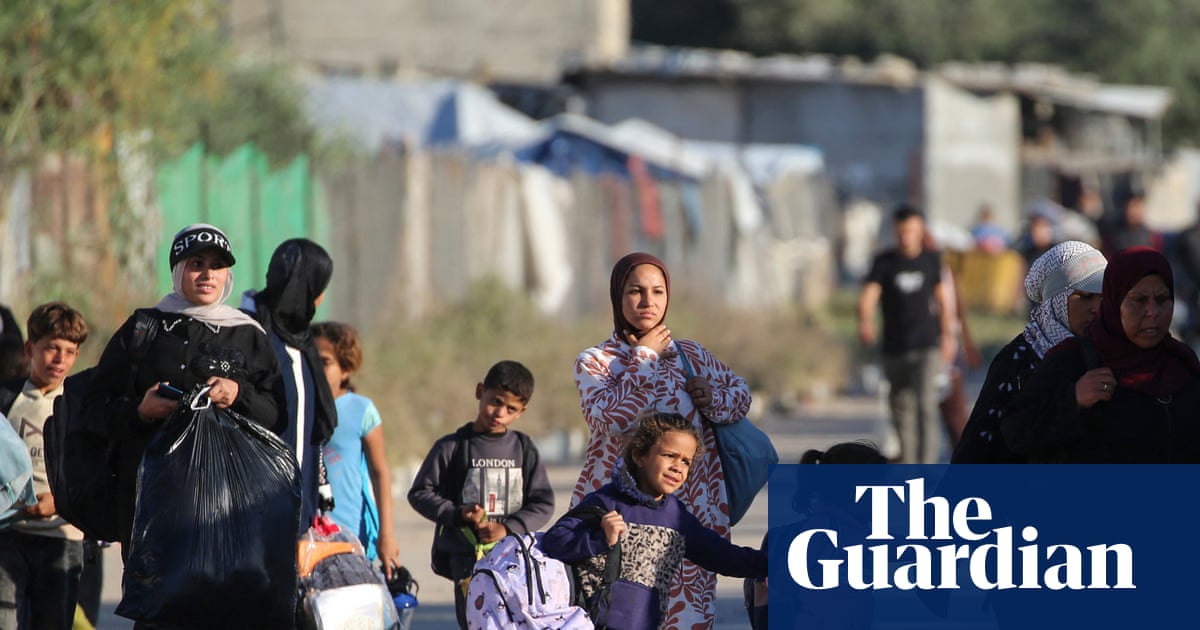
This wasn’t a skirmish at the perimeter. This was a ground offensive into central Gaza, deep into territory controlled by Hamas. Dozens of displaced Palestinians fled their tents. One person was killed by an airstrike near the raid site; two others died in separate incidents across Gaza. The Israeli military said it was targeting “Hamas infrastructure.” It did not elaborate further.
The implications are far larger than another border flare-up. This is the first time Israeli forces have operated east of the yellow line since the truce began, and it changes everything about how fragile that deal actually is.
Who this hits hardest: the hostages still held
The most immediate casualty is likely the hostage release framework. The entire ceasefire structure was built on a promise that neither side would escalate—because escalation breaks the negotiating mechanism that was supposed to bring home the roughly 100 Israelis still believed to be held in Gaza. Crossing the yellow line with armor and artillery is not ambiguous. It is a signal that Israel no longer feels bound by the constraints of the deal.
That signal matters because the hostage families and their supporters were the fragile domestic coalition holding Netanyahu’s government together on this issue. If the military operation continues and expands, that coalition fractures. Every day without a deal, every new strike inside Gaza, makes the political price of continuing the war lower for Netanyahu and the price of accepting a deal higher.
The American awkwardness
Donald Trump’s Board of Peace—the body created to oversee the ceasefire—issued its second report to the UN Security Council last week, accusing both Israel and Hamas of failing to honor their commitments. The language was blunt: “a ceasefire that delivers nothing visible cannot be sustained indefinitely.”
And yet within days, Israeli troops were crossing the very boundary the board was meant to protect. That contradiction is unsustainable. Washington is now caught between defending an alliance and enforcing a deal it brokered. The board’s warning—that the gap between agreements and reality is the single biggest threat to the ceasefire—was essentially a prophecy, and Wednesday proved it right.
Netanyahu’s gambit—or his unraveling?
Here is where it gets interesting domestically. Gadi Eisenkot, the former chief of staff turned opposition politician, is reportedly trying to form a government without Benjamin Netanyahu. That detail alone suggests Israel’s political establishment is already testing whether the war can be ended politically before it ends militarily.
Netanyahu’s entire brand has been built on one promise: keeping Israel safe. But safety is no longer just about eliminating Hamas—it’s about surviving the political consequences of a war that showed no signs of concluding until external pressure forced a ceasefire, and then showing no signs of respecting that ceasefire either. The yellow line crossing undermines his argument that he is the only leader who can manage Israel’s security while also ending the war. If anything, it suggests the opposite: that his strategy is consuming the peace it was supposed to secure.
The regional earthquake nobody is talking about loud enough
The most underreported consequence of Wednesday’s operation is what it does to Israel’s relationships with Egypt, Jordan, and the Gulf states. These countries have tolerated the continuation of Israeli strikes during the ceasefire period because there was always a plausible deniability gap—they could argue the fighting was confined to areas outside the formal ceasefire boundaries. Central Gaza is not outside those boundaries. It never was.
Crossing the yellow line removes that deniability. It forces Arab governments to choose publicly between silence and condemnation. Silence damages their credibility with populations that have watched Gaza for two years. Condemnation damages their relationship with Washington and Tel Aviv. There is no clean option, and that uncertainty is exactly what makes this moment dangerous.
Egypt and Jordan, in particular, face a calculus that goes beyond rhetoric. Both share borders with Gaza or perceive themselves as ultimately responsible for its civilian population. If Israel can operate freely inside Gaza regardless of agreements, what stops it from operating more broadly in the region? The question doesn’t need to be answered for it to change behavior.
The numbers don’t lie—and they aren’t encouraging
Since the ceasefire took effect, Gaza health authorities say at least 1,600 Palestinians have been killed. The Israeli military confirms five soldiers died in that same period. Over 74,000 Palestinians have been killed since October 2023. The war that triggered all of this began with a Hamas attack that killed roughly 1,200 people in southern Israel.
None of these numbers are abstract. They represent the raw materials of future conflicts. The yellow line was always going to be crossed eventually—it is a line drawn on a map, not a wall. What matters is when it is crossed and what comes after. Crossed by tanks on a major road in central Gaza, with a hostage deal hanging in the balance and the US-brokered oversight body simultaneously warning the ceasefire is collapsing? That is not a pause. That is a pivot.
What happens next
If Israel treats the yellow line as advisory rather than binding, the ceasefire was never really functional to begin with. The Board of Peace’s report warned that the gap between agreement and reality was the greatest threat. Wednesday widened that gap from a crack to a chasm.
The immediate question is whether the board responds—with sanctions, with public rebuke, with a restructuring of the deal. The slower but more consequential question is whether Arab partners recalibrate their engagement with Israel before the next escalation cycle begins. The hostage families, the displaced Palestinians in central Gaza, and the diplomats in Washington, Cairo, and Amman are all watching to see whether this was a one-off operation or the opening move of something larger.
The answer will determine whether October’s ceasefire survives as a historical footnote or becomes the last viable framework for ending the war.