Israel's Post-Netanyahu Crossroads and What It Means for Washington
Israel's president has given opposition leader Yair Gantz the mandate to form a new government, threatening to end Benjamin Netanyahu's 19-year rule. The move sends shockwaves through US policy and signals a potential reckoning on Iran, Gaza, and domestic politics.
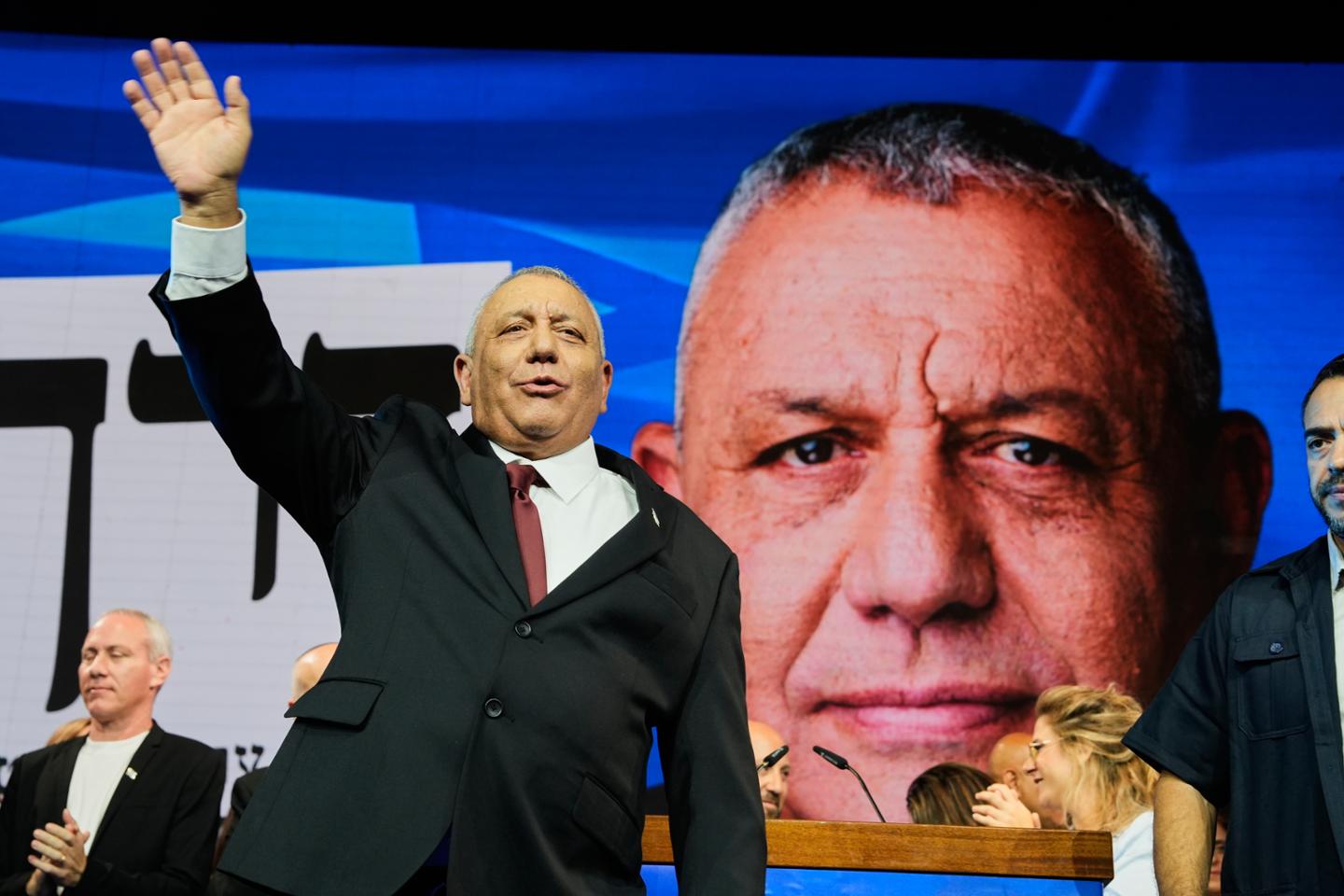
A 19-Year Reign Stumbles
Israel’s president has formally asked opposition leader Yair Gantz to form a government, handing the Likud party’s Benjamin Netanyahu his most consequential setback in nearly two decades of continuous rule. If Gantz succeeds — and there are already serious doubts he will — Netanyahu exits stage left after 19 years, not on a wave of victory but in the kind of political collapse that reshapes countries.
The numbers tell the story. Of Israel’s 120 Knesset seats, 67 have endorsed Gantz, while Netanyahu commands just 46. The ultra-Orthodox United Torah Judaism party declined to back either side, throwing the arithmetic into further disarray. Gantz now has until November 28 to negotiate a coalition, with a possible 14-day extension tacked on if necessary. If he stumbles, the mandate passes to someone else. If everyone fails, parliament dissolves and snap elections fall within 90 days. Until one of those things happens, Netanyahu stays on as caretaker prime minister — effectively the most powerful leader in Israel with no mandate to govern anything beyond emergencies.
This is not a routine change of guard. It is a stress test for Israeli democracy itself, and a moment that will reverberate far beyond Jerusalem’s borders.
Who Is Yair Gantz?
The article identifies Gantz as the leader of the Yamina party, a figure who rose through military ranks before entering civilian politics. He served as chief of staff from 2015 to 2019, making him one of Israel’s most decorated career officers. That background matters because it frames the kind of government he might build — security-first, pragmatic, likely unwilling or unable to govern without right-wing partners. And that is precisely why the mission may fail.
Arab parties hold a disproportionate amount of leverage here. They are willing to support a Gantz administration from outside the cabinet rather than join one, a compromise many right-wing legislators find toxic. Some factions within Gantz’s camp oppose this arrangement outright. Without them, the “minority government” path looks more like fiction than strategy.
So we arrive at an uncomfortable equilibrium: Gantz has the votes to try, but not necessarily the votes to survive.
What This Means for Washington
Let us be direct about what an end to Netanyahu’s rule would mean for American foreign policy. For years, the relationship between Washington and Jerusalem under Netanyahu has been defined by friction masked by solidarity. Israel pursued settlements with impunity. It refused to engage meaningfully on the two-state framework. It treated US pressure as background noise. Meanwhile, American presidents kept providing diplomatic cover at the UN, arms sales, and intelligence cooperation regardless.
A Gantz-led government does not automatically align with Washington. But it removes the most predictable source of unilateralism from Israeli politics. It opens space for Tel Aviv to reconsider settlement expansion, potentially re-engage with Palestinian authority discussions, and treat regional diplomacy differently than Netanyahu preferred. Whether Gantz himself wants any of this remains unclear — he comes from the same nationalist mainstream as most of his peers — but the structural constraints shift.
For Biden’s team, the upside is that Israel may return to being a partner rather than a liability. The downside is timing: Gantz inherits a Gaza that is still burning, an Iran that sees weakness everywhere, and a domestic base that may reject any retreat from hardline positions. The margin for error is thinner than in 2016 or 2018, when Netanyahu was already damaged by scandal and isolation.
The Iran Question, Again
Iran is the variable that ties everything together. Netanyahu built his case for survival partly on the argument that only he could withstand Iranian aggression. His approach was maximalist: maximum pressure, zero engagement, sabotage of every diplomatic channel. The result was an Iran closer to the bomb than at any point since 2003, a hardened proxy network across Lebanon and Gaza, and a region increasingly prone to miscalculation.
A post-Netanyahu government faces a different calculus. It cannot simply declare the status quo sustainable. The Iranian nuclear program is not going away. The regional posture of Hezbollah, Hamas, and their backers will not self-correct. A new prime minister must decide whether to pursue deterrence through diplomacy, containment through alliances, or something in between. Every option carries risk. Every option requires a conversation with Washington that Netanyahu largely avoided.
That conversation is overdue. Its absence shaped the last four years of escalation. Its presence in the months ahead will define the next.
Gaza Without Netanyahu
Gaza is the immediate fire. Any new Israeli government inherits a war that has destroyed infrastructure, displaced much of the population, and generated humanitarian catastrophe rivaling nothing in the region since 2014. Netanyahu used the conflict to consolidate power, absorb critics, and postpone accountability. The question now is whether Gantz can offer a trajectory out of it — or whether the military logic that sustains the campaign continues regardless of who sits in the prime minister’s office.
There is no evidence yet that a change in leadership produces a change in strategy. Gantz served in defense roles under Netanyahu for years. He understands the constraints. But understanding constraints is different from accepting them as permanent. If Gantz believes Israel can re-establish deterrence while simultaneously rebuilding governance frameworks in Gaza, he will attempt it. If he concludes that endless occupation is unsustainable, he may push for something resembling an international reconstruction plan backed by Arab partners — a far cry from Netanyahu’s vision, and far more complicated to execute.
The Real Turning Point
The headlines will focus on Netanyahu’s possible fall. That is the wrong story. The real story is what happens when a country that has ruled itself through crisis management for nearly twenty years confronts its own exhaustion. Gantz may succeed. He may fail. Either outcome forces Israel to answer questions it has avoided: Who is it governing? Against whom does it defend itself? What future does it envision for its neighbors?
Washington should want clear answers. So should Tehran. So should the people of Gaza. The next few weeks will determine whether Israel reaches them or drifts further apart.